Plans for the construction of a significant local road in Carseldine are moving along as the government expects to unveil its business case for the Beams Road Overpass project in early 2021.
The business case should incorporate feedback from the public and the experts in designing the Beams Road Overpass versus its cost estimates following the end of the community consultation in October 2020.
Workers from the Department of Transport and Main Roads (TMR) have done on-site investigations to check if the ideas received during the community sessions are possible.
Photo Credit: TMR
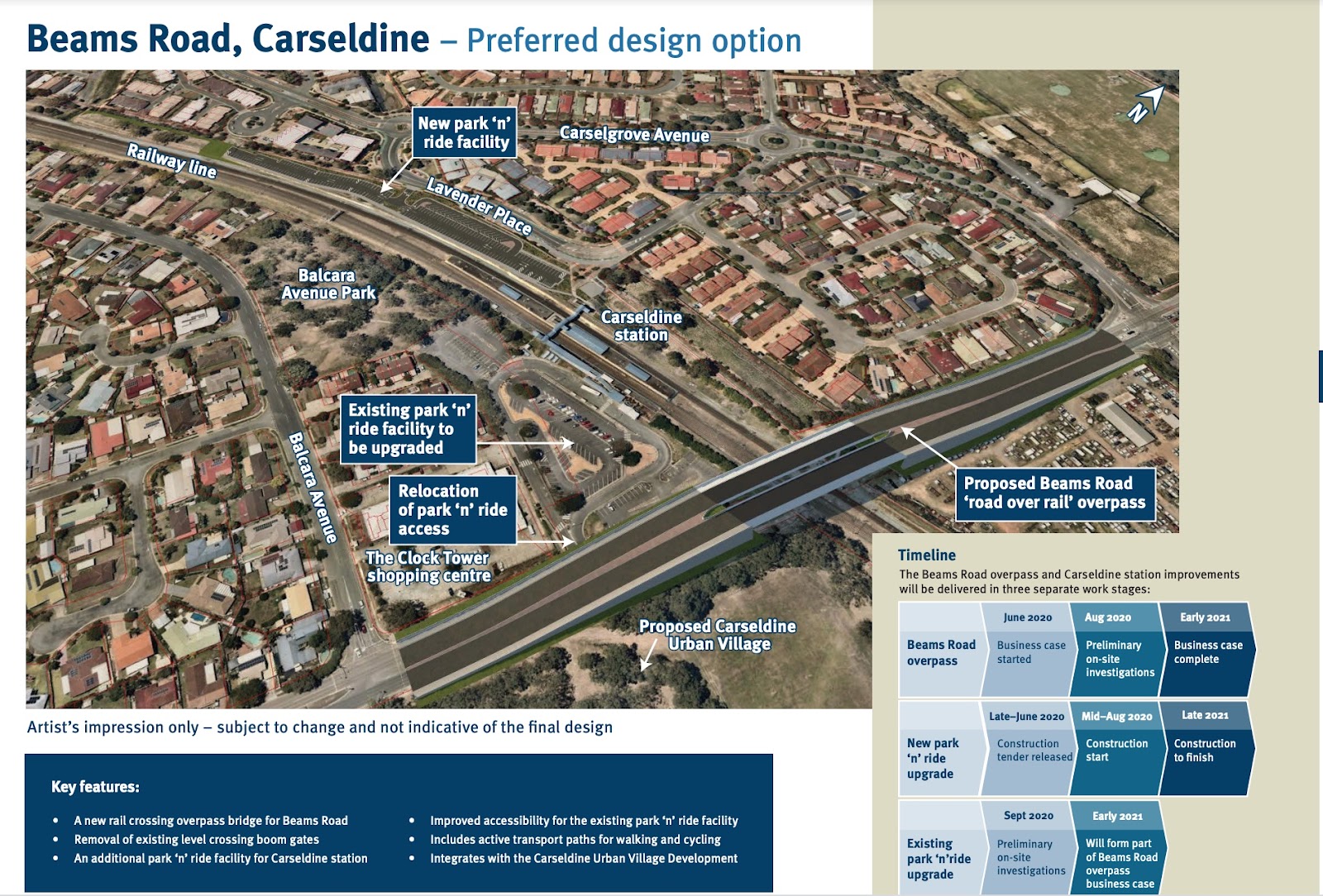
The preferred design underscores the following benefits and impacts:
completely remove the rail level crossing
includes active transport paths for walking, bike riding and mobility devices.
potential to impact residential properties
will reduce the number of car parks at the existing Carseldine park ‘n’ ride, however, this impact will be offset by the development of a new park ‘n’ ride area on the eastern side of the rail line
The road that will connect the northern suburbs communities aims to improve travel time and safety, as well as ease the congestion for commuters. Once the business plan is completed and released, the TMR aims to start the overpass construction by late 2021.
A commitment of $128 million from the Queensland Government in June 2020 accelerated this project, which will also ental upgrades to the Carseldine park ‘n’ ride. Brisbane City Council and the Australian Government have also set aside funding, rounding up the total investment to $248 million.
For questions and comments about the Beams Road Overpass project, contact the project team on metropolitanregion@tmr.qld.gov.au or phone (07) 3066 4338.
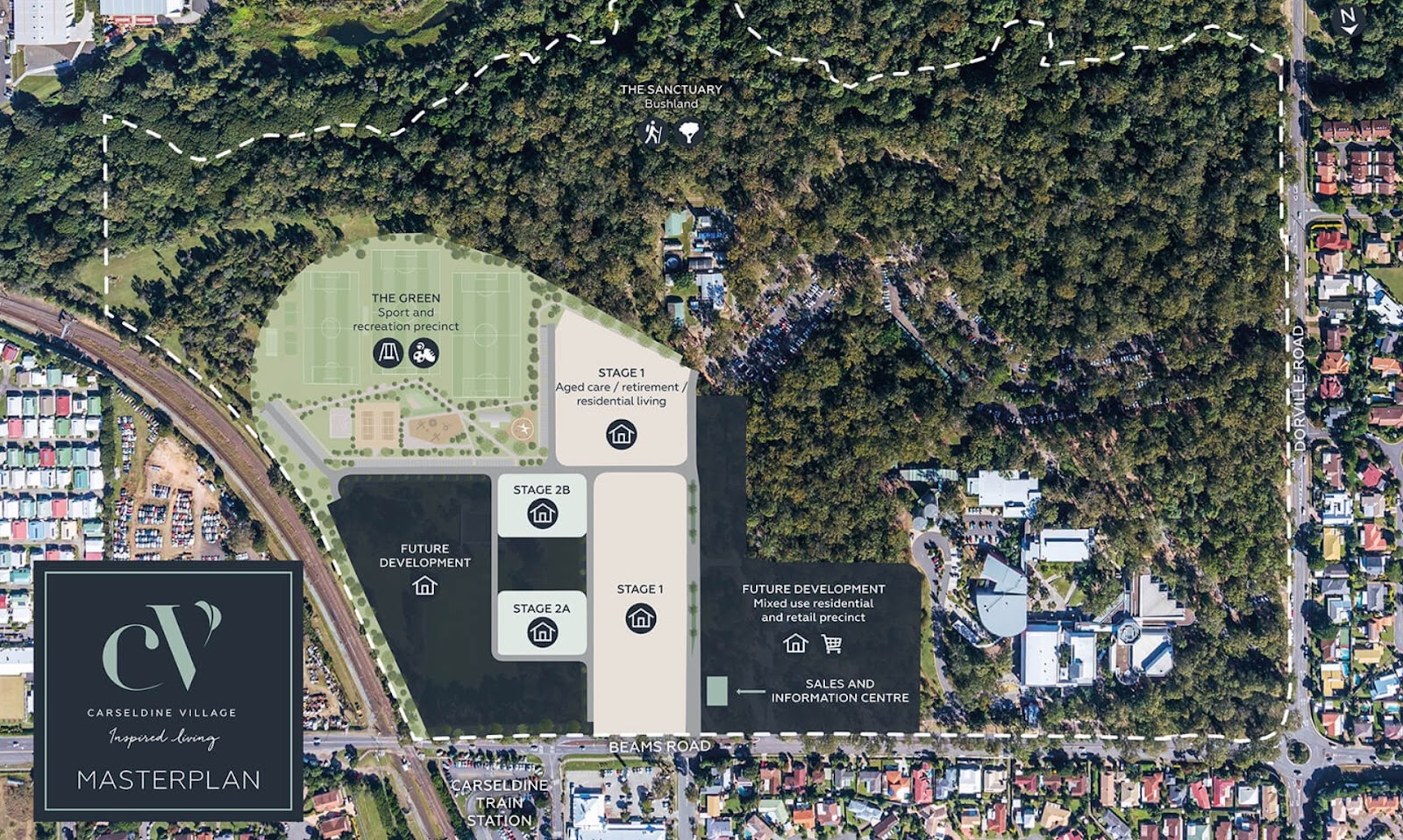
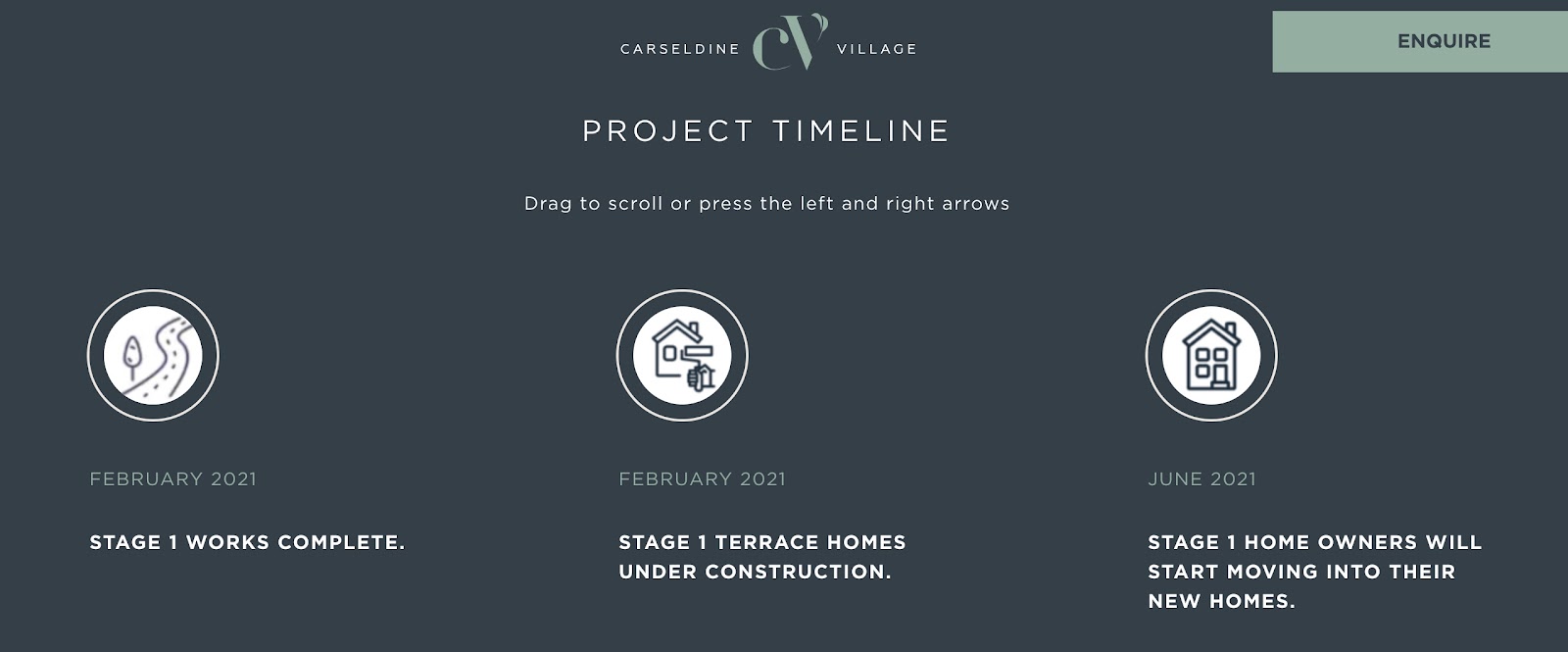
Stage 1 of the Carseldine Village project, fast-tracked by the Queensland Government in mid-2020, could meet its targetted completion date in February 2021, allowing the first set of homeowners to move into the facility by the middle of the year.
Construction of the Carseldine Village Stage 1 includes the 53-terrace residential units, the aged care facility, and road upgrades to three nearby intersections to improve access and traffic flow. The project has brought on over 60 local jobs for the civil works and an additional 50 jobs for the construction of the terrace homes.
The precinct has been dubbed as the “first residential development in Queensland to commit to delivering net zero energy emission homes with energy saving features.”
The terrace homes will incorporate solar power, heat pump hot water systems, smart-phone controlled home airconditioning system and a garage with an electric vehicle charger.
Photo Credit: Carseldine Village
Whilst Stage 1 has been progressing, civil and electric work has begun in December for Stage 2. This next project will add 49 more terrace homes to the village and should be completed by the yearend.
Photo Credit: Carseldine Village
In January 2020, the village opened the four-hectare sports and recreational facility, The Green.
Developed for community use, The Green’s facilities include three soccer fields, two tennis/netball courts, two volleyball courts, half-court basketball, all abilities playground, yoga lawn, fitness equipment, BBQ area, changing rooms with public toilets, shaded seating and 120 car parks.
Carseldine Village is on the former QUT Carseldine campus, which has been closed since 2008. In 2012, the site became a Government Office Precinct but four years later, plans to redevelop the site into a mixed use space with dwellings was lodged with the Council.
BCC is asking for community feedback on the draft strategy for the Bridgeman Downs Neighbourhood Plan. Be sure to have your say by 16 November 2020.
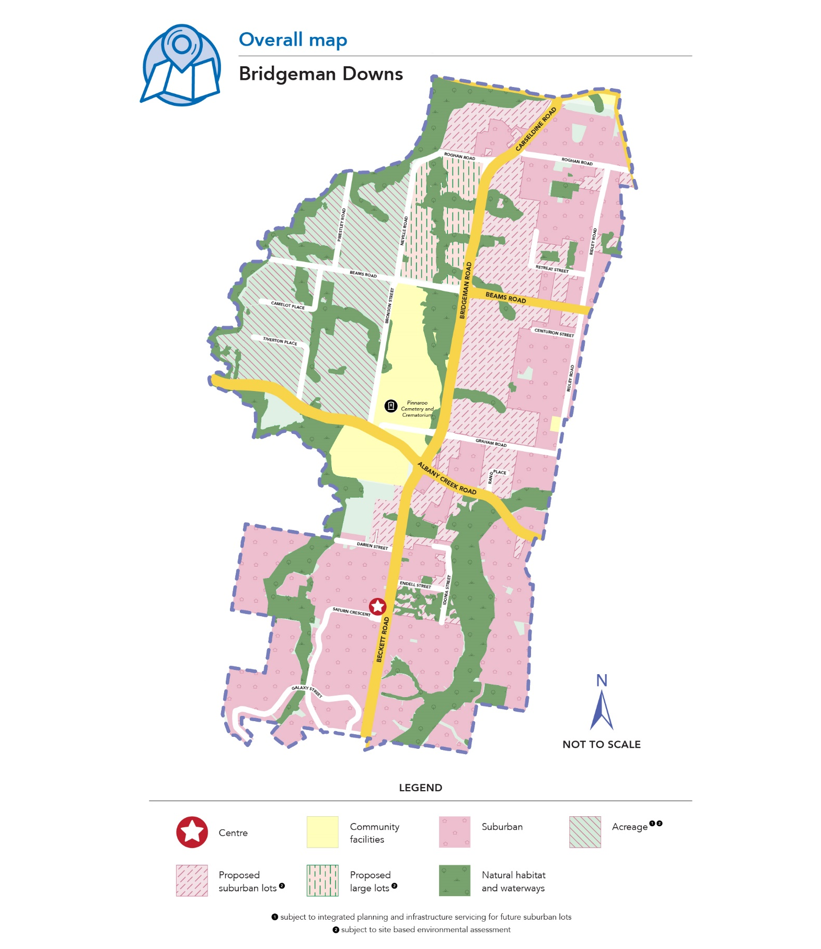
Council is currently in the process of creating a new neighbourhood plan for Bridgeman Downs. The new neighbourhood plan will help guide future development and coordinate land use and infrastructure at Bridgeman Downs over a 10-year period and beyond.
Council will use the community feedback received on this draft strategy to prepare a draft neighbourhood plan and once completed, will form part of Brisbane City Plan 2014.
According to the feedback gathered during the initial community engagement in late 2019, community members felt that recent housing developments and clearing of native vegetation were not in keeping with the area. Hence, council has identified three key community priorities:
Protecting the environment and greenspaces.
Maintaining suburban neighbourhoods.
Servicing the area with infrastructure.
Photo credit: Brisbane City Council / brisbane.qld.gov.au
Vision
“Bridgeman Downs is a relaxed suburb combining city convenience with bushland beauty. Here, natural habitat and waterways are protected and embraced. Well-designed homes contribute to the local community and are connected to natural habitats. Convenient transport connections make getting to surrounding areas easy and active travel options inspire healthy living, clean air, outdoor recreation and smart travel choices.”
The economic climate has drastically changed due to the pandemic but businesses in North Brisbane, including Aspley, have gotten a much-needed boost from the Queensland Government through the Small Business COVID-19 Adaption Grants.
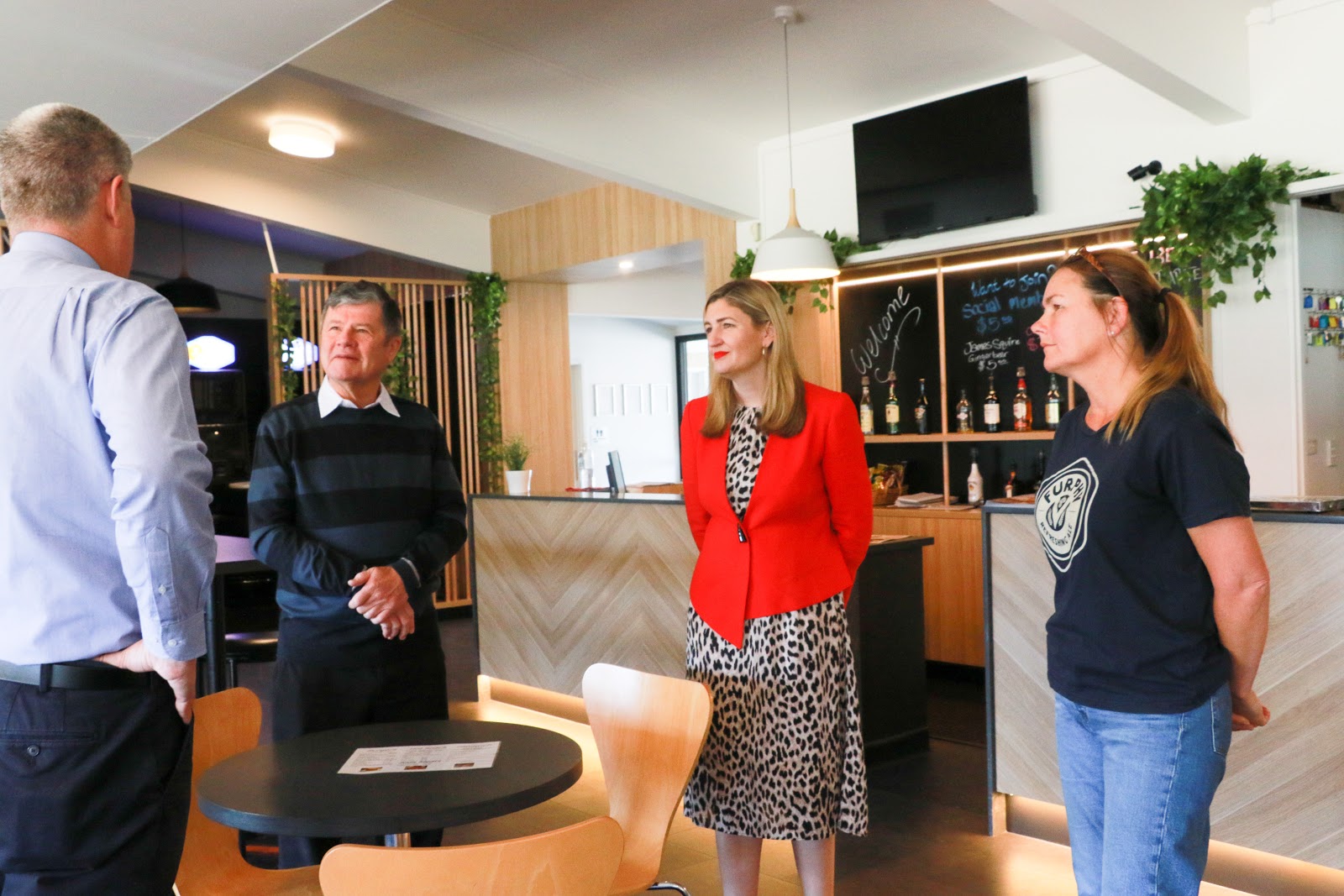
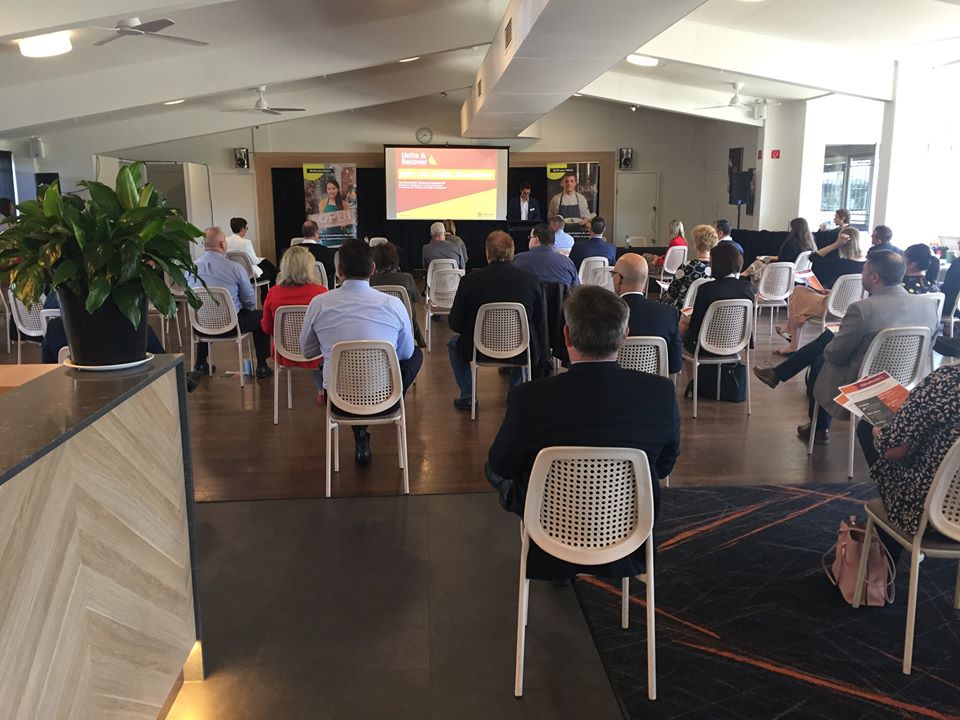
Minister for Employment and Small Business and Minister for Training and Skills Development Shannon Fentiman met with nearly 100 Aspley business owners at the Geebung Bowls Club on Wednesday, 19 Aug 2020, to discuss the help extended to small businesses.
So far,15,000 struggling companies were given over $885,000 in grants, including the management of the bowls club. Almost $200 million in grants have been set aside.
Geebung Bowls Chairman Richard Mason said that since the greens have been closed and unused for months during the lockdown, the club had to seek a $10,000 Small Business COVID-19 Adaption grant. The money helped pay for maintenance, electricity and water supply.
Mr Mason, however, said that he’s glad people are slowly returning to the club amidst the relaxation of restrictions.
“We are returning to pre-COVID trade levels and appreciate the support of some very loyal locals and government financial assistance,” the chairman said. “I would also like to thank Minister Fentiman and our Local Member Bart Mellish for their continued support and commitment to our club.”
Photo Credit: Geelong Bowls/Facebook
Aside from the grants to businesses, a Unite and Recover for Queensland Jobs program has been set up to help the unemployed. North Brisbane residents may avail of the following support:
Free online TAFE courses
Free apprenticeships and traineeships for under 21s
Payroll tax relief
Energy rebates for households and small and medium sized businesses
25% procurement target for small and medium sized businesses – $4 billion of support each year.
“We know businesses across the state including here in the North Brisbane region have been doing it tough during the COVID-19 pandemic,” Ms Fentiman said in a statement. “Because of the great job we’ve done on the health response to COVID-19, we can now focus on our economic plan for recovery.”
For enquiries about the grants, the job recovery program and other benefits, phone 1300 654 687 or visit Business Queensland.
Two brand-new buildings will soon rise in Aspley State High School, delivering a new multi-purpose sports hall and a music centre. The project, costing $16 million, is also expected to bring in 47 new jobs for the locals.
On Thursday, 9 July 2020, Aspley MP Bart Mellish and Education Minister Grace Grace gamely turned the sod on the construction site.
Ms Grace said that Broad Construction has been given the contract to build the new centres and the company will provide jobs that will help with the state’s economic recovery, amid this coronavirus crisis.
“This has ensured a pipeline of work has continued to flow throughout the COVID-19 pandemic,” the Education Minister said.
Mr Mellish, on the other hand, said that the music centre was overdue for a replacement after 35 years. The sports facility, on the other hand, will deliver opportunities for the students.
“The $12 million sports hall will feature two sports courts, two general learning areas, a gym, canteen, staff office, storage rooms and a kinesiology lab. It’s part of our $235 million Renewing Our Schools Program, one of 26 state schools benefitting from this funding,” Mr Mellish said. “Meanwhile, the $3.8 million music centre will include visual arts, music, drama and dance classrooms as well as practice rooms and a staff office. I can’t wait to watch these projects come to life.”
Aspley State High School’s new sports and music centres are expected to be completed by March 2021.
Carseldine Train Station’s Park n Ride is set to see an additional 170 carparks soon as tenders are out for the whole month of July 2020.
Once the $15-million parking space upgrade is done, the Carseldine Station Park n Ride will almost double from 200 to 370.
This is welcome news for northside rail commuters who have been asking for additional parking spaces near the station. In a petition, Councillor Amanda Cooper stated that as a result of the insufficient parking spaces, commuters are using Beams Road and the surrounding streets (often illegally) to park their cars.
The park n ride project is the first stage of the Beams Road Rail Overpass, according to the announcement by Member for Aspley Bart Mellish. The Beams Road Rail Overpass will start construction as early as December 2021, following the 128-million commitment by the State Government.
The rail level crossing project is intended to reduce congestion and address safety concerns in the area.
The overpass will remove the level crossing which is deemed to be unsafe for many commuters. It also aims to improve travel times for rail and road users.
The project resulted from a consultation in early 2019, asking commuters using the rail level crossing what they want to be done to address the issues in the area. Thirty-one percent of respondents supported the call for a road-over-rail overpass, whilst 21 percent wanted the government to just fix the existing rail level crossing.
Approval has been granted for Brisbane Catholic Education (BCE) to put up Fitzgibbon Private Secondary School (FPSS), the first Catholic secondary coeducational school in the area.
The 5.76-hectare land was the former site of the Big Easy Golf and Leisure Centre, with low-medium density residential zoning. Situated on the corner of 441 Beams Road and Carselgrove Avenue, the school’s primary access point will be along Carselgrove Avenue.
MID (Instead of Council) Planning Approval
In submitting their proposal for the school, rather than lodging a development application through Council, BCE applied for a Ministerial Infrastructure Designation (MID). This goes directly to the Planning Minister.
John Phelan, BCE communications manager, clarified that a Ministerial Designation is sought, as is the case with FPSS, whenever they are deemed possible and the most efficient way to proceed.
BCE is a community of parish and diocesan Catholic schools operating 141 schools across the Archdiocese.
In an earlier statement, Brisbane City Planning Chair Matthew Bourke said that developments such as these should be assessed through the Council, where proposals are considered against their existing planning scheme and to ensure that proper consultation and engagement with the local community are undertaken.
Both BCE and the Department of State Development, Manufacturing, Infrastructure and Planning (SDMIP) clarified, however, that BCE has not been remiss in such consultations.
A public consultation held in October and November 2019 resulted in 92 submissions. “As required, Brisbane Catholic Education undertook engagement with the Council and (the) local community before submitting a designation request for the Fitzgibbon Private Secondary College,” a spokesman for the SDMIP clarified.
A spokesman for the BCE also emphasised that existing issues raised by residents about the open level-crossing on Beams Rd and the lack of commuter parking at the Carseldine Train station, have been considered and ought to be adequately addressed as well.
Sneak Peek
Photo Credit : BCE / Rendering from the development plans
The overall proposal for the school includes buildings ranging from one to three storeys. Buildings closer to the north end where homes are situated will have a reduced height, whilst the taller buildings will be orientated towards the south end of the grounds.
Photo Credit: BCE / development plans
The FPSS campus will include:
■ Three two-storey structures containing classrooms;
■ Two one to two-storey speciality buildings;
■ Two two-storey speciality buildings;
■ A large oval and tennis courts;
■ A three-storey physical education hall and music and performance centre;
■ A two to three-storey learning centre and cafe;
■ Staff parking, with manouevring and turnaround areas;
Photo Credit: BCE / development plans
Stage One, to be completed prior to school opening, will include the classrooms, specialist rooms, administration spaces, a covered area for PE, and the school oval.
There will be multiple connection points to the existing Cabbage Tree Creek bikeway for access, along with connections to ingress/egress points for pedestrians, for better access to Carseldine train station and existing external bus stops.
Plans also include the retention of rehabilitated wetlands located northeast of the site, and vegetated buffers to the north and the northwest corner adjoining houses.
Funding is entering the final stages of approval and construction is slated for early 2021. Construction will be in stages, towards a projected Term 1 opening for 2022.
Over 800 families have already expressed their interest in sending their children to the new secondary school. The school has a planned enrolment of about 900 students.
If you shop for supplies at Coles and other supermarkets, here’s some great news! Purchase caps have started to be lifted on selected everyday staples.
Coles Aspley and Other Branches
Coles has lifted purchase limits on all types of meat, UHT and fresh milk, tissues, and nappies.
Photo Credit: nutritionfacts.org
Meanwhile, the company currently still has a 1 pack/shopper limit on toilet paper and paper towels; and 2 packs/shopper on sugar, eggs, canned tomatoes, flour, pasta, dry rice, frozen vegetables and desserts, liquid soap, antibacterial wipes, and hand sanitiser.
Individual stores may still impose additional limits on other items as the need arises, so shoppers should check in-store announcements or signages for related updates.
Community Hour
At Coles, weekdays from 7:00 a.m. to 8:00 a.m. is designated as the Community Hour. During this time, vulnerable shoppers who require assistance and access will be allowed to complete their shopping ahead of the regular store clientele.
Mondays, Wednesdays, and Fridays are for elderly customers, their carers, other people needing special assistance, and the friends and neighbours of those who need assistance. Any of the following government-issued identification cards must be presented upon entry:
Commonwealth Seniors Health Card
Health Care Card
Seniors Card
Disability Card
Pensioner Concession Card
Companion Card
Community Hour on Tuesdays and Thursdays are for emergency services and healthcare workers who:
Can demonstrate they are registered with AHPRA;
Have a workplace ID; or
Are wearing their work uniform.
Regular customers may proceed with their shopping after Community Hour. Stores have the discretion to extend the time to enable Community Hour shoppers to complete their purchases.
Woolworths
At Woolworths, purchase caps have now been removed on all canned vegetables, tinned tomatoes, canned legumes, oats, long-life milk, serviettes, and baby care items, excluding wipes. This is a significant change from earlier this month when most products had a 2 pack/person limit. Caps at Woolies are constantly being updated, so it’s best to check their website for the latest details before going in to shop.
Aldi’s and IGA
Purchase limits at Aldi‘s seem to still be in place. Currently, there are caps on toilet paper (1 pack/shopper); flour, dry pasta, dry rice, eggs, tissues, and paper towels (2 packs/shopper); sugar, UHT milk, and microwavable rice (6 packs/shopper); and canned food (10 packs/shopper).
Interestingly, IGA maintains that caps are a store-based decision. Explaining that they seek to provide access to essential items for the local communities they serve, IGA stores have imposed limits on items with critically low inventory. The chain recently released a statement saying that limits are being maintained and updated on a store by store basis.
For more details on supermarket item limits, visit Coles, Woolworths, Aldi and IGA‘s websites.
Racing Queensland has appointed a town planner and architect as its Deagon Racecourse master planning process pushes forward.
Concept master planning at Deagon has commenced, seeking to establish a multi-purpose State Training Centre in order to address the declining residential stabling numbers in South East Queensland. The facility will also provide a training environment for apprentice jockeys and stable hands.
The planning and conceptual design process is expected to take 18 to 24 months to complete. The initial announcement was made in July 2019.
To assist RQ with its community engagement activities throughout 2020 and to help in the master planning process, Urbis has been appointed as its town planner and will be working together with Cox Architecture.
“Under the RQ proposal, the State Training Centre would serve as a state-of-the-art equine precinct, supporting the heritage requirements placed on Deagon to maintain its status as a racing and sporting precinct,” Racing Minister and Member for Sandgate Stirling Hinchliffe said.
“Just as importantly, however, they have committed to working with their technical advisors and the community to explore what additional uses could compliment the site.”
The State Training Centre, as proposed, would cater for more than 200 horses at Deagon whilst creating 60 new racing jobs in the region and up to 900 jobs throughout its construction. Other uses envisaged for the facility include community sporting facilities; farmers markets, dining, retail, entertainment, and accommodation.
“We’d like to quadruple the current stable numbers at Deagon, so it’s great to see the project advancing,” RQ CEO Brendan Parnell said.
“The declining stabling numbers in South East Queensland is one of our real challenges and the establishment of a multi-purpose State Training Centre is viewed as a key solution.
“Additionally, it would also allow us to create a world-class training and education environment for our participants and usher in a new era for racing in Queensland.”
Students attending Aspley state schools are set to benefit from a more comfortable learning environment, along with other state schools across Queensland via the Cooler Cleaner Schools Program (CCSP).
Aspley East State School, Aspley Special School, Aspley State High School, and Aspley State School are among the 330 schools that will benefit from the more than $477 million in CCSP funding, over four years, as announced last February 2020.
The funding package will have some 650 state schools, including those that were announced last year, benefiting from air conditioning installations, as well as ongoing maintenance and replacement of existing air conditioning units.
To power these air conditioners, the CCSP will also provide an additional $71 million, spread over three years, to install over 190,000 solar panels, creating a virtual solar farm on state school roof tops.
“Through the Cooler Cleaner Schools Program, we are providing a boost to our existing solar program,” Education Minister Grace Grace said.
“An additional $71.1 million has been allocated to install solar PV systems at Queensland schools.
“We want to ensure the energy needs associated with installing these new air-conditioning units will be offset by cleaner, greener electricity generation.
An additional 80,000 solar panels will be installed on state schools that will be able to generate an extra 26MW of power. Minister Grace said the state schools are among the biggest consumers of energy in Qld, prompting the state government to invest $97 million toward the Advancing Clean Energy Schools Program. This meant the installation of 110,000 solar panels and other energy saving devices including light sensors and timers.
“Already, solar panels have been installed at 120 Queensland state schools during phase one of the rollout, with two more phases scheduled in the coming years.”