A community woodworking project has helped create a recognition display at Aspley 10 Pin Bowl, with members of the Ridley Road Community Men’s Shed cutting bowling pins in half for a Wall of Fame.
An unexpected request from a local bowling venue in Aspley led to a practical project for the Ridley Road Community Men’s Shed. The task involved cutting a box of bowling pins in half, not for use in the game, but for display.
Members John and Neville carried out the work using a band saw, carefully dividing the pins into matching halves suitable for presentation.
Building A Wall Of Fame With Local Craftsmanship
The split pins were transformed into recognition pieces engraved with names and scores. These were prepared for display at Aspley 10 Pin Bowl as part of its Wall of Fame.
The display highlights bowling achievements and is expected to grow as more names and pins are added over time.
A Practical Role In The Community
The project reflects the broader work undertaken by the Ridley Road Community Men’s Shed. The group regularly completes repairs, restorations and small woodworking projects for the community.
Members range from skilled craftspeople to hobbyists and those learning new skills. Training and safety measures are part of daily operations, supporting participation across different experience levels.
More Than Woodworking: Connection And Purpose
The Shed operates from several workshops on the grounds of the Anglican Church on Ridley Road while functioning independently. It provides a space where men can stay active, social and involved in meaningful tasks.
Many members join to maintain routine, develop skills or connect with others, particularly during retirement or periods of personal change.
The Shed is open on Monday, Tuesday and Thursday mornings and welcomes new members regardless of experience.
The bowling pin project adds to a range of community-focused work carried out by the group. Activities have included practical support for local events and organisations.
North Star Football Club in Zillmere has been confirmed for facility upgrades as part of a wider suburban sports and community works program across Brisbane.
North Star Football Club in Zillmere is one of four locations identified for approved upgrade works, alongside Oxenham Park in Nundah, Waterloo Bay Leisure Centre in Wynnum and Runcorn Pool.
At the Zillmere site, the planned works include replacement of the club’s roof and improvements to the change rooms. These upgrades form part of a broader effort to maintain and improve suburban sporting facilities used by local communities.
The wider program includes several projects across Brisbane suburbs.
At Oxenham Park in Nundah, the upgrade will deliver two new change rooms, a new toilet block with accessible facilities, a covered walkway connecting to the croquet club and a new path leading to the accessible car park near the cricket club.
At Waterloo Bay Leisure Centre in Wynnum, works will involve replacement of part of the roof in the main hall area and structural reinforcement to support the facility long term. The centre has been operated by volunteers and has hosted activities and community programs for more than 40 years.
At Runcorn Pool, upgrades will include improvements to accessible toilet and baby change facilities, installation of new bathroom fittings and construction of new walls. Indoor facilities are expected to close temporarily for around two months during construction, with temporary bathrooms to be provided.
Available project updates confirm that North Star Football Club in Zillmere is included in the current upgrade rollout, with roof and change room works identified as part of the program. However, the exact start timing for the Zillmere works is not consistently specified and remains subject to clarification.
A slice of nostalgia is heading to North Brisbane, with Carseldine Markets set to host a one-day vintage pop-up celebrating retro style, sustainable shopping and local creativity.
On Saturday, 21 March, the popular weekly market will introduce a special “Vintage Lane” activation, bringing together more than 150 stalls featuring pre-loved goods, antiques, local produce and live music. Organisers say the event aims to highlight Brisbane’s growing vintage scene while creating a vibrant space for the community to connect.
Photo Credit: Supplied
The morning market, running from 6:00 a.m. to 12:00 p.m., is expected to draw early risers, collectors and families keen to browse unique items. The Vintage Lane pop-up will place a spotlight on pre-loved fashion, retro pieces, antiques and unusual finds, while also giving local makers and small businesses another platform within one of North Brisbane’s best-known market spaces.
Beyond the vintage offering, visitors can expect the mix that regulars know well — farm-fresh fruit and vegetables, flowers, breakfast bites and sweet treats.
For many shoppers, the appeal lies not only in finding something distinctive, but also in supporting reuse, local enterprise and Brisbane’s broader market culture. That community dimension remains one of the strongest angles of the story.
Market coordinator Mark Power said the pop-up reflects a strong local interest in second-hand goods and creative reuse, as more residents embrace sustainable shopping habits and support small businesses. The event will also provide a platform for local makers and independent sellers to showcase their work.
Photo Credit: Supplied
For regular marketgoers, the themed event offers something new within a familiar community space. Carseldine Markets already attracts thousands of visitors each Saturday, and the Vintage Lane pop-up is expected to add a fresh dimension to the weekly gathering.
Photo Credit: Supplied
Entry and parking will be free, with organisers encouraging visitors to arrive early to explore the full range of stalls and activities.
Carseldine Markets is located at 133 Dorville Road, Carseldine.
Carseldine commuters could soon see relief at one of Brisbane’s most congested junctions, with Queensland moving ahead on plans to upgrade the Gympie Arterial Road and Beams Road intersection, a long-standing bottleneck affecting daily travel across the northern suburbs.
The upgrade will be delivered alongside the duplication of the Linkfield Road Overpass, combining two major works into a single construction package aimed at improving traffic flow in Brisbane’s north.
Expressions of Interest (EOI) for the project have now opened, marking a key step toward construction and signalling that planning has progressed into the contractor selection phase.
The intersection at Carseldine has been under increasing strain as surrounding suburbs continue to grow. According to the Queensland Department of Transport and Main Roads, the area serves as a critical link for local commuters, freight operators and public transport, making congestion a daily issue for many residents.
Details on the government’s Gympie Arterial Road and Beams Road intersection upgrade project page show that the planned works include additional lanes and improved turning capacity, aimed at easing traffic build-up and improving safety for all road users.
The project is part of a broader effort to support population growth in Brisbane’s north, where traffic volumes have steadily increased over recent years.
Procurement process signals next stage
The opening of the EOI confirms that the project is moving beyond early planning. The tender process will identify construction partners capable of delivering both the intersection upgrade and the Linkfield Road Overpass duplication under one contract.
Information from the eTender listing outlines a scope that includes expanded road capacity and intersection improvements designed to reduce delays and improve travel times. Bundling the two projects means a streamlined delivery that will minimise disruption during construction.
Part of wider transport investment
The Carseldine upgrade is funded under the state’s Safer Roads, Better Transport program and is also reflected in the Brisbane North allocation within the Queensland Budget. Planning documents indicate the project is intended to support safer travel conditions while improving access for local communities and businesses.
While timelines for construction have not yet been confirmed, the start of the EOI process suggests the project is moving closer to on-ground works.
As the sun rises each month, hundreds of men gather at Dale Farm in Fitzgibbon for breakfast, stories and a reminder that resilience often grows through shared experience.
It was a very humid morning as I drove to Fitzgibbon, an interesting local community surrounded by green spaces near Carseldine, to an interesting house and some very interesting people.
Fitzgibbon is named after Abraham Fitzgibbon, the engineer who designed early Queensland railways. Fittingly, the suburb sits beside the North Coast railway line that helped develop the Carseldine–Bald Hills corridor.
Fitzgibbon didn’t really exist until the 1980s, when rural subdivisions began to take shape. Parts of the suburb were built on landfill, particularly around Telegraph Road and Roghan Road.
Meet Hudson Dale
Hudson Dale is an extraordinary, selfless man. I don’t fully understand how he has developed his amazing monthly men’s breakfast; but what I do know is we need more Hudson Dales on this planet.
Around 200 men gathered for breakfast on Saturday morning in Hudson’s converted barn as the sun rose, kicking off around 6:30am.
The property once flooded badly and tested Hudson’s love of what he calls Dale Farm, a sprawling acreage property among an estate of normal sized blocks.
Quite inexplicable how this enormous block sits within Desert Willow Way – it’s one of many eccentric but brilliant components of Hudson’s life.
A long line up for the great coffee, multiple volunteers cooking bacon, eggs, snags and toast, without fanfare… selflessness on full display.
I was an outsider, my first attendance at a monthly event that I had heard a lot about. In fact, my good friend Andre Moore, the former Bullets star and Denver Nugget, had previously been guest speaker and he had invited me but I couldn’t make it.
A gentleman introduced himself to me — Daniel. He had suffered a major car accident, the type where you spend 18 months in hospital while surgeons rebuild you. After running a very busy surveying business in Katherine, NT, he had recently moved from a wheelchair to walking with the assistance of a four-wheel walker as his rehabilitation unfolded from his new home in North Lakes.
The grace and dignity in this man would inspire anyone who met him. His family (including three kids) will have been through the most terrible journey, but Daniel was magnetic and hopefully, his recovery and continued progress will enable him to flourish.
The men that attended ranged in age from their early 20s to their 70s — business people, people looking for inspiration and company and sports people.
Ian Jacobs, three time world kickboxing champion, who looked in incredible shape, was in attendance.
Isaac Hardman was also in attendance, a young UFC fighter who was about to fight in his next IBC event having knocked out his previous opponent. IBC is a new derivation of MMA in the mould of what T20 is to cricket, a smaller cage so less room to retreat, two minute rounds and no grappling. You can follow Isaac’s career progress here and see his latest victory speech.
Quite a panoply of men who all had a story. Hudson’s off-the-cuff intro was hilarious. The warmth of the welcome was world-class and the main event didn’t disappoint. The main event was Barney Lewis.
Barney Lewis is quite a bloke. His business Legendex is a one stop shop for four wheel drives.
Barney’s 45-minute speech was inspiring, fascinating and didn’t pull any punches. It touched on the rugged story of his life and the rugged territory he had driven through. The theme was resilience, presented to a room of men that appreciated the tough times that life can bring.
He related the amazing story of driving the $1000 Track in Tasmania, known to be a catastrophe for anyone attempting it. Catastrophe, that is, for the vehicles that are designed to withstand the extreme conditions but rarely do. In fact, constantly repairing broken vehicles is the common outcome.
If you haven’t heard of the ‘Thousand Buck Track‘, here’s an insight into it:
He was a fan of the “half-bloke from Ipswich” –- you had to be there to appreciate who he was talking about, but the reference brought the house down.
He brought his big, red fire truck, a great example of a vehicle he has broken over and over and always repaired and made stronger.
Barney is a leader who would constantly divert respect and pride for his offsider, Jesse and his son Jackson.
His story covered his rollercoaster business and personal life, which would have resonated with the audience.
Here’s a longer form version of Barney’s business story on a podcast called the Wildcast. The host was also in attendance on Saturday.
The Men’s Breakfast happens every month, graced by men from far and wide that are determined to get up at the crack of dawn to attend an event with a purpose — inspiring resilience but not in a one dimensional way, focused instead on hearing great stories and being amongst a great group of blokes.
Hudson Dale is a force of nature who is quietly building a movement. Whilst his days focus on Commercial Real Estate as a director of Raine and Horne based in Kedron, his curation of the Men’s Breakfast deserves a spotlight.
Communities across South East Queensland are seeing more women step into the top jobs at their local Catholic schools, with a growing number of female educators appointed as principals and heads of college in recent years. As International Women’s Day approaches on 8 March, Brisbane Catholic Education (BCE) has highlighted the appointment of 29 women to principalship or head of college or campus roles over the past two years, reflecting a shift toward stronger female representation in school leadership.
From Graceville and Bardon to Mango Hill, Birkdale and Scarborough, these appointments are shaping the future of education in neighbourhoods across the region. For families, students and staff, it means welcoming experienced educators who will guide school communities through the next chapter of learning and growth.
BCE’s People and Culture Executive Cathy Heffernan said the appointments reflect a broader effort to support and prepare more women for leadership roles in schools.
“Since the program commenced, 38 per cent of participants have progressed into Head of College, Principal or BCE office leadership roles,” Ms Heffernan said.
“Beyond appointments, the program builds confidence, capability and connection, qualities that are essential for leadership in today’s educational landscape.”
Jessica Lusk, Head of College Unity College (Secondary), Caloundra West Photo Credit: Supplied
Across BCE schools, female principalship has increased from 33 per cent in 2021 to 50 per cent in 2026. In BCE offices, women now make up 64 per cent of leadership roles, up from 48 per cent in 2021.
Many of the recently appointed leaders have participated in BCE’s Women in Leadership program, which was reimagined in 2024 to strengthen leadership pathways and build a pipeline of future-ready female leaders.
For educators like Notre Dame College, Bells Creek Head of College Jasmine Brown, the program has had a lasting impact.
“For me the program highlighted the importance of women actively supporting and advocating for one another,” she said.
“I also found the course an opportunity to connect with other like-minded women who shared the same aspirations for senior leadership.
“The impact of the program has endured well beyond its conclusion, particularly for me through the lasting professional relationships I have built.”
Jasmine Brown, Head of College Notre Dame College, Bells Creek Photo Credit: Supplied
Since March 2024, a number of schools across South East Queensland have welcomed new female leaders, including appointments at St Mary’s College in Ipswich, St Patrick’s Primary School in Nanango, Unity College in Caloundra West, and St Francis College in Crestmead.
Other appointments span communities including Graceville, Bardon, Mango Hill, Ferny Grove, Birkdale, Zillmere, New Farm, Scarborough and Enoggera, where local school communities are now led by experienced educators committed to supporting students, families and staff.
For BCE, the growing number of women stepping into leadership roles reflects a commitment to creating inclusive leadership pathways and recognising the vital contribution women make to education and their communities.
As schools across the region celebrate International Women’s Day, these appointments highlight the strong role women continue to play in shaping the future of Catholic education across South East Queensland.
North Brisbane robotics club BotBuilders Robotics has moved into new premises in Geebung, as the team prepares to compete at the FIRST Robotics Competition World Championships in Houston, Texas.
BotBuilders Robotics, a not-for-profit community team founded in 2016, holds weekly sessions where students drawn from various schools meet to design, build, and code robots. The club is preparing to travel to the United States for the international competition.
Photo credit: BotBuilders Robotics
The FIRST Robotics Competition World Championships take place at the George R. Brown Convention Center in Houston from 16–19 April 2025. Presented by BAE Systems, the four-day event is the pinnacle of the FIRST robotics competition season, bringing together over 40,000 students, mentors, and participants from around the world.
BotBuilders has been working to refine its robot in the lead-up to the trip. To help meet the costs of travelling to the United States, the club has set up a crowdfunding campaign on Chuffed.org.
Photo credit: Facebook/Cr Adam Allan
Cr Adam Allan paid a recent visit to the team at their Geebung base. He reported the club had settled in well after the move. “They moved into new premises in Geebung a little while ago but have not missed a beat and the new location is working well for them,” Cr Allan wrote on his Facebook page.
He also had the opportunity to see the team’s robot in action during the visit. “It will be great experience for the young team as they will be competing against and learning from the best in the world,” he added, encouraging anyone with an interest in robotics, or with children who are interested, to reach out to the club directly.
The club also mentors other community and school teams and runs a Robotics Immersion Program to develop STEM skills and confidence in younger students.
About BotBuilders Robotics
BotBuilders Robotics is a not-for-profit, community-based team established in 2016 in north Brisbane. Members are drawn from various schools and meet each week to design, build, and code robots.
The club competes in FIRST Lego League, FIRST Tech Challenge, and FIRST Robotics Competition, and actively mentors other community and school teams. It also delivers a Robotics Immersion Program aimed at developing skills and confidence in STEM among younger students. They are now located at 459 Newman Rd, Geebung. More information is available at BotBuilders’ website.
You can board a train at Zillmere and arrive at Geebung in minutes.
But new research from the University of Queensland shows the difference in median age of death between men living near those two stations is 10 years.
The study, published in the Health Promotion Journal of Australia, mapped median age of death across Queensland’s rail network. Using train stations as geographic markers, researchers highlighted how health outcomes can diverge sharply within just a few kilometres.
Along the Redcliffe Peninsula line, men living near Zillmere station recorded a median age of death of 72. Near Geebung station, the figure was 82.
Same rail line. Two stops apart. A decade of difference.
The study measures median age of death — the age at which people in an area have actually died — rather than projected life expectancy. While different from formal life expectancy modelling, it remains a strong indicator of embedded health disadvantage.
The research was led by Associate Professor Jonathan Olsen from UQ’s Institute for Social Science Research, alongside Associate Professor Mark Robinson, Professor Lisa McDaid and Professor Jonathan Corcoran.
Photo Credit: University of Queensland
By overlaying mortality data onto Queensland’s rail map, the team created a clear, place-based framework that residents and policymakers can easily interpret. Stations became reference points for comparing outcomes along shared transport corridors.
Photo Credit: University of Queensland
Across Queensland, the median age of death for women ranged between 68 and 88. For men, it ranged from 60 to 83. The Zillmere–Geebung gap sits within that broader statewide variation.
The Pattern Repeats Across Brisbane
The Redcliffe Peninsula line is not an isolated example.
Photo Credit: University of Queensland
On the Cleveland line, women near Murarrie station recorded a median age of death 15 years lower than women near Cannon Hill, despite being just 1.6 kilometres apart.
Photo Credit: University of Queensland
South of the CBD, men in the Inala–Richlands area recorded a median age of death of 70 — 11 years below men in Darra–Sumner. For women in those same areas, the gap reached 12 years.
Researchers link these differences to a mix of income levels, housing security, education access, employment opportunity, family structure and access to services and green space.
The authors stress the data is not designed to stigmatise suburbs. Instead, it provides an evidence base for targeted, place-based investment — from park upgrades and active travel infrastructure to community health initiatives.
Similar transport-mapped studies have been conducted in Glasgow, London and New York, allowing governments to track whether investment narrows gaps over time.
The full research paper is available here. UQ’s Institute for Social Science Research can be contacted through issr.uq.edu.au. Maps and media resources from the study are available through the UQ newsroom at news.uq.edu.au.
For Zillmere and Geebung residents, the takeaway is simple but confronting: postcode can shape health outcomes.
Guardian Childcare and Education is inviting Aspley families to explore the centre at 1239 Gympie Road during its February 2026 Tour Month, showcasing the To BE Me learning program and highlighting the centre’s recent upgrades, enhanced safety measures and Nutrition for Life food initiative.

Tour Month, now underway across Guardian Childcare’s network of approximately 180 centres in Sydney, Melbourne, Brisbane, Adelaide and Canberra, offers families a chance to step inside a day in the life of a child at Guardian and see first-hand how the centres support children to learn, play and grow. The Aspley centre has operated since 2005 and holds an Exceeding rating under the National Quality Standard. It is one of more than 15 Guardian centres across Queensland taking part in the initiative.
Guardian Childcare Chief Network Officer Sharon Whiteman said centre teams were proud of their services and enjoyed showing them to children and families. She said the organisation aimed to provide safe, inspiring spaces where children felt comfortable and confident, could be themselves and grow at their own pace. She said the team focused on delivering a premium, fun and engaging experience for children and families in everything they did.
What Aspley Families Can See on Tour
The Aspley centre at the corner of Gympie Road and Riordan Street caters to children aged six weeks to six years and is licensed for 150 children. The purpose-built outdoor space, accessible from every classroom, features vegetable gardens, a sandpit, mud pit and pet budgies, along with resident bees and a native Australian garden. The interior features learning spaces equipped with age-appropriate resources inside.
Tour Month is an opportunity for families to understand how the To BE Me program works. Launched in 2025, To BE Me is an individualised learning program designed around each child’s age, stage and interests. The centre records every milestone and shares it with families, creating a keepsake for the future. The program also demystifies the link between play-based activities and learning to read, write and understand numbers, helping families see and understand their child’s progress at every step.
Aspley families attending the tour can learn how the centre implements the Safety Plus program, which sets child safety standards above regulatory requirements, and how Nutrition for Life supports families who want healthy, engaging meals that build lifelong habits. An on-site cook prepares five nutritious meals each day, serving them in the centre’s piazza to encourage multi-age interaction.
Free Kindergarten and All-Inclusive Fees
The Aspley centre offers the Queensland Government funded kindergarten program, providing families up to 15 hours of free kindergarten a week for 40 weeks per year. This funding, for children who turn four years old by 30 June in the year before they attend primary school, is in addition to the Child Care Subsidy and helps lower out-of-pocket fees.
Guardian Childcare centres have everything included in the fees, including meals, nappies, hat, wet bag and all learning programs, helping to make daily life simpler for families. The Aspley centre trades Monday to Friday from 6.30am to 6.30pm.
Whiteman says many Guardian centres still have vacancies for 2026 and most centres still have available slots for family tours. To check out the Aspley centre and book a tour, visit guardian.edu.au/book-a-tour.
Holy Spirit College Fitzgibbon is bridging the gap between primary and secondary education with a cutting-edge STEAM program designed to prepare Year 6 students for the challenges of high school, including students from St Dympna’s Parish School in Aspley.
The Primary School Transition Program focuses on Science, Technology, Engineering, Arts and Maths (STEAM), giving students hands-on experience with secondary school learning before they officially begin Year 7.
“It’s a launchpad to success in secondary school,” said Holy Spirit College Acting Principal Andrew McEwan.
The initiative comes as the college seeks to create meaningful connections with surrounding primary schools while supporting Brisbane Catholic Education (BCE) students through what can be an intimidating transition period.
Future-Focused Education
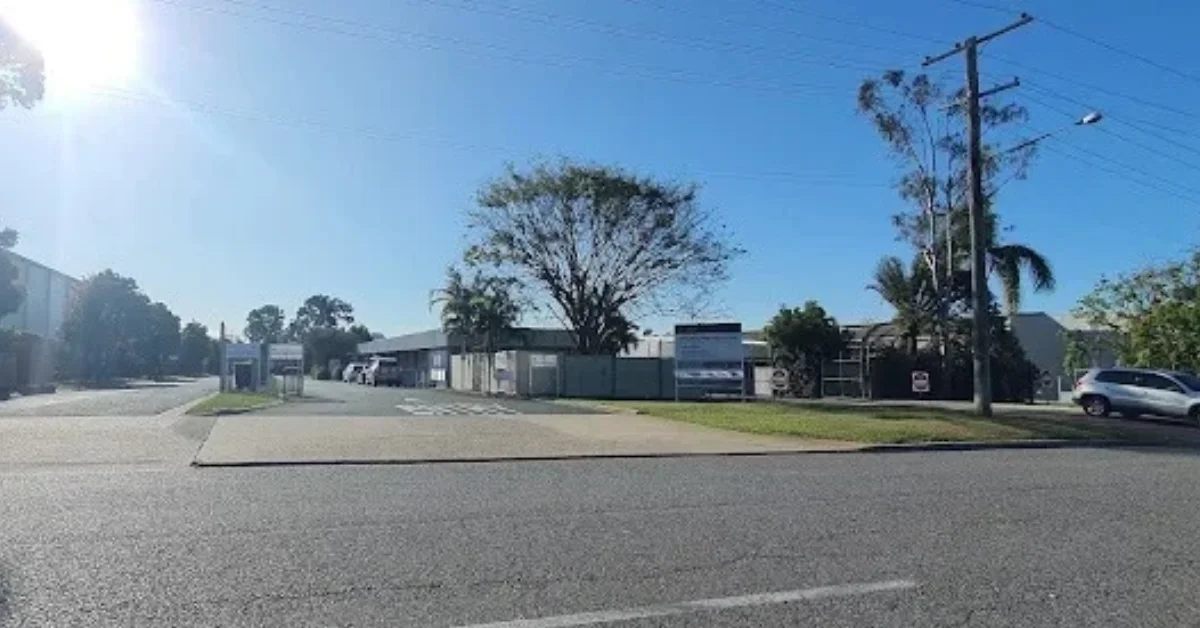
Photo credit: Google Street View
Mr McEwan said the program was developed with future graduates in mind.
“When developing our College’s Primary School Transition Program for Year 6 students we had to consider, ‘what does a graduate of 2027 and beyond look like, what future skills will they need?’,” he said.
“For us, it was a no-brainer to develop a STEAM transition program. Not only will students need STEAM knowledge and skills for their futures, but it’s also the foundation for many secondary subjects as students, especially as students near Year 11 and 12.”
The program offers multiple benefits beyond subject knowledge. Students build connections and familiarity with the college environment, develop their identity within the school community, and gain context for what lies ahead in secondary education.
“The program also allows our educators to see what knowledge students already have in STEAM, so when their first day of secondary school comes around both staff and students feel prepared,” Mr McEwan said.
The Primary School Transition Program
Photo credit: St Dympna’s Primary School/Google Maps
Five BCE primary schools are currently participating in the Primary School Transition Program:
St Flannan’s School, Zillmere
St Kevin’s School, Geebung
St Joseph’s Catholic Primary School, Bracken Ridge
St Dympna’s Parish School, Aspley
Sacred Heart Primary School, Sandgate
The program operates as a reciprocal partnership between schools, with benefits extending to primary school educators as well as students.
“The program is also an opportunity for BCE’s primary educators to shadow our educators, see our teaching practices in person, and pick up techniques that can build independence in Year 6 learners as they prepare them for secondary school,” Mr McEwan said.
“Primary educators can then take these practices in their own Year 6 classrooms helping learners build critical thinking, skills they will need in secondary school.”
Student-Led Learning Initiatives
A highlight of the program has been the involvement of Holy Spirit College students selected for the University of Queensland Science Ambassador program, who mentor primary students in STEAM subjects.
“The Science Exchange with St Dympna’s Primary School allowed our students to lead and engage Year 6 students as a part of this Transition Program,” Mr McEwan said.
Other collaborative projects have seen Year 8 and 9 students work with Sacred Heart Primary School Year 2 students to create a mural focusing on environmental sustainability and Pope Francis’ Laudato Si’ encyclical promoting care for our common home.
Senior phase students also supported St Kevin’s Primary School ‘Spotlight on STEM’ event, highlighting knowledge and skills learned from the college’s innovative curriculum while developing a passion for STEM in primary school students.
Beyond Year 6
Mr McEwan emphasised that the college’s transition support extends well beyond the traditional Year 6 to Year 7 pathway.
“We engage with our parent community from Year 3 onwards, touching base with families throughout the year and engaging students in a variety of activities that get them interested in secondary education,” he said.
The college also supports students who commence in later years, recognising that every transition is unique.
“Every transition is unique and our College will continue to work with families to ensure the transition to our College is as seamless as possible for our students,” Mr McEwan said.
Holy Spirit College will continue to expand its transition programs in 2026.