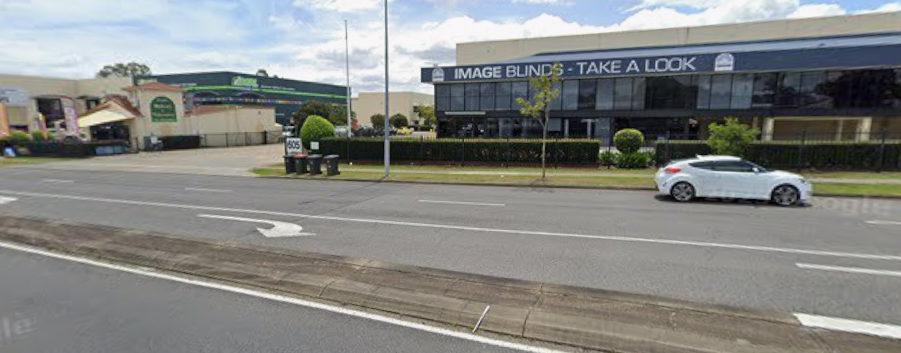


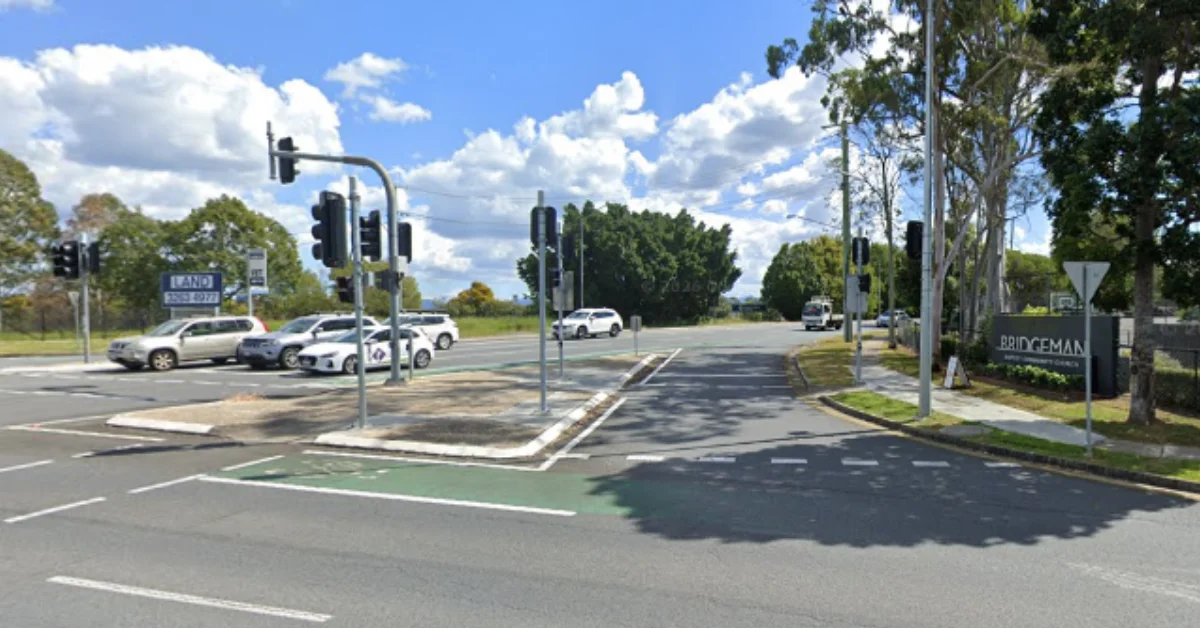
Why Is It Called Bridgeman Downs? The Story Behind the Name

Bridgeman Downs is a familiar name on Brisbane’s northside, but the story behind it leads back to an Irish migrant, a substantial landholding, and a family whose lives unfolded largely elsewhere.


Read: Two Suburbs, Two Very Different Versions of Brisbane’s Housing Boom


So, who was Bridgeman Downs named after? Historical research points to Henry St John Bridgeman, a bank manager who migrated from Ireland to Queensland in the 1860s. His documented connection to the area came through land ownership, although the family did not live on the land that would eventually carry his name.

The Landowner Behind the Name
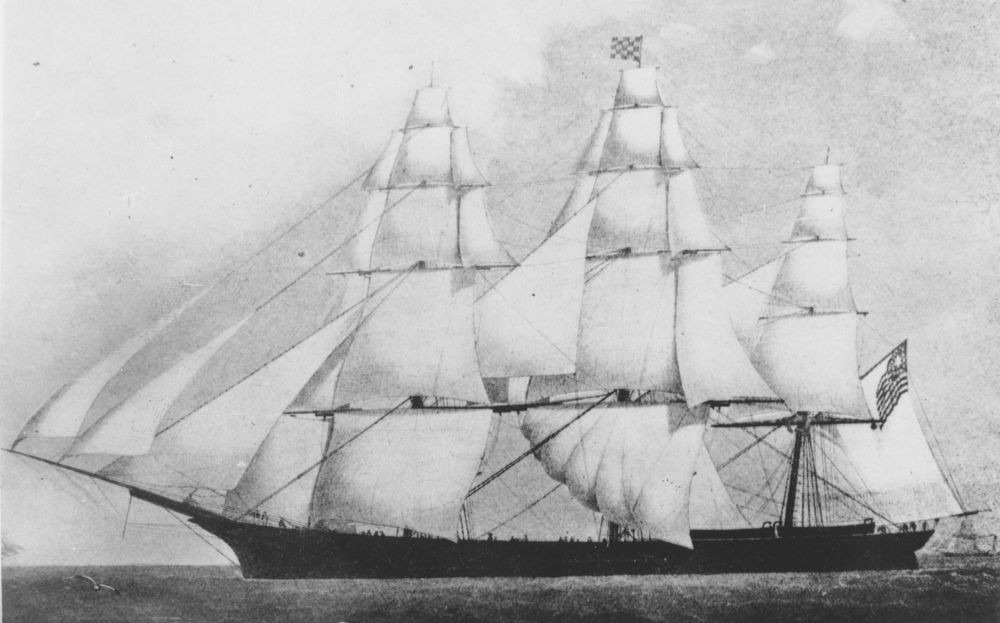
The Golden City (Photo credit: State Library of Queensland, Neg. 63670)

Research by the State Library of Queensland established that Bridgeman arrived in Brisbane aboard the Golden City on 9 March 1863, having left Queenstown, now Cobh, in Ireland, on 10 December 1862.

He arrived with his wife, Frances, their nine children and a servant, Johanna Quinn. Land Order records show the family obtained four land grants in 1863, followed by another in 1865 and a further grant in 1874.

The records provide a clear documented connection to the area now known as Bridgeman Downs. H. S. Bridgeman’s name appeared on 153 hectares of land there, while his holdings also extended across 433 hectares in the present-day Boondall-Sandgate region.

Bridgeman Downs was named after H. S. Bridgeman in 1977. The land was later acquired by the Queensland Immigration Society and used for pig raising and field crops. It remained farmland for about 80 years before being subdivided in 1957.

The district was once quite different from the residential suburb residents know today. Its agricultural history stretched across decades, long before suburban development changed the landscape.

The Family That Lived Somewhere Else
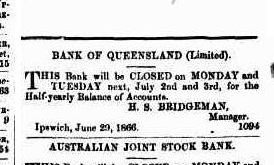
Photo credit: Bracken Ridge History

Despite the family’s connection to the land, their known homes were elsewhere. The Bridgemans first lived in Ipswich, where Henry worked for the Bank of Queensland. A seventh daughter, Isabella, was born there in 1866. The family later lived in Light Street, Fortitude Valley, which remained their home for many years.

Henry died in Light Street in 1878, while Frances died in 1901. Their children went on to pursue different lives. Lucy and Agnes became nuns and teachers with the Sisters of Mercy. Lucy, known as Sister Mary Bega, died in 1877, while Agnes, Sister Mary Theresa, lived until 1931 and taught at convents in Central Queensland.

Other members of the family remained in Brisbane. Constance and Mary lived in Light Street and ran a business. Johanna died in 1881 at the age of 27, while Isabella, the only Queensland-born child, died in 1886 aged 20. Their brother Henry died in 1891, aged 36.

Only two of the ten Bridgeman children are recorded as having married in Queensland. Richard married Johanna Liebs in 1882, while Teresa married P Banks Wilkins in 1899 and later remarried in 1905.

One part of the family’s story remains unresolved. The State Library’s research did not locate records for the youngest son, Orland, although Frances Bridgeman’s obituary in 1901 stated that she was survived by four daughters and one son.

A Name That Stayed on the Map

The history behind Bridgeman Downs is therefore less about a family settling in the suburb and more about the landholding that connected Henry St John Bridgeman to the district.

Today, Bridgeman Downs is a residential suburb, a marked change from the farmland that once occupied the area. The suburb was gazetted in 1977, preserving the Bridgeman name long after Henry’s death.


Read: From Aspley Netball Courts to Queensland Basketball History: Kath Williamson’s Story


For a name now attached to streets, homes and a whole suburb, its origins are surprisingly easy to overlook.

To trace the Bridgeman family is to look to Ireland, Ipswich, Fortitude Valley and Central Queensland. Just not, it seems, on the land that eventually became Bridgeman Downs.

Published 1-Nov-2026
Aspley Metro Expansion Study Looks Towards Carseldine as Smaller Vehicles Considered

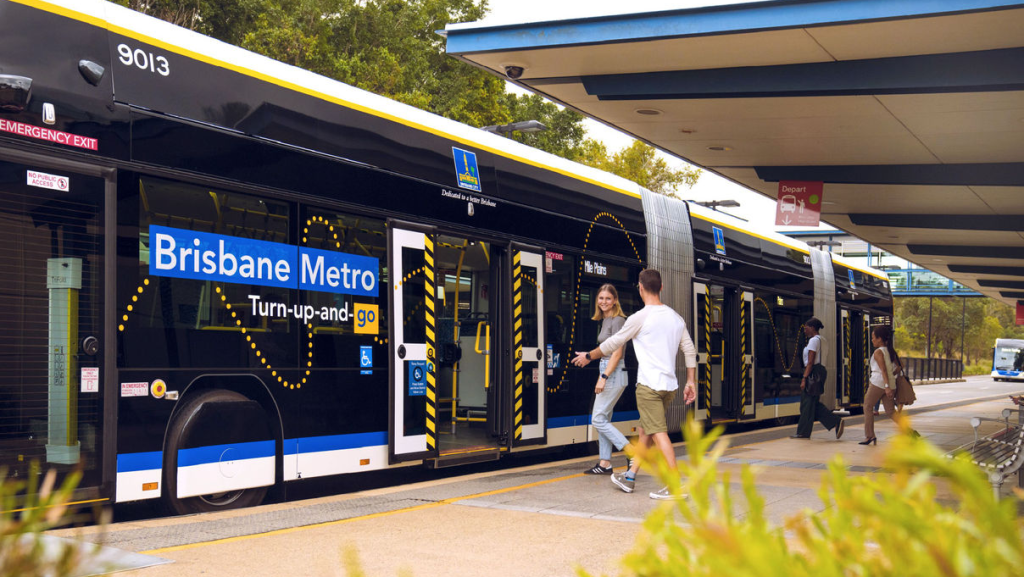
Aspley is among the northern Brisbane suburbs being considered for a future Metro expansion towards Carseldine, with smaller vehicles now under investigation as a possible way to bring frequent public transport closer to residential areas. The proposal remains at planning stage, leaving the location of future stops and connections to existing bus services undecided.


BCC’s investigation into smaller Metro-style vehicles was reported on 21 October 2026, alongside new RACQ findings showing continued congestion on major Brisbane roads. Smaller vehicles could potentially operate along existing road corridors, although no vehicle model, procurement arrangement or delivery timetable has been confirmed.

Where Would Aspley Fit Into The Northern Metro?

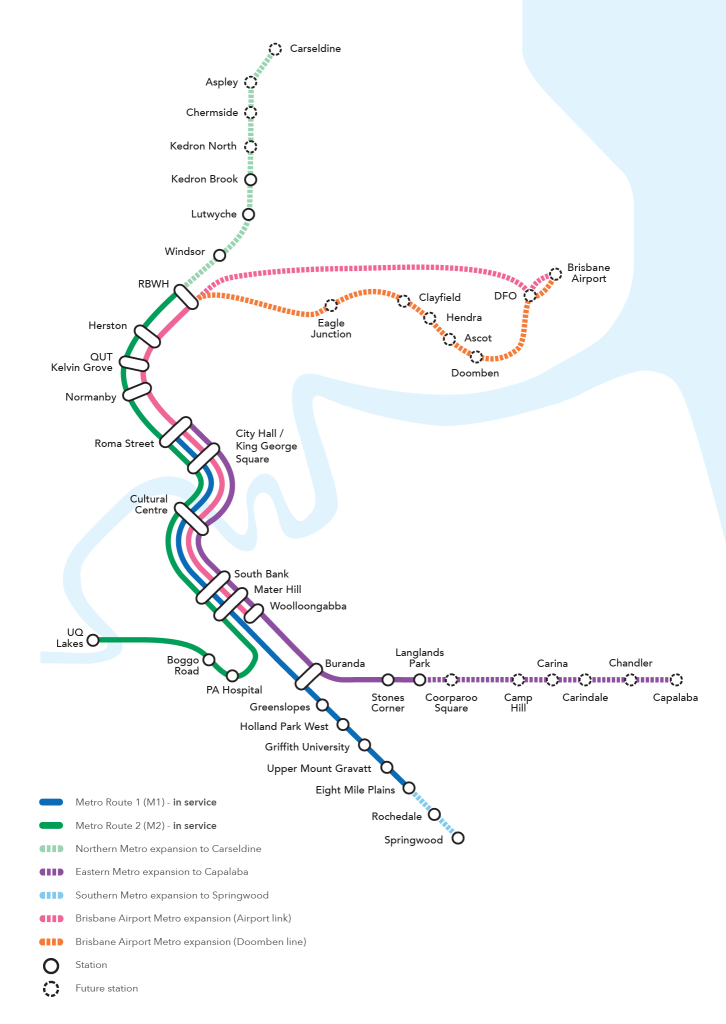
BCC’s Brisbane Metro expansion programme identifies a proposed northern corridor extending from the CBD through Lutwyche, Kedron, Chermside and Aspley to Carseldine. The route remains subject to a business case being prepared by Jacobs Group (Australia), which will examine potential alignments, depot locations, network improvements, infrastructure requirements and delivery stages.

The study raises practical questions about where passengers would board future services and how connections could work between Gympie Road, existing neighbourhood bus routes and the northern rail network. BCC has not confirmed a Metro station in Aspley or a final terminus location at Carseldine. Its current programme places completion of the expansion business case in late 2027, meaning the northern corridor is not yet an approved construction project.

Aspley Metro Expansion
Photo Credit: BCC

Two Bus Routes, Different Journeys Through Aspley

Aspley’s existing bus network provides a useful starting point for understanding how future Metro services might connect with the community. Translink’s route 340 links Carseldine station with Woolloongabba through central Brisbane. The service includes stops along Gympie Road at Aspley and Aspley South, as well as connections through Carseldine West.

Meanwhile, route 345 departs from Aspley Hypermarket interchange before travelling along Maundrell Terrace through Chermside West and Stafford towards the city. The distinction matters for residents living away from Gympie Road. A future Metro service along the main corridor would not automatically provide the same access as buses travelling through western Aspley, particularly for passengers relying on neighbourhood stops. Any future interchange arrangements would need to be considered alongside the existing network. BCC has not announced changes to routes 340 or 345 as part of the Metro expansion study.

Gympie Road Remains A Challenge For Northern Commuters

Traffic congestion is another consideration for the proposed northern Metro corridor, particularly where suburban bus services share roads with general traffic. RACQ’s annual travel-speed findings recorded an average afternoon peak speed of 25.2 km/h along Gympie Road between Kedron and Beams Road at Carseldine during 2025.

Congestion added almost nine minutes to journeys across the measured section, according to RACQ. The figure covers the wider northern corridor rather than Aspley alone. The Queensland Department of Transport and Main Roads is separately examining improvements through its Gympie Road Planning Program, covering the corridor between Herston and Carseldine. Whether smaller Metro vehicles could provide faster or more reliable journeys through Aspley would depend on the eventual route and road arrangements. No dedicated Metro priority measures have been confirmed for the suburb.

Brisbane Metro expansion
Photo Credit: BCC

Roadworks Near Carseldine Are A Separate Piece Of The Puzzle

Transport improvements are already underway near Carseldine, although they should not be confused with construction of a northern Metro extension. BCC’s Beams Road upgrade has completed Stage 1A, while Stage 1B between Carselgrove Avenue and Handford Road remains in progress. The works include road widening, improved walking and cycling connections, and upgrades to two bus stops.

Nearby, the State is replacing the Beams Road rail level crossing with an overpass. Transport and Main Roads lists construction as underway, with completion expected in late 2026, subject to weather and site conditions. A separate upgrade to the Gympie Arterial Road and Beams Road intersection is also undergoing detailed design. These projects address existing road and rail connections near Carseldine. None confirms a future Metro station, an interchange location or the alignment of services through Aspley.

Residents Can Have A Say Before Routes Are Settled

With the northern Metro corridor still being assessed, BCC is seeking community feedback on existing travel experiences and possible improvements to Brisbane’s bus network. The Metro expansion consultation is scheduled from October to December 2026 and covers the proposed northern, eastern, southern and airport corridors.


The consultation provides an opportunity to raise practical concerns about access to bus stops, connections between neighbourhood services and Gympie Road, and travel towards Carseldine station. The business case will determine which expansion opportunities may progress and what infrastructure they would require. Until those decisions are made, smaller Metro vehicles and a northern extension through Aspley remain proposals rather than confirmed new services.

Published 26-October-2026

Aspley Bids Goodbye to The Crepe Cafe as It Heads to Carseldine

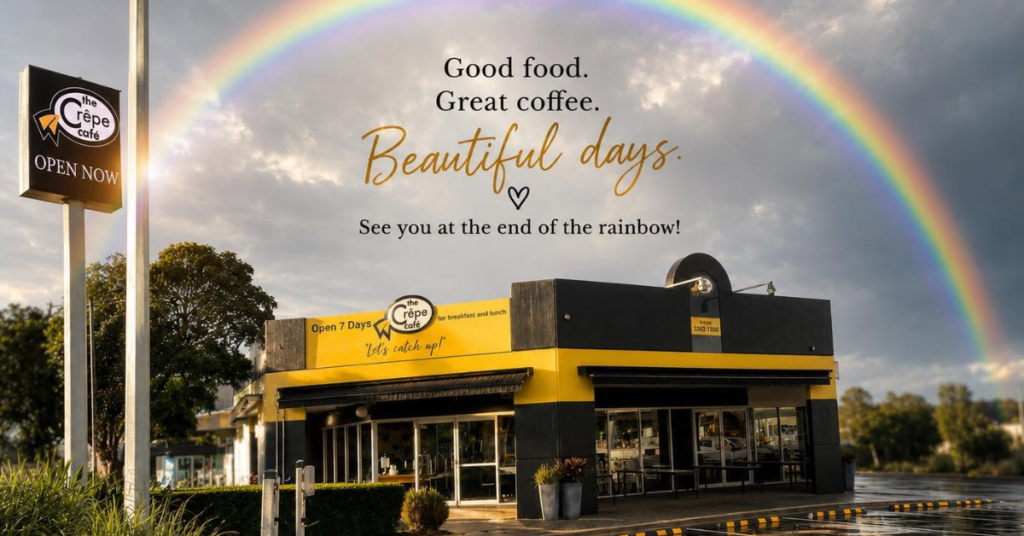
A Zillmere Road cafe that Aspley diners can visit every day is packing up, with The Crepe Cafe heading to a new home in Carseldine.


The cafe announced the relocation in a message to customers, saying the team can’t wait to welcome people at the new Carseldine cafe. The Aspley cafe will stop trading after Sunday, 15 November 2026.

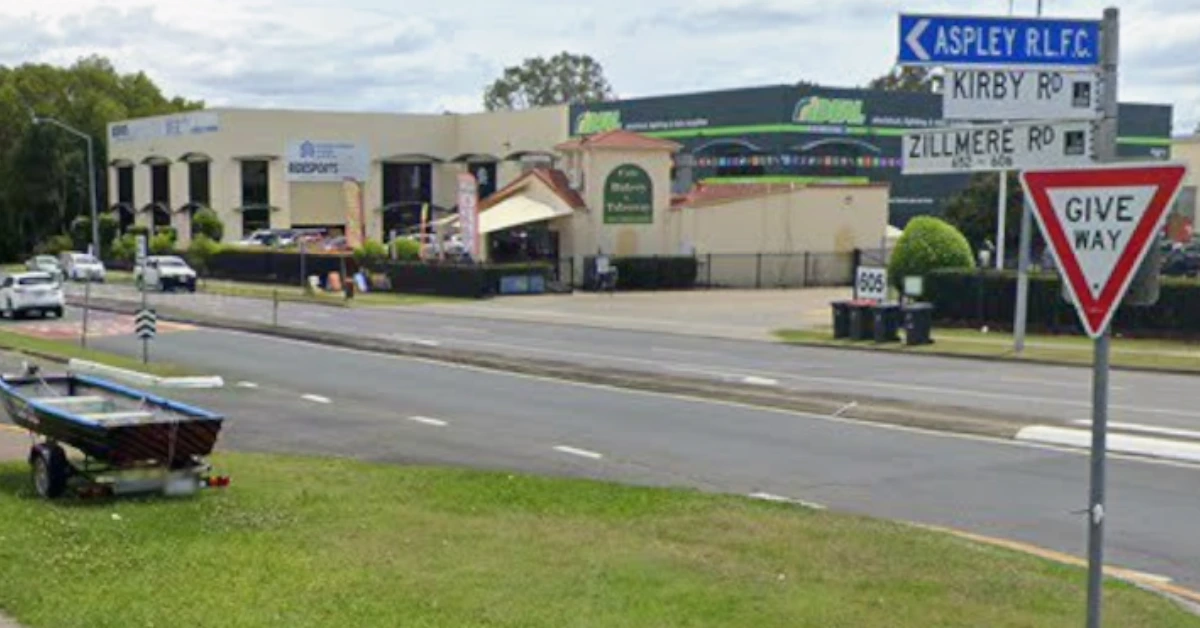
The cafe sits inside Aspley Homemaker City at 815 Zillmere Road. Online listings show it trading daily from 7:30 a.m. to 4 p.m., which covers breakfast, brunch and an early lunch.

Crêpes are the headline act, in sweet and savoury versions. Menu details for the cafe list the Parisian, the Mexican and a classic ham and cheese, alongside Eggs Benedict, omelettes, waffles and the Ploughman’s Hearty Brekky. Younger diners get their own menu. Staff bring orders to the table, high chairs are on hand for families, and takeaway or delivery through the major food apps is available for anyone who prefers to eat at home.

The Crepe Cafe name has Queensland roots. French-Australian founders Jean-Pierre Corgnet and Norbert Baillette created the concept on the Gold Coast in 2001, and the first restaurant opened in Surfers Paradise. A 2013 industry report names BFC Retail Group as the company behind the brand.

Its calling card has always been the open kitchen. Customers see the batter go on the griddle, the crêpe turn over and the filling go in, all within a few metres of their table. The brand later moved into the Middle East in 2007, and its yellow and black colours are now recognised well beyond Australia. In Aspley, that same format has been running out of a Brisbane homemaker centre.


So what should Aspley’s crêpe fans do now? Anyone planning a last visit has until the closing Sunday. Carseldine is a neighbouring suburb, so the new cafe won’t be far away. For the address, opening date and trading hours, the cafe’s own channels are the place to watch.

Published Date 22-October-2026

Raising a Family Between Two Worlds: Meet the “King” of the Mongols

Jeff King’s sons could spend one day doing Australian schoolwork in their Ulaanbaatar apartment and another riding horses and milking goats with their Mongolian relatives. To them, neither life was the unusual one.

Their father is Australian; their mother grew up in a Mongolian herding family. The boys were raised between both worlds, speaking English and Mongolian and knowing Australia and Mongolia as home.

One part of their upbringing, though, remained deliberately Australian: their schooling.


An Australian classroom in Mongolia

Jeff and his wife chose an Australian homeschooling program rather than putting the boys into a Mongolian school. When they were preparing to return to Mongolia, they weren’t even certain where they would be living.

There was a possibility the family might stay in remote country with nomadic relatives, where they couldn’t count on having internet access. So instead of relying on online lessons, they went with paper.

Books and materials travelled with them. Tests and completed work went back to Australia, keeping the boys in the Australian education system even while they were living thousands of kilometres away.

“We were still in the Australian system,” Jeff said.

The family eventually settled in Ulaanbaatar rather than living remotely with the herders, but they kept the same arrangement. Jeff remembers it working “really, really well” academically.

The harder part wasn’t the schoolwork.

It was everything that normally happens around it.

After finishing lessons, the boys didn’t have classmates spilling out of school with them. That became particularly noticeable during the Mongolian winter, when temperatures around -30°C could keep them indoors for long stretches.

Jeff tried to break that up. Every couple of weeks, when they could, he would get the boys out horse riding or skiing.

Summer opened things up again. They travelled, spent time outside the city and visited their mother’s relatives, where the boys slipped into a very different rhythm.

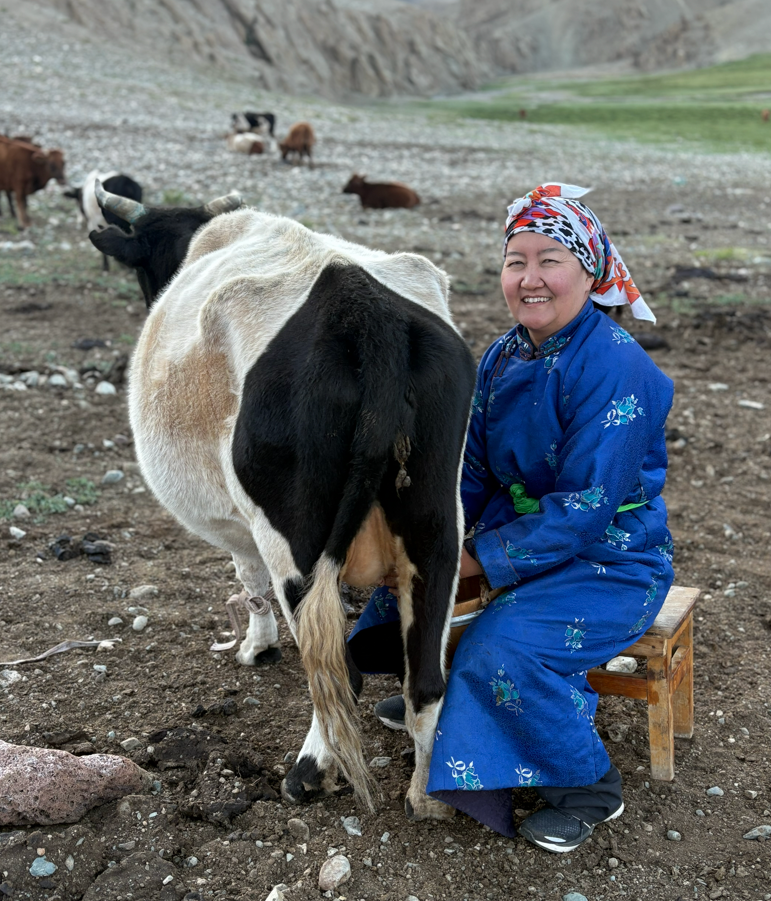
Milking the cow. Photo Credit: Supplied

Their mother was completely at home there. She had grown up in a herding family herself, and relatives continued to raise animals and move with the seasons. For her sons, these weren’t encounters with some distant version of Mongolian culture. The people in the gers were Grandma, aunties, uncles and cousins.

Jeff’s son with a herdsman. Photo Credit: Supplied

The boys could ride horses and motorbikes, herd animals, and help milk goats. They ate the dried dairy foods their father had once needed time to acquire a taste for.

English remained their first language, but their understanding of Mongolian became extensive. Jeff said his older son was the more confident speaker, although both could understand the language extremely well.

His wife brought something else to their children’s upbringing that Jeff could never have learnt from a book. She had been about nine when Mongolia’s communist era ended around 1990, and had grown up with the knowledge and routines of herding life before raising children in a very different Mongolia.

By the time her sons came along, smartphones, huge supermarkets and restaurants were part of everyday life in Ulaanbaatar. So were horses, hand-milking animals and visits to relatives who still moved their gers with the seasons.

The boys didn’t need anyone to reconcile those things for them.

They had grown up with both.


Coming back to Australia

Over the years, the family developed a loose rhythm: three or four years in Mongolia, then roughly a year in Australia.

COVID disrupted it. They found themselves staying in Tasmania for around two-and-a-half to three years before eventually returning to Mongolia, where their most recent stint lasted about four years.

They arrived back in Australia shortly before Christmas.

This time the boys are older, and that changes the equation. The Australian schooling they had carried with them through childhood has become increasingly important as they move into their teenage years.

What hasn’t changed is the family waiting in Mongolia, or the language and experiences they brought back with them.

For Jeff, Mongolia was somewhere he had to learn. He arrived as an Australian adult, picked up the language, adjusted to the food and gradually found his place in his wife’s family.

His sons started from somewhere very different.

The apartment and the ger, Brisbane and Ulaanbaatar, English and Mongolian, Australian schoolbooks and summers with their mother’s relatives were never competing versions of childhood. They were the same childhood.

Perhaps that is why the question of where they belong has no particularly tidy answer.

Australia is home. So is Mongolia.

Catch Jeff at the Brisbane Men’s Breakfast on October 17.

Free Community Event
Brisbane Men’s Breakfast
Jeff King — Saturday, 17 October

The free community breakfast brings men together at Dale Farm in Fitzgibbon every four to eight weeks, with a guest speaker chosen for the uniqueness of their story.

Where: Dale Farm, 42A Desert Willow Way, Fitzgibbon
Start: 6.30am–7am
Cost: Free
Who: Lads of all ages welcome
Also: Coffee van on site

Updated 9-October-2026

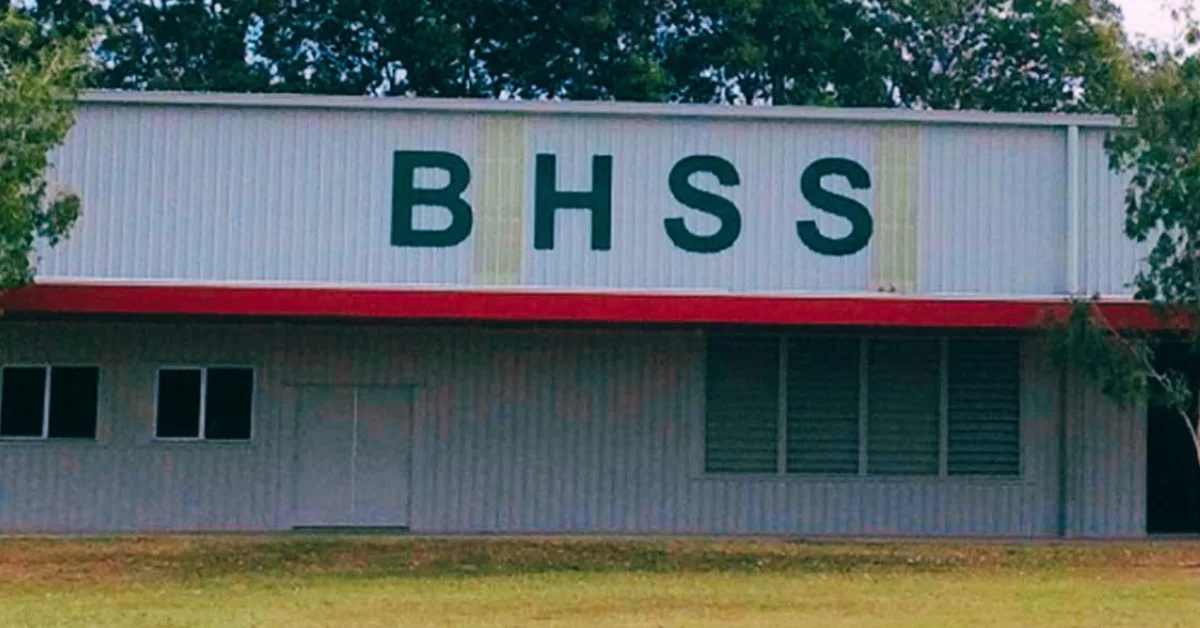
Bald Hills State School Looks Back on 160 Years of History

Bald Hills State School is celebrating 160 years of education, marking a milestone that reaches back to the early days of state schooling in Queensland.


Read: Bald Hills School Puts People First in New Junior School Blessing


Established in 1866, the school began admitting pupils from Bald Hills and surrounding districts at a time when families across the area relied on local education facilities. Its anniversary will be marked with a community festival on Saturday, October 10, featuring entertainment, historical displays, and fundraising activities.

The event will also support plans to restore the school’s historic Forestry, creating an outdoor learning and nature play space for students.

Festival to celebrate 160 years of school history

Photo credit: BCC

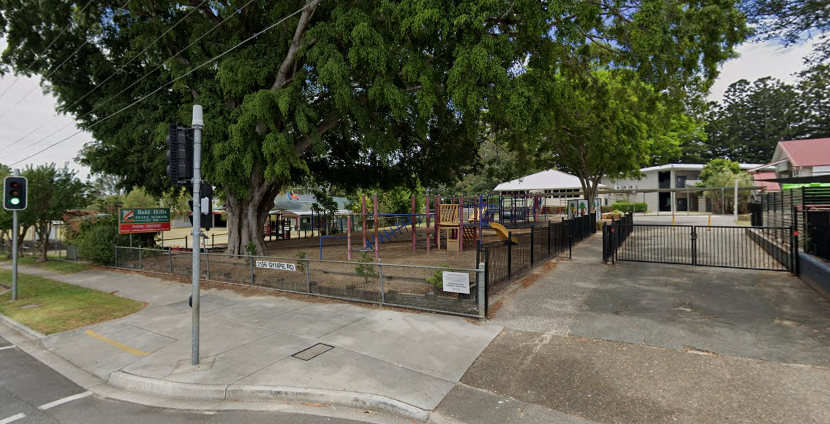
The anniversary festival will run from 11am to 7pm on October 10, 2026, at Bald Hills State School, 2156 Gympie Road, Bald Hills.

The program includes amusement rides, sideshow alley, market stalls, food trucks and live entertainment. Children can take part in circus activities, games and a scavenger hunt, while free face painting and roving entertainers will add to the day’s activities.

Historical displays will trace the school’s story back to 1866, alongside an art exhibition and silent auction. Visitors can also browse the plant stall, pick up baked goods and enter a community raffle featuring prizes valued at more than $12,000. Fireworks are scheduled to bring the festival to a close.

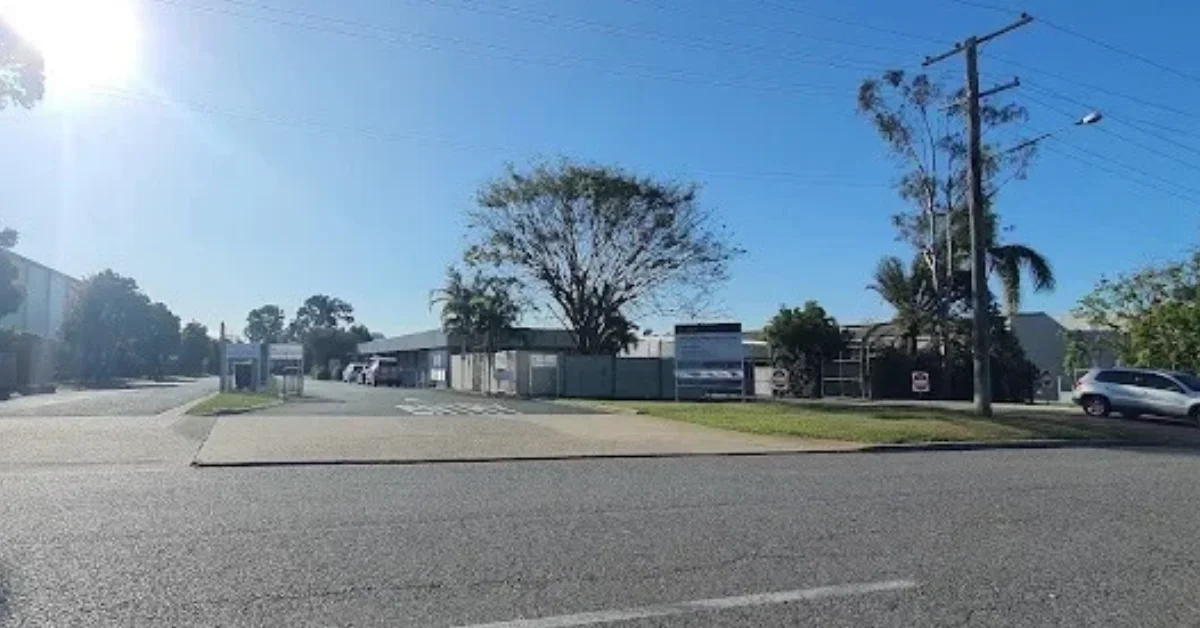
Photo credit: Google Street View

Entry is free, with unlimited ride passes available for $35 when purchased in advance or $40 on the day. Individual ride tickets will cost $8 each or two for $15.

Funds raised will go towards restoring the school’s historic Forestry into an outdoor learning and nature play space. The planned work aims to provide students with an area to learn, explore and play outdoors while retaining a feature associated with the school’s history. The Forestry is a special part of Bald Hills’ identity. The restoration project is intended to give the space a renewed purpose for students while maintaining its place within the school grounds.

In preparation for the anniversary, old photographs, stories and personal memories have also been collected to create a snapshot of the school’s history and the changes it has experienced over 160 years.

From its first pupils in 1866 to today

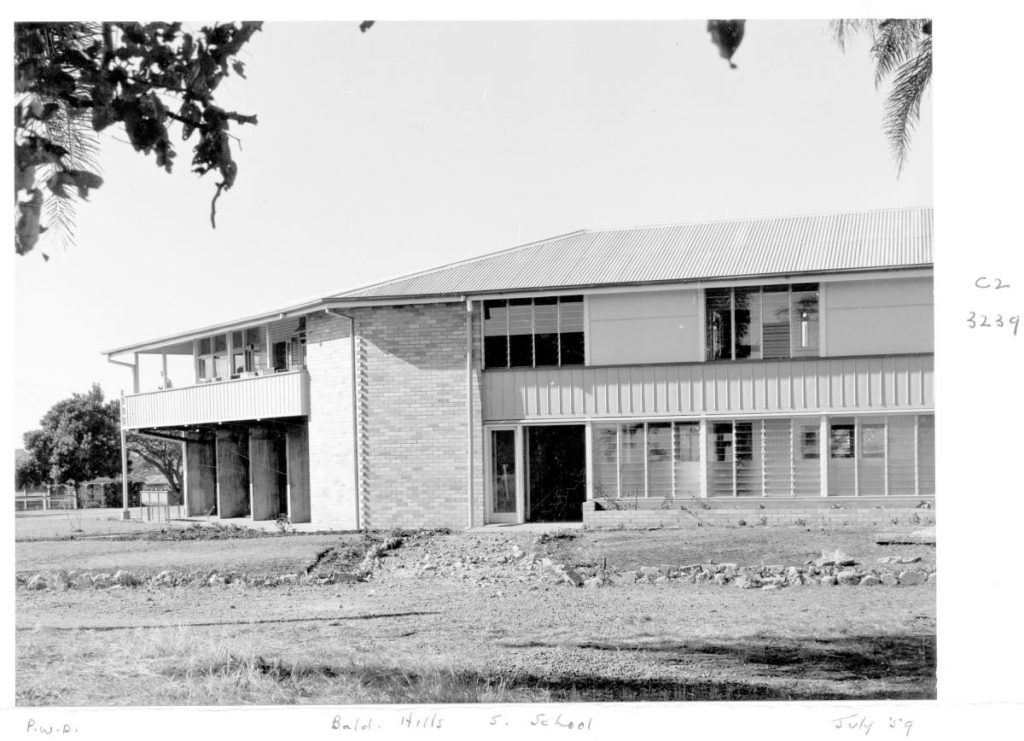
Queensland State Archives, Item Representation ID DR6599

Bald Hills State School began admitting students on April 30, 1866. A new schoolhouse officially opened on September 24, 1866, with pupils drawn from Bald Hills, South and North Pine, Cabbage Creek and Sandgate.

Historical records identify John Young Walker as the school’s first head teacher and list an aggregate attendance of 44 pupils in 1866. At the time, the facilities consisted of a main school building and a residence.

Around 1913, a new school was built and the original wooden building was relocated and adapted for use as a School of Arts. The old structure was eventually demolished.

Further changes came in the following decades. The school closed for remodelling in 1933 and reopened in 1934, with additional extensions completed in 1936. A pre-school unit on land adjacent to the primary school has operated since 1979.

Queensland State Archives described Bald Hills State School as the eighth-oldest operating school in Queensland. Its long history reflects the school’s continued presence in the district since the 19th century.


Read: Bald Hills Family Refuses to Let Century-Old Home Be Knocked Down


The anniversary festival will bring that history into focus through historical displays and collected memories, while the Forestry project looks towards the school’s future. The planned restoration will support the creation of an outdoor learning and nature play area for students, linking the anniversary celebrations with a practical project for the school community.

Featured image credit: Bald Hills State School

Published 9-October-2026

Carseldine’s 152 Social and Affordable Homes Reach Full Structural Height

A seven-storey housing development that will eventually accommodate hundreds of residents at Carseldine Village has reached full structural height, almost two years after plans for the 152-home project were approved.


Anyone passing through Carseldine Village recently will have seen the development becoming increasingly prominent above Plaza Place.

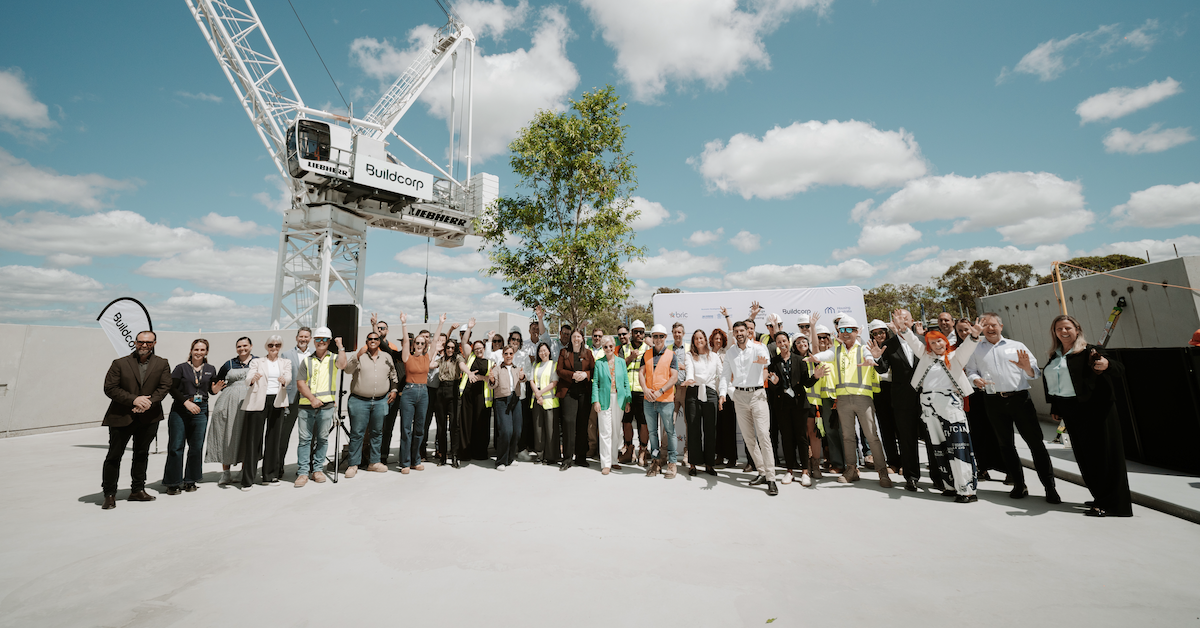
The building at 41–49 Plaza Place has now officially “topped out”, meaning construction of its main structural framework is complete. Housing Australia announced the milestone on 1 October, with the project moving into its next phase ahead of expected completion in 2027.

Photo Credit: Supplied

For Carseldine, it is a much more visible stage in a project that has been taking shape since plans emerged in 2024. The development will contain 152 apartments — 62 social homes and another 90 affordable homes — within a precinct steadily shifting from construction site to established residential and mixed-use neighbourhood.

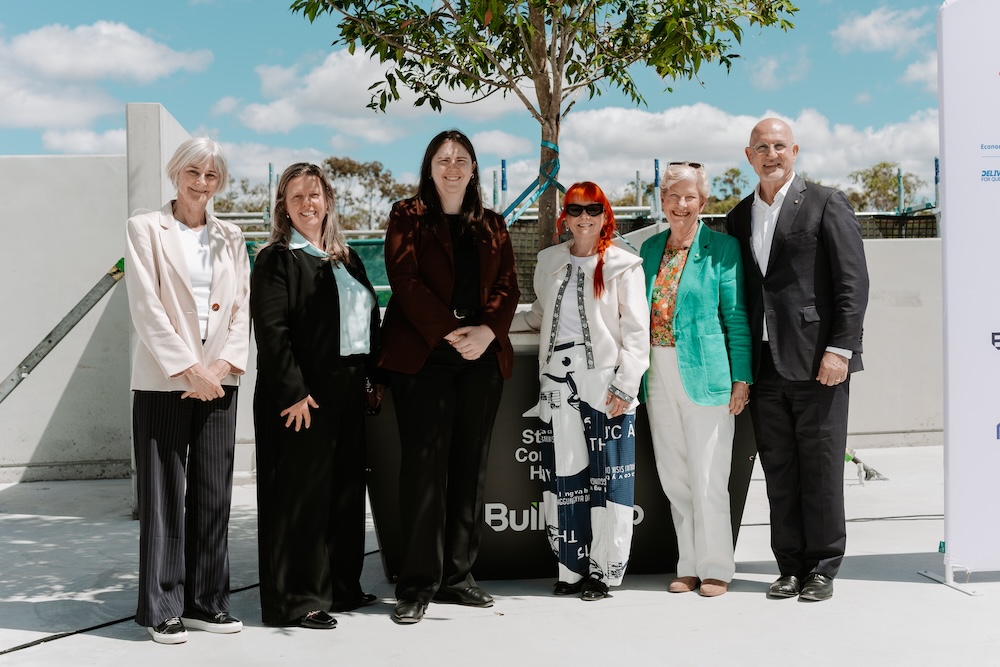
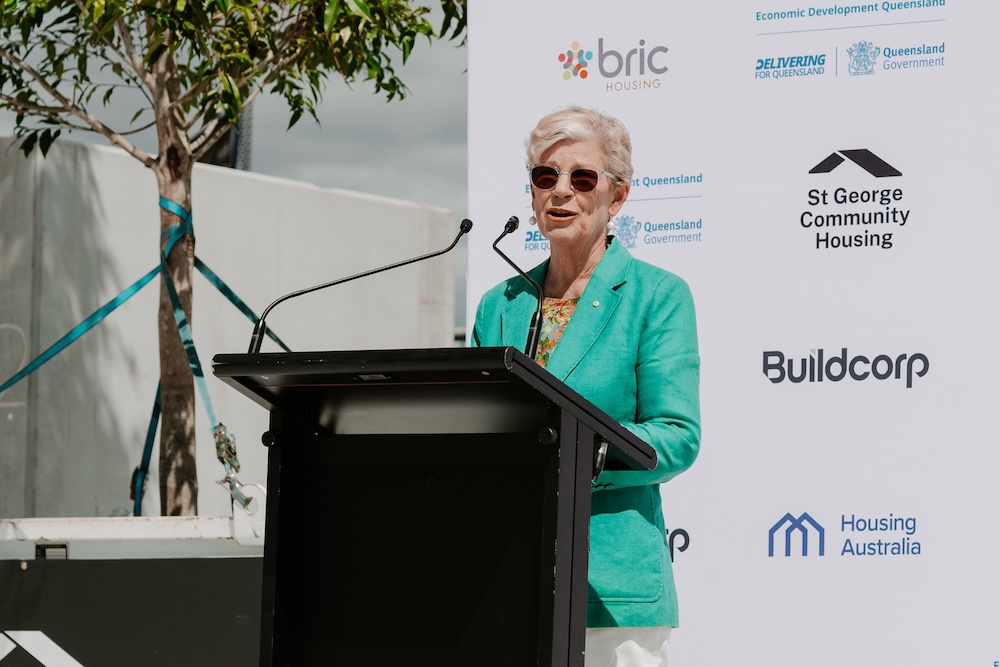
Housing Australia Chair Ann Sherry said seeing Carseldine Village taking shape provided tangible evidence of projects moving through the delivery pipeline.

“What we’re seeing here today demonstrates the strength of collaboration between governments, community housing providers, developers and investors,” Ms Sherry said.

Photo Credit: Supplied

Nearly Two Years Since the Plans Were Approved

Economic Development Queensland approved the development in November 2024, with construction getting underway in June 2025.

St George Community Housing is leading the project in partnership with EDQ and Bric Housing, while Buildcorp is responsible for construction. It is SGCH’s first project in Queensland and, according to information provided by the project team, will become the largest community housing project in the state.

Rather than 152 identical apartments, the building has been designed for different household sizes. Current project information lists 56 one-bedroom homes, 90 two-bedroom homes and six with three bedrooms, together with 102 car spaces.

While most will have one or two bedrooms, the three-bedroom apartments provide options for some larger households. SGCH currently expects the development to be completed in mid-2027.

Who Will Be Able to Live There?

As construction advances, the distinction between the project’s social and affordable housing is becoming more relevant for people who may eventually want to live there.

The 62 social homes and 90 affordable homes won’t all be allocated in the same way. Social housing is intended for eligible households within Queensland’s social housing system, while affordable rental housing serves eligible low-to-moderate-income households under separate requirements.

EDQ has previously advised prospective residents that Bric Housing intends to seek expressions of interest for the affordable homes about nine months before completion. People interested in social housing need to be registered through Queensland’s Housing Register of Need.

That means the apartments won’t simply appear among conventional Carseldine rentals when the building is finished.

Once construction is finished, Bric Housing will take over tenancy management for the property.

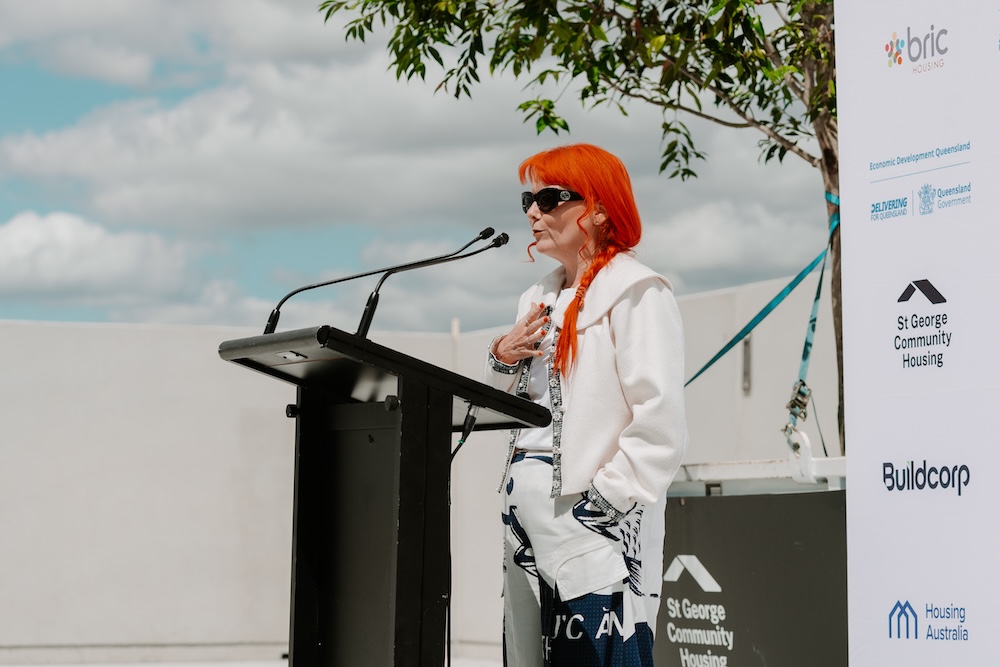
Bric Housing Chief Executive Officer Jane West said the partnership was intended to create more than the homes themselves.

“We’re creating a place where people can feel safe, connected and supported for the long term,” Ms West said.

“We look forward to welcoming residents and helping foster a community where people can build relationships, access support when needed and truly feel at home.”

Lower Household Costs Are Part of the Design

Sustainability measures have been incorporated with an eye to the ongoing costs of living in the apartments, rather than simply the building’s environmental credentials.

Housing Australia says the project is targeting a 5-Star Green Star rating and exceeds National Construction Code requirements for energy efficiency and liveability.

Rooftop solar panels with battery storage, double glazing and energy-efficient fixtures are among the features being installed, together with measures intended to improve thermal and acoustic performance. Housing Australia says these are designed to help reduce energy costs and improve comfort for residents.

SGCH Chief Executive Officer Debi Marriott-Lavery said the approach extended to how residents would use the surrounding spaces.

Photo Credit: Supplied

“Carseldine Village has been designed as a place where people can feel part of a community,” Ms Marriott-Lavery said.

“Alongside safe, high-quality homes, residents will have access to shared spaces, open areas, local shops and services and amenities that create opportunities for connection, belonging and everyday interaction.”

Local Stories to Become Part of the Building

One element of the project will have a distinctly local connection.

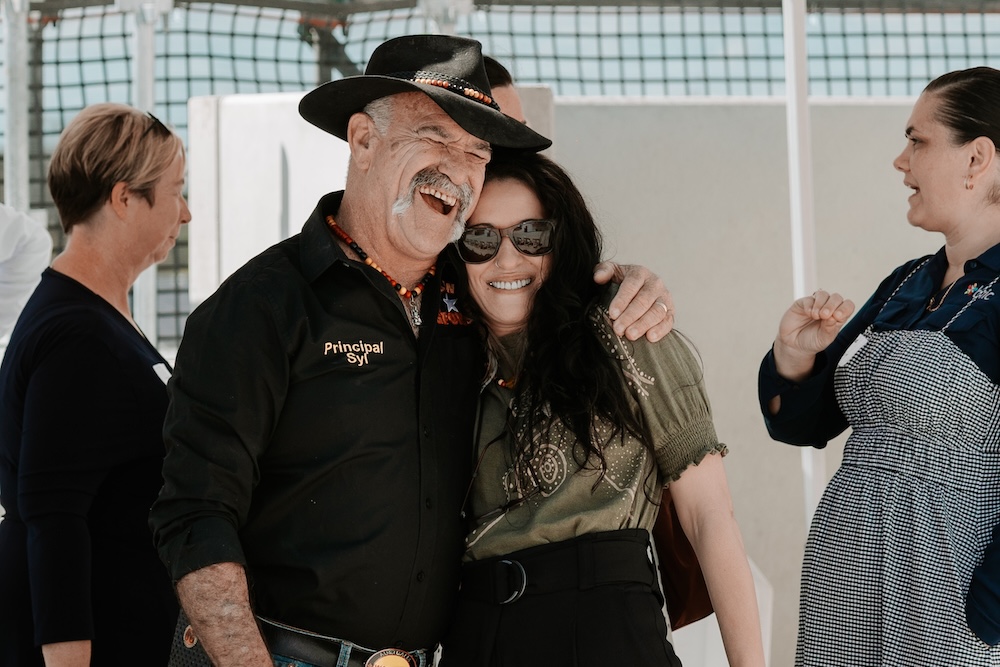
Brisbane artist Lisa Anne Caruana has been appointed to create public art to be incorporated into the building. Ms Caruana is a First Nations artist with local connections to the area and has been working with Elders Uncle Syl and Uncle Alex to gain permission to share traditional stories through the work.

Photo Credit: Supplied

That gives the finished development a cultural element tied specifically to its location rather than relying on a generic public-art treatment.

Details of the final work have not yet been released.

Carseldine Village Is Filling In

The scale of the change becomes clearer when the 152 apartments are considered as part of Carseldine Village rather than as a standalone development.

The 15-hectare community occupies the former Queensland University of Technology campus site and is planned to contain more than 600 homes alongside retail, commercial and community facilities.

Some of that neighbourhood is already established. Terrace housing has been delivered through earlier stages, The Green provides recreation space, while development around the Village Heart is adding apartments, shops and services.

The social and affordable housing project at 41–49 Plaza Place is separate from the privately developed apartments within the Village Heart, although both form part of the same emerging neighbourhood.

For Carseldine residents who remember the site in its university days, the seven-storey structure is another visible marker of just how substantially this part of the suburb has changed.


What Happens Between Now and 2027

Reaching the top of the building doesn’t mean construction is finished. With the main structural work complete, attention shifts to enclosing and fitting out the development, installing building services and completing the apartments, common areas and external works.

For people watching the structure rise above Carseldine Village, however, the October milestone gives a much clearer picture of the project’s eventual scale.

It also brings the development closer to the point where attention will shift from construction to residents. With completion currently expected in mid-2027, application and eligibility information will become increasingly important as Carseldine’s 152 social and affordable homes move towards opening.

Published 7-Oct-2026

Carseldine Driving Tests Shift to Zillmere as Beams Road Works Bite

Practical driving tests at the Carseldine Transport and Main Roads centre have been temporarily moved to Zillmere as construction work affects vehicle access around the Carseldine site.


Read: Carseldine Commuters May Face Longer Wait for Gympie Road Tunnel Completion


Transport and Main Roads has confirmed practical driving tests will be run from the Zillmere Select Service Centre at 69 Pineapple Street until further notice. The department said the change is intended to ensure applicants continue to have a safe and effective driving test route while road conditions around the Carseldine centre change.

Construction Changes Access Around Carseldine

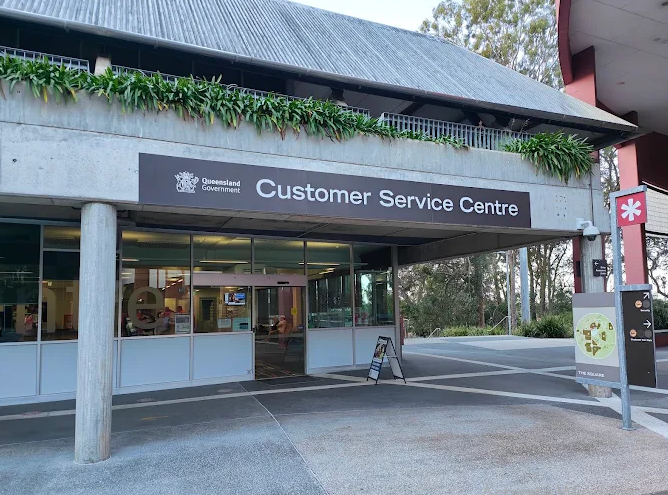
Photo credit: Google Maps/Marty Supreme

Vehicle access to the Carseldine Customer Service Centre at 532 Beams Road may be affected by construction work next to the entrance on Beams Road and Meander Street. TMR is advising visitors to allow extra time when travelling to the centre.

The relocation comes as construction work affects access around the Carseldine centre. The broader Beams Road upgrade covers sections of the road through Carseldine, Fitzgibbon, Taigum, and Zillmere, with Stage 1B covering the section between Carselgrove Avenue and Handford Road.

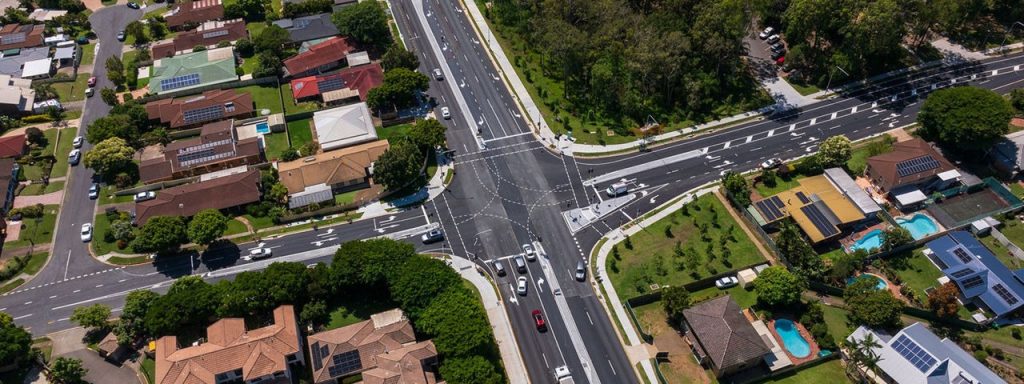
Photo credit: BCC

Brisbane City said more than 20,000 vehicles travel along Beams Road each day. Stage 1B includes widening the roadway to provide a consistent median-separated four-lane carriageway, along with upgrades to pedestrian, cycling and public transport infrastructure.

The project includes extending culverts across Cabbage Tree Creek, constructing a new shared pedestrian underpass, upgrading sections of the shared path and improving two bus stops. Traffic is being managed during the works, with motorists advised to expect temporary disruptions.

No Return Date Yet for Carseldine Tests

The practical driving test arrangement is separate from the published construction timetable. TMR currently states that tests will operate from Zillmere until further notice, and no date has been published for their return to Carseldine.

The Carseldine centre remains available for other services, including driver licensing, boat licensing, photo identification cards, vehicle and vessel registration and industry licensing services. Practical light-vehicle tests, excluding motorcycles, are temporarily being conducted from Zillmere.


Read: Carseldine Intersection Upgrade Moves Forward as Contractor Search Begins


The Zillmere Select Service Centre also conducts practical tests for light rigid, medium rigid and heavy vehicle licences, as well as light-vehicle tests excluding motorcycles. Learners booking or preparing for a practical driving test should check the current testing location before travelling, as tests are temporarily being run from Zillmere.

The arrangement will remain in place until TMR provides further advice on when practical driving tests can return to Carseldine.

Featured image credit: Google Maps/Lobo Dozal

Published 5-October-2026

Two Mongolias: Meet the “King” of the Mongols

For more than 20 years, Brisbane man Jeff King has lived between two Mongolias. One has high-rise apartments, supermarkets and traffic so bad he often walks. In the other, his wife’s family can pack up their home and move with their animals — until the terrain gets too rough and the camels take over.

Jeff first went to Mongolia in 2003 and later married into a traditional herding family. His life since has taken him regularly between the capital, Ulaanbaatar, and the vast countryside where his wife’s relatives still raise sheep, goats, cattle and horses.

The family lived about three kilometres from central Ulaanbaatar, and Jeff had little enthusiasm for driving there. “We bought a car, but we didn’t buy it to drive in the city,” he said. “We bought it to get out.”


When the family moves, the house goes too

His wife’s relatives don’t simply wander across the countryside. Families have a migratory pattern for different seasons, typically making four major moves through the year, although grazing conditions can push that to eight or even 10.

The ger goes with them.

For a family accustomed to the job, Jeff said, the circular felt-covered home can be dismantled in about an hour. Trucks have taken over much of the heavy carrying, but only for as long as the terrain allows. In mountain country where a vehicle can go no further, camels can carry the ger and the family’s possessions for the rest of the journey.

Traditionally, Jeff said, a family could move its home and belongings with about five camels.

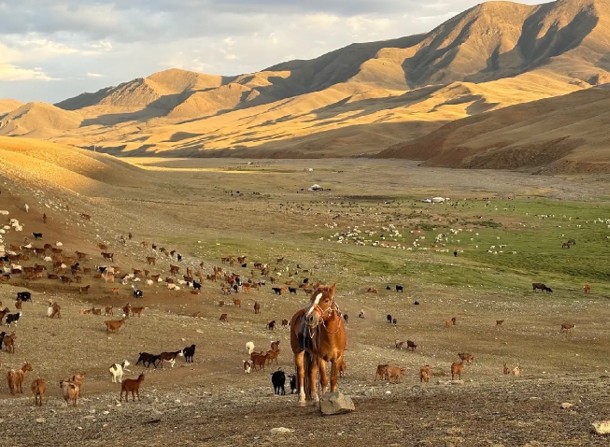
The scale of the livestock took some getting used to as well. His sister-in-law’s family can have more than 1,000 animals, roaming country without the paddocks and boundary fences familiar to Australians.

Photo Credit: Supplied

When different families’ sheep mingle, sorting them out might look impossible to an outsider. Jeff has watched herders recognise individual animals, know which lamb belongs to which ewe and separate mixed flocks. Their knowledge can stretch across generations of animals.

Even asking how many horses somebody owns comes with a rule Jeff learnt not to break. Asking directly is considered bad luck.

There is, however, a workaround: ask how many stallions the herder has. With roughly 20 mares to a stallion, Jeff said, the answer gives you a fair idea without asking the question you’re not supposed to ask.

Horses remain part of working life, although motorbikes now do plenty of the work as well. Trucks carry families between camps and smartphones have changed how people communicate across enormous distances.

Jeff has seen how quickly news can travel through communities that look isolated on a map. Phones and internet make that easier now, but even before them, information moved. Somebody would hear something, get on a motorbike and carry the news onwards.

Winter changes the equation again.

Temperatures around -30°C are unremarkable enough in Jeff’s experience, while the mercury can fall into the -40s. Families spread farther apart as grazing becomes scarcer, and journeys that are straightforward in summer become much more serious.

Hospitality matters in those conditions. A traveller arriving at an isolated ger can expect tea, food and shelter — things that take on rather more importance when it is 40 degrees below freezing outside.

Jeff generally saved his longer journeys for the warmer months. For a time, some of them were made with a vehicle full of books.

A library that came to the readers

Mongolia had high literacy from the Soviet era, Jeff said, but access to books could be difficult for families living far from population centres.

So the library travelled.

Jeff and his colleagues drove from family to family, leaving books and returning roughly a month later to exchange them. Among everything they carried, one title became the unexpected favourite: Jules Verne’s Around the World in Eighty Days.

Jeff took a camera with him too. He would photograph families, have the pictures printed and bring them back on subsequent visits, giving him another reason to return to the same people.

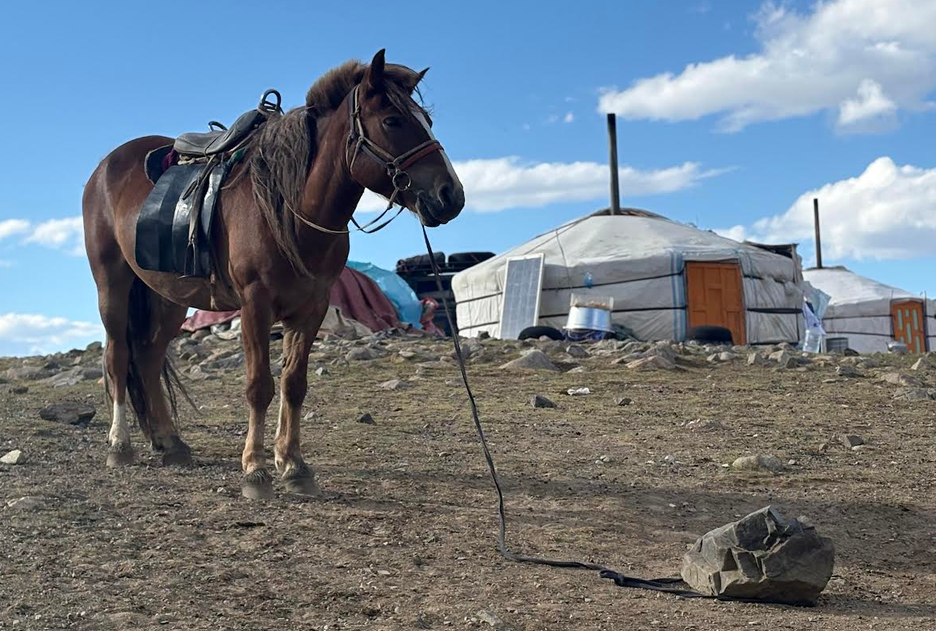
A horse outside a family’s ger. Note the solar panel outside the ger. Photo Credit: Supplied

Over time, combinations that might initially have struck an Australian visitor as unusual became part of the scenery: a motorbike outside a ger, a smartphone in a herder’s pocket, or a truck carrying a home that might later have to be transferred to camels.

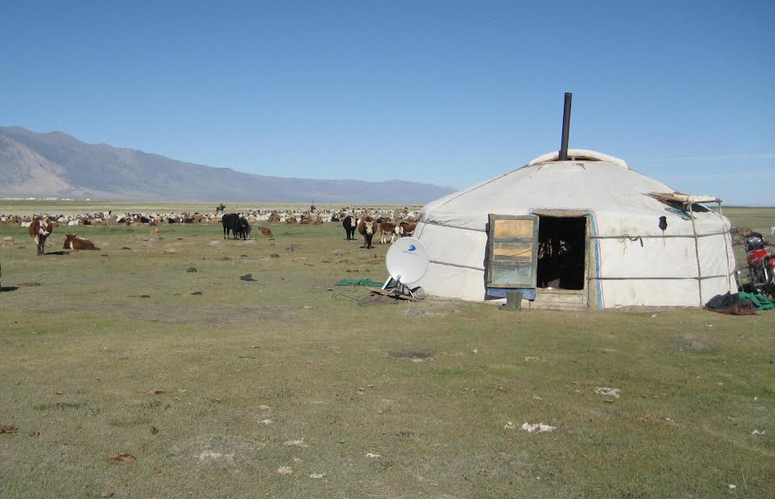
A satellite dish outside a ger is not an uncommon sight. Photo Credit: Supplied

Most herdsmen also have solar panels that run a light and TV, and satellite
dish that provides them with about 100 channels – most of which are Chinese
or Russian.

None of it seemed particularly unusual to Jeff’s children.

For Jeff, moving between these two Mongolias took years of learning. For his sons, there was never the same dividing line.

The apartment and the ger, Brisbane and Ulaanbaatar, English and Mongolian, city life and their mother’s herding family — all of it belonged to their childhood.

As the boys grew older, that raised a much harder question for Jeff and his wife: when your children belong to two countries, where is home?

Jeff talks about all these and more at the Brisbane Men’s Breakfast on October 17.

Free Community Event
Brisbane Men’s Breakfast
Jeff King — Saturday, 17 October

The free community breakfast brings men together at Dale Farm in Fitzgibbon every four to eight weeks, with a guest speaker chosen for the uniqueness of their story.

Where: Dale Farm, 42A Desert Willow Way, Fitzgibbon
Start: 6.30am–7am
Cost: Free
Who: Lads of all ages welcome
Also: Coffee van on site

NEXT: Part 3: Raising a Family Between Two Worlds

Updated 3-October-2026

Bullets Fight Back from the Brink, Only for Tasmania to Steal Overtime Victory

The Brisbane Bullets were 22 seconds away from completing a remarkable comeback at Boondall, having erased an 11-point fourth-quarter deficit to snatch the lead against Tasmania. But a moment of brilliance from JackJumpers guard Taran Armstrong forced overtime, where the visitors pulled away for a 109–99 victory at the Brisbane Entertainment Centre on Saturday, 3 October.


Brisbane had already surrendered a 14-point lead of their own earlier in the contest, and appeared headed for defeat when Tasmania led 89–80 late in the final quarter. What followed was a desperate 11–0 scoring run, capped by Tyrell Harrison’s close-range basket with 26.5 seconds remaining, that brought the home crowd to its feet.

Harrison’s score put Brisbane ahead 91–89, completing a comeback that had looked increasingly unlikely only minutes earlier. Tasmania had missed ten consecutive field-goal attempts as the Bullets clawed their way back, and the visitors needed something special to escape.

Armstrong supplied it.

Driving the play with 22 seconds remaining, he delivered a behind-the-back pass to Josh Bannan beneath the basket for the tying score. Brisbane had one final opportunity, but Max Mackinnon’s three-point attempt at the buzzer missed, sending the teams into overtime locked at 91–91.

A fourteen-point lead slips away

The Bullets had started the evening looking capable of maintaining their unbeaten home record, taking control early through Harrison’s work inside and a productive offensive performance from Mackinnon and Nate Hinton.

Brisbane led 23–17 after the opening quarter and stretched the advantage to 14 points during the second. Even after Tasmania began to respond, the Bullets went into half-time ahead 47–40, with their attack having found a productive balance between scoring in the paint and shooting from distance.

That balance deserted them after the main break.

Tasmania unleashed a 13–0 run in the third quarter, with Armstrong directing the offence and former Brisbane players Will Magnay and Bannan increasingly influential. The JackJumpers scored 34 points to Brisbane’s 18 in the period, completely reversing the contest to lead 74–65 with ten minutes remaining.

The change was substantial. Brisbane had gone from controlling the game to chasing it, and Tasmania’s physicality around the basket was making every possession more difficult.

Harrison leads the resistance

Harrison refused to let the contest drift away. The Brisbane centre finished with 24 points and 12 rebounds, including five offensive boards, while Hinton and Mackinnon contributed 21 points apiece.

Mackinnon’s outside shooting was particularly valuable, with five three-pointers from eight attempts keeping Brisbane in touch. Hinton added three steals and repeatedly found ways to attack Tasmania’s defence.

Arnas Velička had a more difficult night scoring, missing all 11 of his field-goal attempts during regulation. Yet the Lithuanian guard remained heavily involved in Brisbane’s offence, eventually finishing with 13 assists, five rebounds and six points.

Those contributions helped the Bullets mount their extraordinary late recovery, particularly when Tasmania’s shooting dried up. Harrison was central to the final push, converting an inside opportunity after Brisbane had gathered three offensive rebounds on the same possession, then putting the Bullets ahead during their 11-point unanswered run.

For all the excitement of that comeback, however, Brisbane could not find the defensive stop that would have preserved their advantage.

Armstrong has the final word

Velička briefly gave Brisbane renewed hope when he scored the opening basket of overtime, his first field goal of the evening after 11 misses in regulation.

The JackJumpers soon regained their composure. Armstrong continued to attack, Magnay and Bannan provided the inside presence, and Tasmania converted seven of nine field-goal attempts during the extra period.

With 44 seconds remaining, Armstrong completed a driving basket through contact and added the free throw, stretching Tasmania’s advantage to five points. Brisbane had little left to offer after spending so much energy fighting their way back into the contest, and the JackJumpers scored the final ten points of overtime to turn a tense struggle into a double-digit victory.

Armstrong finished with a game-high 29 points and four assists, while Magnay and Bannan scored 22 apiece. Bannan also collected 11 rebounds, with Magnay adding nine rebounds, six assists and four blocks. Dakota Mathias contributed 19 points.

For Brisbane, the defeat was especially difficult given the opportunities they had created at both ends of the game. Their early 14-point advantage had disappeared in a damaging third quarter, yet they still found enough determination to recover from 11 points down and take the lead in the final minute.

The Bullets were left with a 2–2 record after four matches, having followed two opening victories with consecutive defeats. Their next assignment was a trip north to face Cairns on Thursday, 8 October, with coach Will Weaver facing the challenge of turning encouraging passages of basketball into a complete four-quarter performance.

Brisbane had led by 14, trailed by 11 and fought back to within seconds of victory. After 45 minutes of basketball, all they had to show for it was a ten-point defeat.


Game Details

Competition: 2026–27 NBL Season, Round 3
Date: Saturday, 3 October 2026
Venue: Brisbane Entertainment Centre, Boondall
Final Score: Tasmania JackJumpers 109 defeated Brisbane Bullets 99 (overtime)

Quarter-by-quarter scores:
First Quarter: Brisbane 23–17 Tasmania
Half-time: Brisbane 47–40 Tasmania
Three-quarter time: Tasmania 74–65 Brisbane
End of Regulation: Brisbane 91–91 Tasmania
Overtime: Tasmania outscored Brisbane 18–8

Leading Scorers:
Brisbane Bullets: Tyrell Harrison — 24 points, 12 rebounds; Nate Hinton — 21 points; Max Mackinnon — 21 points
Tasmania JackJumpers: Taran Armstrong — 29 points; Will Magnay — 22 points; Josh Bannan — 22 points

Brisbane’s Season Record: 2 wins, 2 losses
Next Match: Cairns Taipans v Brisbane Bullets — Thursday, 8 October 2026, Cairns Convention Centre.

Published 3-Oct-2026

Aspley Cyclist Wins Appeal After 2009 Footpath Crash

An early-morning bicycle ride through Aspley in 2009 has led to a lengthy legal battle, culminating in a Queensland Court of Appeal decision in favour of cyclist Victor George Dennison.


Read: Motorcyclist Miraculously Uninjured After Frightening Gympie Road Encounter


Mr Dennison was 64 when he was riding along a footpath beside Zillmere Road in the early hours of 18 December 2009. The path had been partly blocked by an orange mesh barricade installed to protect newly poured concrete while it cured overnight. As Mr Dennison approached the obstruction, he attempted to avoid the mesh but collided with it and was thrown from his bicycle.

The crash reportedly caused severe injuries, including the loss of his left eye and a traumatic brain injury. A metal stake supporting the barricade penetrated his eye socket and entered his skull, destroying the eye and fracturing the eye socket.

Zillmere Road, Aspley (Photo credit: Google Street View)

The barricade had been accompanied by four orange traffic cones intended to improve visibility, but those cones were no longer present when Mr Dennison arrived. The incident occurred before sunrise, while the closest streetlight was not working. The mesh and its metal supports were not reflective or illuminated, and no warning signs had been left to alert people approaching the worksite.

The original Supreme Court proceedings considered whether Brisbane City had taken reasonable precautions and whether its conduct met the higher legal threshold applying to public authorities under Queensland’s Civil Liability Act 2003. Justice Lincoln Crowley found that Brisbane City had breached its duty of care and would have been liable under ordinary negligence principles, but concluded that the statutory threshold for imposing liability on a public authority had not been met.

That decision meant Mr Dennison’s compensation claim was initially unsuccessful, despite the finding that Brisbane City’s conduct amounted to a breach of its ordinary duty of care.

Appeal changes the outcome

Photo credit: Pexels/KATRIN BOLOVTSOVA

The case then went to the Queensland Court of Appeal, where Justices David Boddice, Shane Doyle, and Sean Cooper reached a different conclusion. The appeal court found that the risks associated with the barricade were foreseeable and that the absence of reflective warnings, directions to an alternative path, and local lighting meant Brisbane City’s exercise of its functions was not reasonable in the circumstances.

The judges considered that reflective warnings could have provided cyclists and pedestrians with advance notice of the barricade, while clearer directions could have helped people identify a safe route around the worksite. The appeal court overturned the earlier decision and gave judgment in Mr Dennison’s favour.

Brisbane City has now been ordered to pay Mr Dennison $675,926.77, plus interest and his court costs. The judgment was delivered on 28 September 2026, almost 17 years after the crash in Aspley.


Read: First Stage of Beams Road Upgrade Delivers New Signalised Intersection and Shared Paths


Mr Dennison is now 80. His wife represented him in the legal action. The appeal decision produced a different legal outcome from the Supreme Court ruling delivered in May. While the earlier judgment found that the higher threshold under section 36 of the Civil Liability Act protected Brisbane City from liability, the Court of Appeal found that the threshold had been met in the circumstances of Mr Dennison’s case. Brisbane City said it was considering the Court of Appeal’s judgment.

Published 30-September-2026