



Two Train Stops. A 10-Year Life Gap. What It Means for Zillmere and Geebung

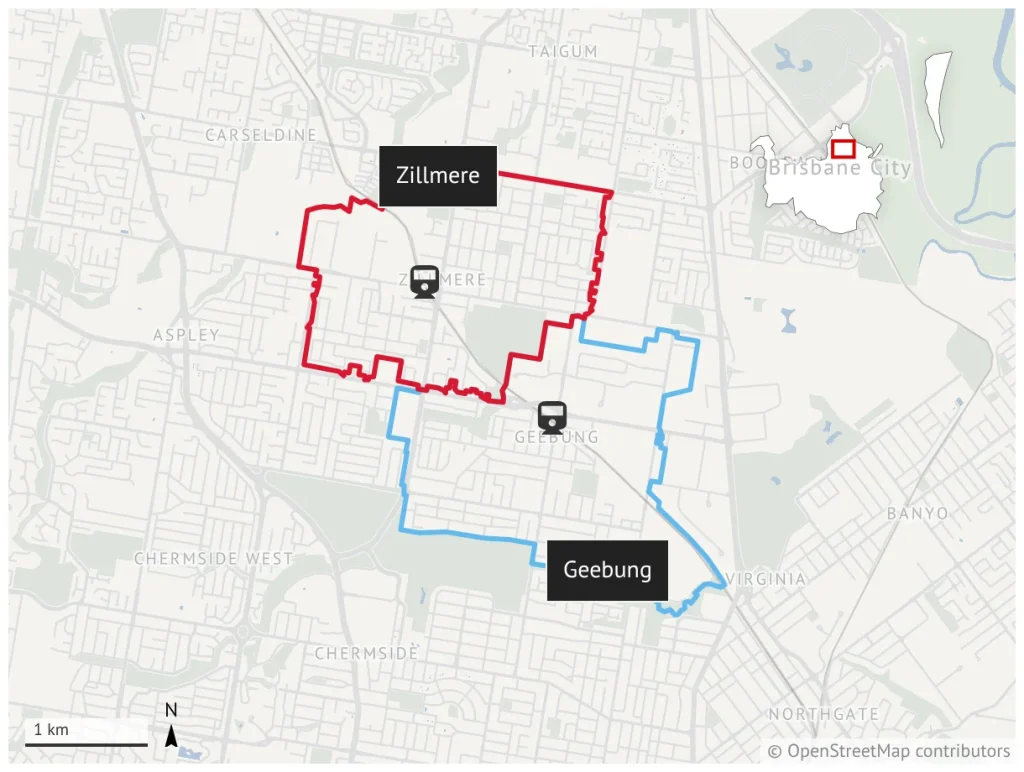
You can board a train at Zillmere and arrive at Geebung in minutes.

But new research from the University of Queensland shows the difference in median age of death between men living near those two stations is 10 years.

The study, published in the Health Promotion Journal of Australia, mapped median age of death across Queensland’s rail network. Using train stations as geographic markers, researchers highlighted how health outcomes can diverge sharply within just a few kilometres.

Along the Redcliffe Peninsula line, men living near Zillmere station recorded a median age of death of 72. Near Geebung station, the figure was 82.

Same rail line. Two stops apart. A decade of difference.

The study measures median age of death — the age at which people in an area have actually died — rather than projected life expectancy. While different from formal life expectancy modelling, it remains a strong indicator of embedded health disadvantage.


How the Research Was Conducted

The research was led by Associate Professor Jonathan Olsen from UQ’s Institute for Social Science Research, alongside Associate Professor Mark Robinson, Professor Lisa McDaid and Professor Jonathan Corcoran.
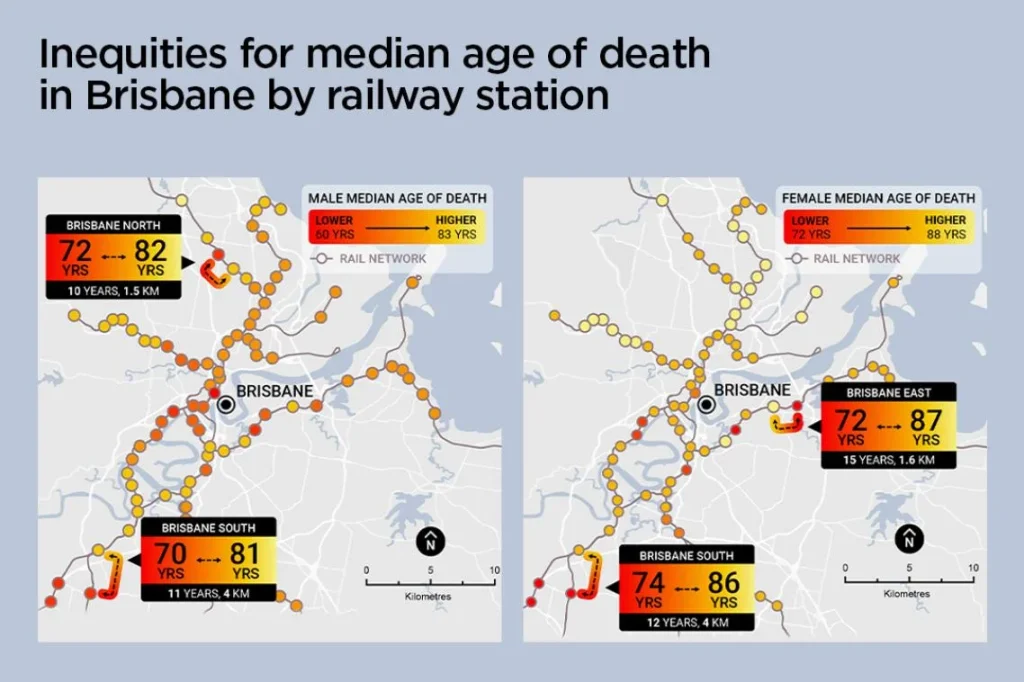
Photo Credit: University of Queensland

By overlaying mortality data onto Queensland’s rail map, the team created a clear, place-based framework that residents and policymakers can easily interpret. Stations became reference points for comparing outcomes along shared transport corridors.
Life expectancy gap for Zillmere and Geebung
Photo Credit: University of Queensland

Across Queensland, the median age of death for women ranged between 68 and 88. For men, it ranged from 60 to 83. The Zillmere–Geebung gap sits within that broader statewide variation.

The Pattern Repeats Across Brisbane

The Redcliffe Peninsula line is not an isolated example.
Life expectancy gap for Murarrie and Cannon Hill
Photo Credit: University of Queensland

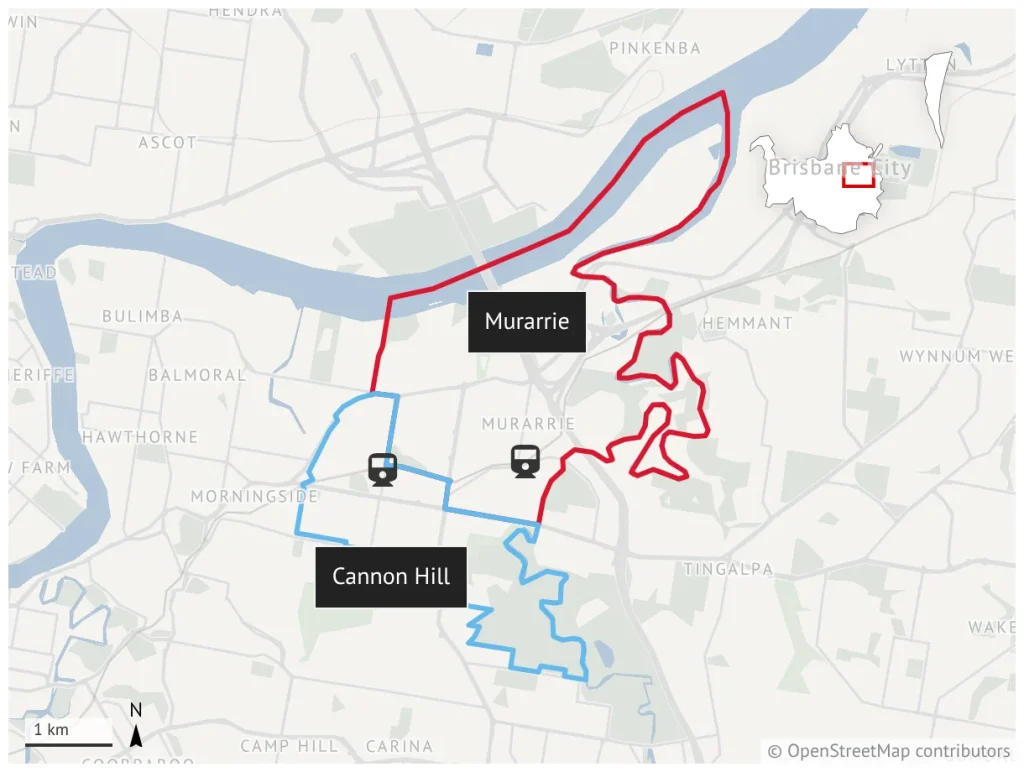
On the Cleveland line, women near Murarrie station recorded a median age of death 15 years lower than women near Cannon Hill, despite being just 1.6 kilometres apart.
Life expectancy gap for Darra-Sumner and Inala-Richards
Photo Credit: University of Queensland

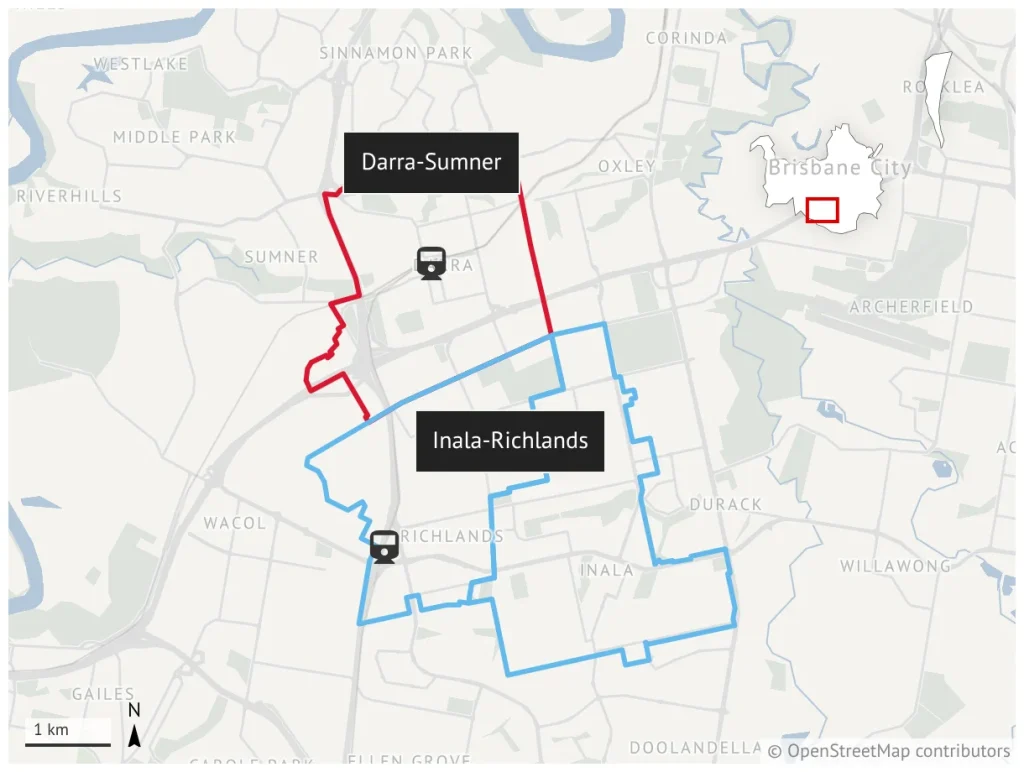
South of the CBD, men in the Inala–Richlands area recorded a median age of death of 70 — 11 years below men in Darra–Sumner. For women in those same areas, the gap reached 12 years.

Researchers link these differences to a mix of income levels, housing security, education access, employment opportunity, family structure and access to services and green space.


What the Findings Are Meant to Do

The authors stress the data is not designed to stigmatise suburbs. Instead, it provides an evidence base for targeted, place-based investment — from park upgrades and active travel infrastructure to community health initiatives.

Similar transport-mapped studies have been conducted in Glasgow, London and New York, allowing governments to track whether investment narrows gaps over time.

The full research paper is available here. UQ’s Institute for Social Science Research can be contacted through issr.uq.edu.au. Maps and media resources from the study are available through the UQ newsroom at news.uq.edu.au.

For Zillmere and Geebung residents, the takeaway is simple but confronting: postcode can shape health outcomes.

Two stations. Ten years.

Published 2-March-2026.

Domestic Violence Survivor Rebuilds Life After Brutal Attack in Carseldine

A woman who survived a brutal domestic violence attack in Carseldine is now advocating for stronger protections and early education around healthy relationships.


Forty-Five Blows in Carseldine: A Survivor’s Story

Brisbane mother-of-three Simone O’Brien continues to speak out more than a decade after a violent domestic violence incident in Carseldine left her with life-altering injuries. Ms O’Brien was struck 45 times with a baseball bat by her former partner, Glenn Cable, in an unprovoked attack after she ended their nine-month relationship in 2012.

Ms O’Brien was placed in an induced coma at the scene to survive the swelling on her brain. She later required full facial reconstruction and spent months in hospital relearning basic tasks such as walking and eating. Mr Cable was convicted of attempted murder in 2015 and sentenced to 15 years in prison. He becomes eligible for parole after serving 80 per cent of his sentence.

Red Flags Before the Violence

Ms O’Brien met Mr Cable online while raising three children as a single parent. Subtle red flags soon emerged—contacts disappeared from her phone, money went missing, and flowers arrived daily at her workplace in a pattern that felt unsettling rather than affectionate. After she ended the relationship, Mr Cable turned up at her Carseldine home and launched the violent attack.

The outcome was devastating: a shattered skull and jaw, vision loss in one eye, and loss of smell.

From Recovery to Advocacy

Ms O’Brien has since become a strong voice in the domestic violence space. She recently addressed a crowd of more than 600 at a local event, sharing her experience and educating young people about early warning signs in relationships. Her message was clear: early intervention matters.

She also appeared at the EmpowHer gala dinner, joined Victoria’s 16 Days of Activism campaign, and participated in an international session hosted by the Alaska Black Caucus. She spoke to the importance of recovery, respect, and solidarity across communities and cultures.

Simone O'Brien
Photo Credit: Simone O’Brien/Facebook

A Push for Change: Parole and Prevention

With Mr Cable eligible for parole, Queensland Police Union president Shane Prior is calling for stricter control orders on high-risk offenders. Proposed measures include barring parolees from dating apps, monitoring phone usage, and restricting entry to venues.

Ms O’Brien supports these ideas and continues pushing for broader reforms, including Clare’s Law—a proposal that would give individuals the right to know if a prospective partner has a history of domestic violence.

She’s also advocating for education to start as early as Prep, aiming to build awareness of what constitutes a healthy relationship from a young age.

Marching On: The Movement Grows

Community support has been strong at events where Ms O’Brien has spoken. From home owners clapping during DV marches to attendees lining up to thank her at forums, the response shows a growing desire for change. Ms O’Brien remains committed to speaking up, encouraging others to act on early warning signs.

Her ongoing message: “Any little red flag is a big red flag.”

Domestic Violence Helplines


Support is available for anyone affected by domestic or family violence:

  • Womensline: 1800 811 811
  • MensLine Australia: 1300 789 978
  • 1800 RESPECT (24-hour sexual assault and DV counselling): 1800 737 732
  • Lifeline: 13 11 14
  • Family Violence Crisis and Support Service: 1800 608 122
  • Emergency/Police: 000

Published 28-Mar-2025