


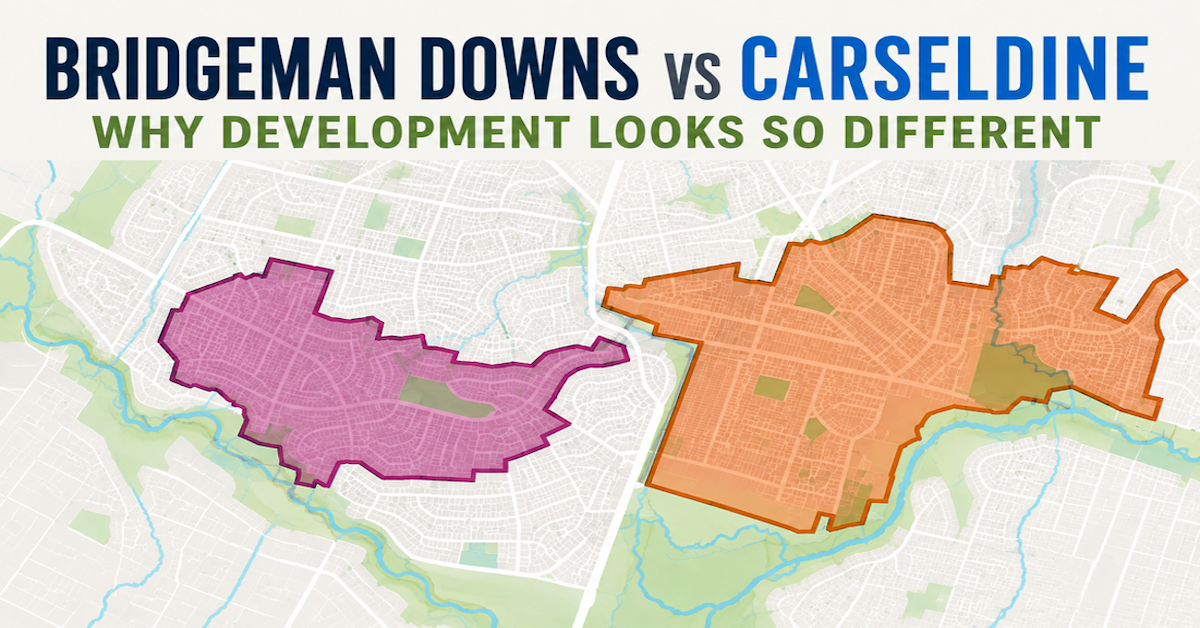
Bridgeman Downs and Carseldine sit side by side on Brisbane’s northside, but some of their biggest housing developments are taking markedly different forms.
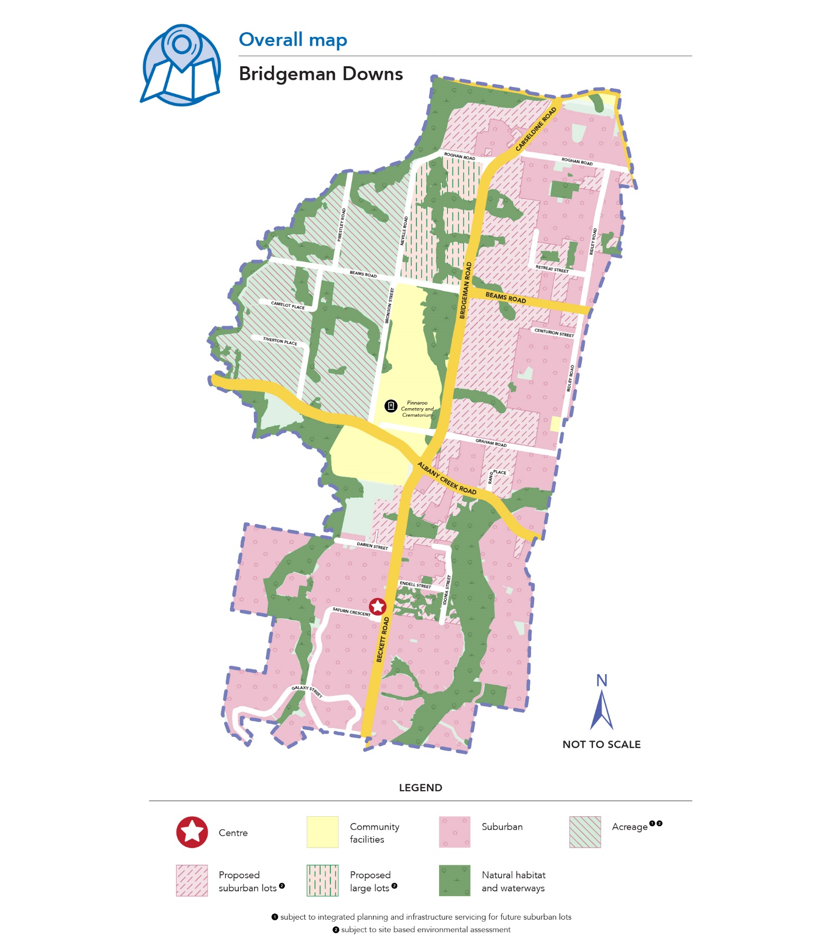
In Bridgeman Downs, large parcels of suburban land continue to provide opportunities for subdivision and new detached housing.
Across the suburb boundary, Carseldine Village is following another path, bringing terrace homes, apartments, social and affordable housing, shops and community facilities together within a master-planned precinct.
The contrast shows how differently Brisbane can accommodate more homes, even between neighbouring suburbs.
Bridgeman Downs’ Big Blocks Are Being Subdivided
Beckett Road provides some of the clearest examples of the change underway in Bridgeman Downs.
The landholding at 409–427 Beckett Road is currently being marketed as an approved 41-lot residential subdivision opportunity covering about 4.16 hectares. Brisbane City Council’s Development.i records also show an in-progress reconfiguration application covering properties at 409, 411, 415 and 427 Beckett Road.
Another substantial subdivision proposal is progressing at 341–349 Beckett Road, where Council records show an impact-assessable reconfiguration application remains in progress.
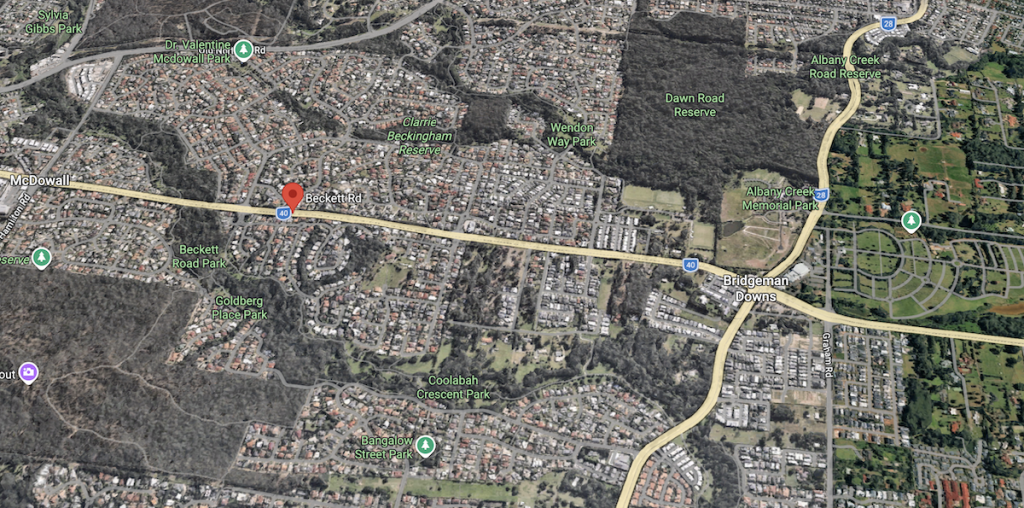
These developments reflect one of Bridgeman Downs’ defining characteristics. Large residential properties remain in parts of the suburb, providing opportunities for additional homes to be created through subdivision while maintaining a predominantly low-rise suburban form.
Council Has Already Planned for Change
The transformation has not gone unnoticed by planners.
Brisbane City Council adopted the Bridgeman Downs Neighbourhood Plan in June 2023, with the plan taking effect on 1 September that year.
Council developed the plan to guide future land use, development and infrastructure in the area over the following decade and beyond.
That means new proposals are being considered within a planning framework specifically developed for the suburb as it changes.
On the ground, that growth can still look distinctly suburban: new residential lots and streets emerging from land that previously accommodated far fewer homes.
Across the Boundary, Carseldine Took Another Path
Carseldine Village presents a markedly different picture.
The Queensland Government development is being delivered by Economic Development Queensland on the former Queensland University of Technology campus site near Carseldine railway station.
Its approved master plan allows for a maximum of 606 dwellings across a seven-stage development, with full build-out anticipated in 2028, subject to market demand.
The project combines different types of housing with aged care, childcare, sporting facilities, retained bushland and retail and commercial space.
Terrace housing has been a major part of the residential development, with 182 terrace homes forming part of the project across several stages.
Rather than development occurring property by property, Carseldine Village has provided the opportunity to plan housing, roads, open space and other facilities across a large precinct.
152 Homes Are Now Rising at Plaza Place
One of the biggest current additions to Carseldine Village is Plaza Place.
Construction began in June 2025 on the seven-storey development, which will provide 152 social and affordable homes.
The project comprises 62 social and 90 affordable apartments, including 56 one-bedroom, 90 two-bedroom and six three-bedroom homes.
Current project information indicates completion is expected around mid to late 2027.
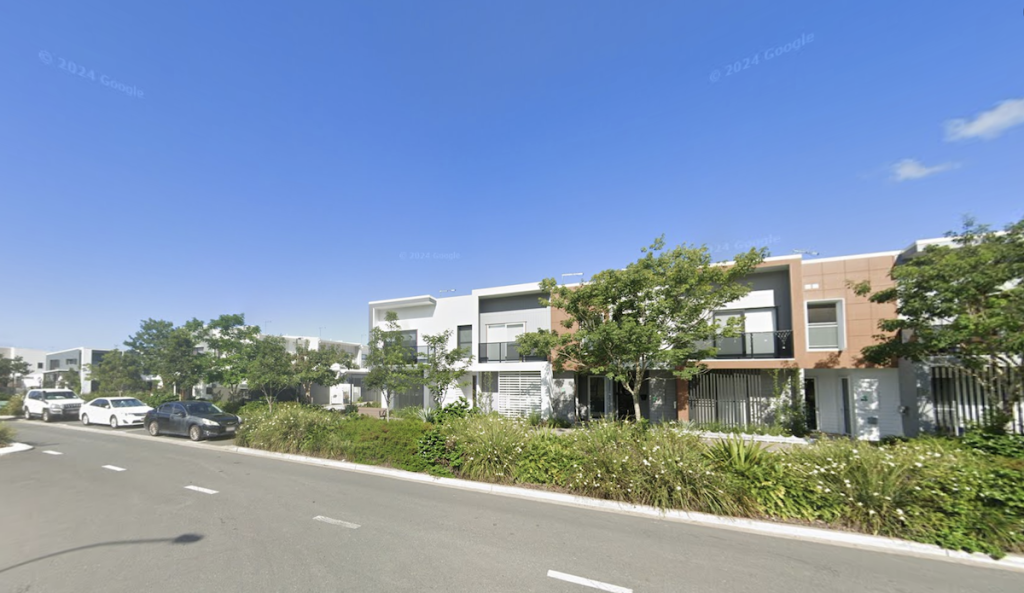
Photo Credit: Google Maps
The project represents a very different form of housing growth from the subdivisions occurring only a few kilometres away in Bridgeman Downs.
Instead of distributing additional homes across newly created suburban lots, Plaza Place concentrates 152 homes within one development in an established master-planned precinct.
One Had Big Blocks. The Other Had a Blank Canvas.
The difference between the two suburbs partly comes down to the land available for development.
Carseldine Village occupies a large former institutional site, giving planners the opportunity to design an entire precinct incorporating housing, roads, open space, shops and community facilities.
Bridgeman Downs developed under different circumstances and retains large privately owned residential parcels in some areas.
As those properties are redeveloped, subdivision can create additional housing while retaining much of the suburb’s detached, low-rise character.
The distinction is not absolute. Carseldine also has conventional subdivisions outside Carseldine Village, while development in Bridgeman Downs is not limited to detached houses.
But some of the largest current projects in the neighbouring suburbs illustrate two distinctly different approaches to adding housing on Brisbane’s northside.
Two Paths to More Homes
The contrast is likely to remain visible over the coming years.
Carseldine Village is expected to continue developing towards its anticipated 2028 build-out, while subdivision proposals remain part of the changing residential landscape in Bridgeman Downs.
In Carseldine, hundreds of homes are being incorporated into a planned mixed-use precinct.
Next door, large suburban landholdings are creating opportunities for new lots, streets and detached housing.
The suburbs may share a boundary, but the way they are growing can look very different.
Published 14-Aug-2026