



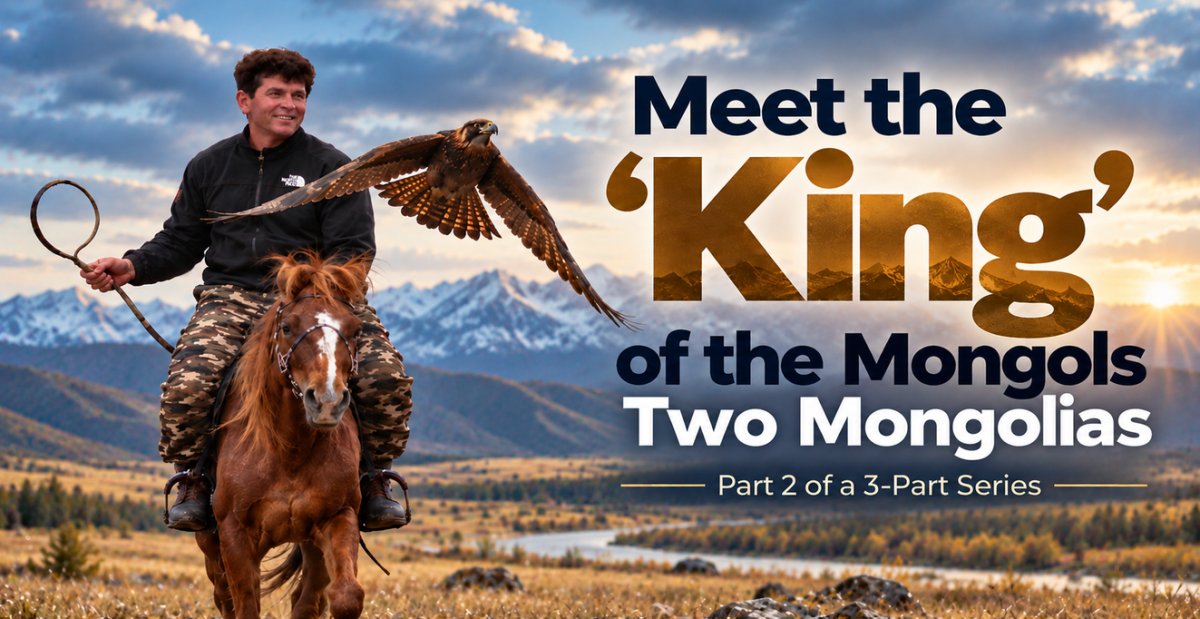
Two Mongolias: Meet the “King” of the Mongols

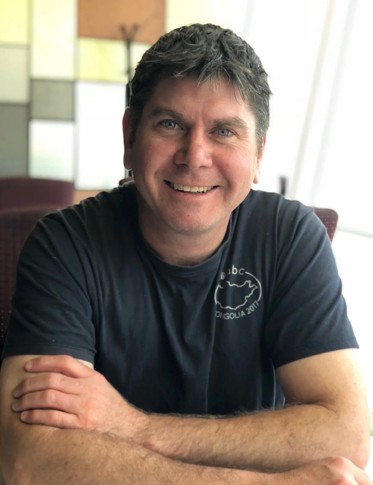
For more than 20 years, Brisbane man Jeff King has lived between two Mongolias. One has high-rise apartments, supermarkets and traffic so bad he often walks. In the other, his wife’s family can pack up their home and move with their animals — until the terrain gets too rough and the camels take over.

Jeff first went to Mongolia in 2003 and later married into a traditional herding family. His life since has taken him regularly between the capital, Ulaanbaatar, and the vast countryside where his wife’s relatives still raise sheep, goats, cattle and horses.

The family lived about three kilometres from central Ulaanbaatar, and Jeff had little enthusiasm for driving there. “We bought a car, but we didn’t buy it to drive in the city,” he said. “We bought it to get out.”


When the family moves, the house goes too

His wife’s relatives don’t simply wander across the countryside. Families have a migratory pattern for different seasons, typically making four major moves through the year, although grazing conditions can push that to eight or even 10.

The ger goes with them.

For a family accustomed to the job, Jeff said, the circular felt-covered home can be dismantled in about an hour. Trucks have taken over much of the heavy carrying, but only for as long as the terrain allows. In mountain country where a vehicle can go no further, camels can carry the ger and the family’s possessions for the rest of the journey.

Traditionally, Jeff said, a family could move its home and belongings with about five camels.

The scale of the livestock took some getting used to as well. His sister-in-law’s family can have more than 1,000 animals, roaming country without the paddocks and boundary fences familiar to Australians.
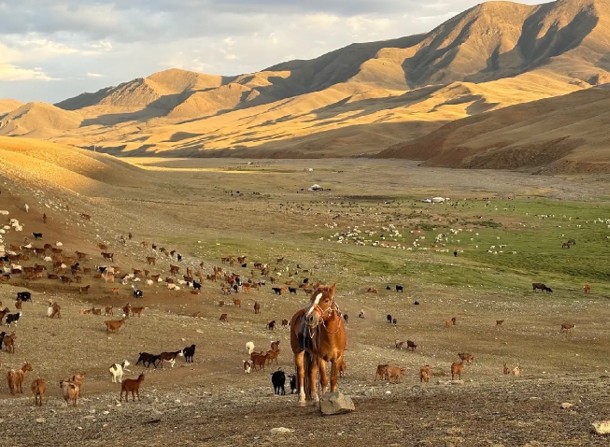
Photo Credit: Supplied

When different families’ sheep mingle, sorting them out might look impossible to an outsider. Jeff has watched herders recognise individual animals, know which lamb belongs to which ewe and separate mixed flocks. Their knowledge can stretch across generations of animals.

Even asking how many horses somebody owns comes with a rule Jeff learnt not to break. Asking directly is considered bad luck.

There is, however, a workaround: ask how many stallions the herder has. With roughly 20 mares to a stallion, Jeff said, the answer gives you a fair idea without asking the question you’re not supposed to ask.

Horses remain part of working life, although motorbikes now do plenty of the work as well. Trucks carry families between camps and smartphones have changed how people communicate across enormous distances.

Jeff has seen how quickly news can travel through communities that look isolated on a map. Phones and internet make that easier now, but even before them, information moved. Somebody would hear something, get on a motorbike and carry the news onwards.

Winter changes the equation again.

Temperatures around -30°C are unremarkable enough in Jeff’s experience, while the mercury can fall into the -40s. Families spread farther apart as grazing becomes scarcer, and journeys that are straightforward in summer become much more serious.

Hospitality matters in those conditions. A traveller arriving at an isolated ger can expect tea, food and shelter — things that take on rather more importance when it is 40 degrees below freezing outside.

Jeff generally saved his longer journeys for the warmer months. For a time, some of them were made with a vehicle full of books.

A library that came to the readers

Mongolia had high literacy from the Soviet era, Jeff said, but access to books could be difficult for families living far from population centres.

So the library travelled.

Jeff and his colleagues drove from family to family, leaving books and returning roughly a month later to exchange them. Among everything they carried, one title became the unexpected favourite: Jules Verne’s Around the World in Eighty Days.

Jeff took a camera with him too. He would photograph families, have the pictures printed and bring them back on subsequent visits, giving him another reason to return to the same people.
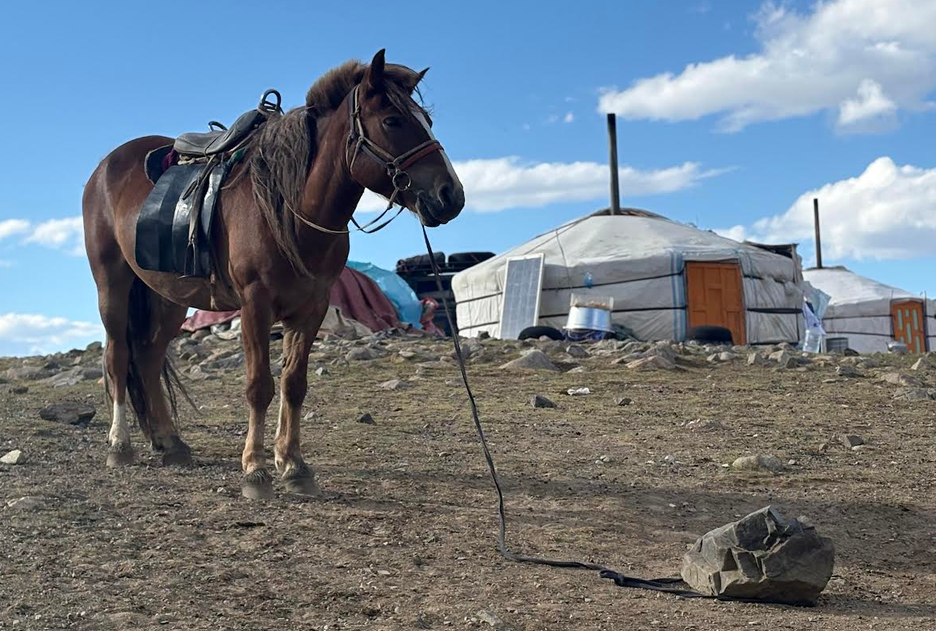
A horse outside a family’s ger. Note the solar panel outside the ger. Photo Credit: Supplied

Over time, combinations that might initially have struck an Australian visitor as unusual became part of the scenery: a motorbike outside a ger, a smartphone in a herder’s pocket, or a truck carrying a home that might later have to be transferred to camels.
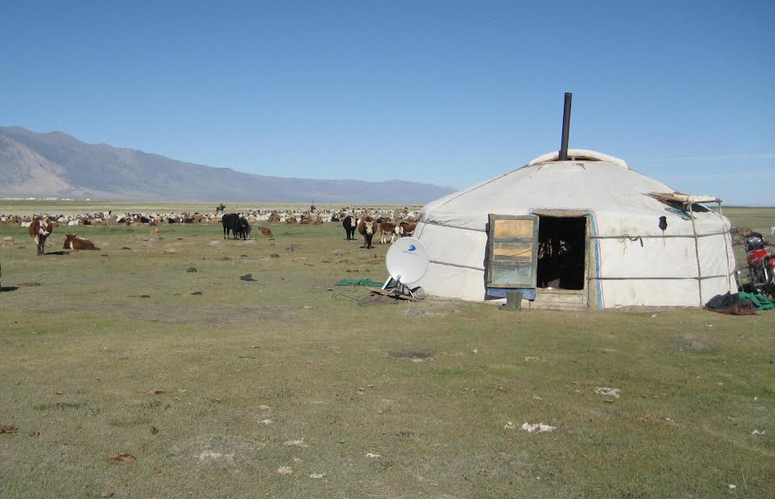
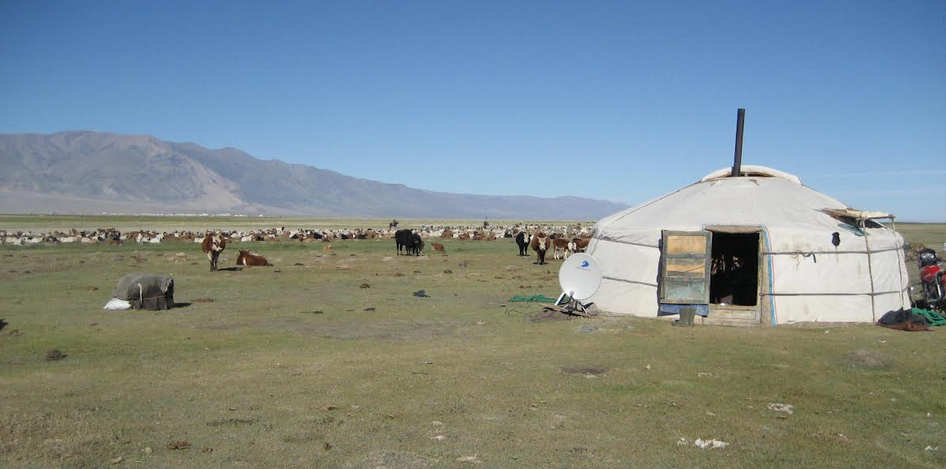
A satellite dish outside a ger is not an uncommon sight. Photo Credit: Supplied

Most herdsmen also have solar panels that run a light and TV, and satellite
dish that provides them with about 100 channels – most of which are Chinese
or Russian.

None of it seemed particularly unusual to Jeff’s children.

For Jeff, moving between these two Mongolias took years of learning. For his sons, there was never the same dividing line.

The apartment and the ger, Brisbane and Ulaanbaatar, English and Mongolian, city life and their mother’s herding family — all of it belonged to their childhood.

As the boys grew older, that raised a much harder question for Jeff and his wife: when your children belong to two countries, where is home?

Jeff talks about all these and more at the Brisbane Men’s Breakfast on October 17.

Free Community Event
Brisbane Men’s Breakfast
Jeff King — Saturday, 17 October

The free community breakfast brings men together at Dale Farm in Fitzgibbon every four to eight weeks, with a guest speaker chosen for the uniqueness of their story.

Where: Dale Farm, 42A Desert Willow Way, Fitzgibbon
Start: 6.30am–7am
Cost: Free
Who: Lads of all ages welcome
Also: Coffee van on site

NEXT: Part 3: Raising a Family Between Two Worlds

Updated 3-October-2026
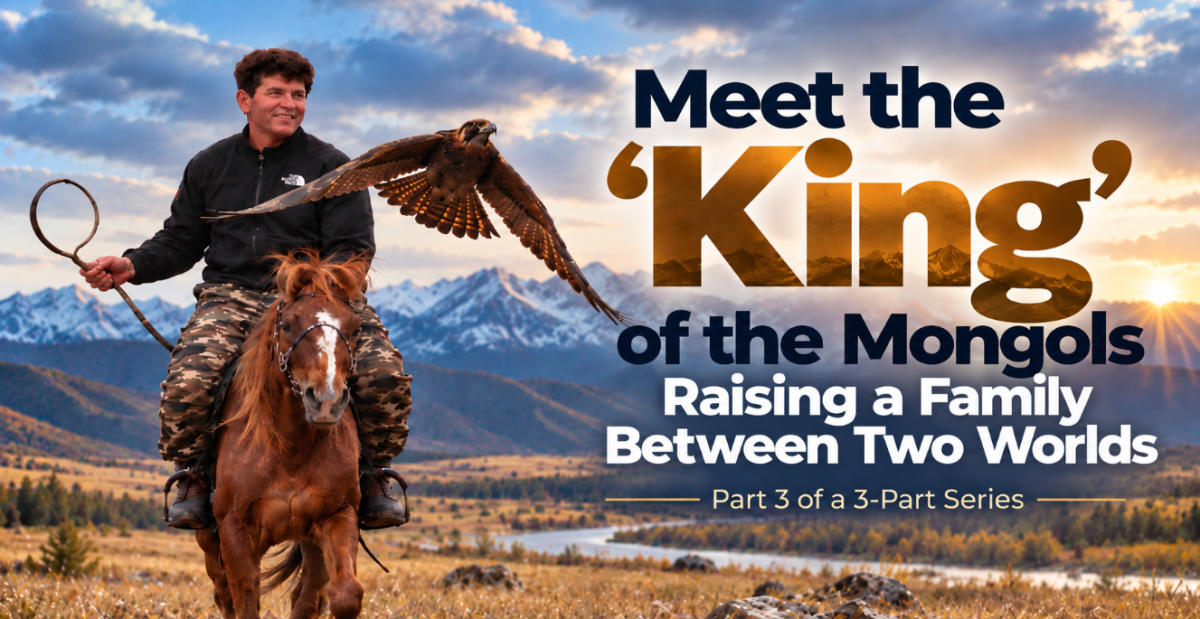
Raising a Family Between Two Worlds: Meet the “King” of the Mongols

Jeff King’s sons could spend one day doing Australian schoolwork in their Ulaanbaatar apartment and another riding horses and milking goats with their Mongolian relatives. To them, neither life was the unusual one.

Their father is Australian; their mother grew up in a Mongolian herding family. The boys were raised between both worlds, speaking English and Mongolian and knowing Australia and Mongolia as home.

One part of their upbringing, though, remained deliberately Australian: their schooling.


An Australian classroom in Mongolia

Jeff and his wife chose an Australian homeschooling program rather than putting the boys into a Mongolian school. When they were preparing to return to Mongolia, they weren’t even certain where they would be living.

There was a possibility the family might stay in remote country with nomadic relatives, where they couldn’t count on having internet access. So instead of relying on online lessons, they went with paper.

Books and materials travelled with them. Tests and completed work went back to Australia, keeping the boys in the Australian education system even while they were living thousands of kilometres away.

“We were still in the Australian system,” Jeff said.

The family eventually settled in Ulaanbaatar rather than living remotely with the herders, but they kept the same arrangement. Jeff remembers it working “really, really well” academically.

The harder part wasn’t the schoolwork.

It was everything that normally happens around it.

After finishing lessons, the boys didn’t have classmates spilling out of school with them. That became particularly noticeable during the Mongolian winter, when temperatures around -30°C could keep them indoors for long stretches.

Jeff tried to break that up. Every couple of weeks, when they could, he would get the boys out horse riding or skiing.

Summer opened things up again. They travelled, spent time outside the city and visited their mother’s relatives, where the boys slipped into a very different rhythm.

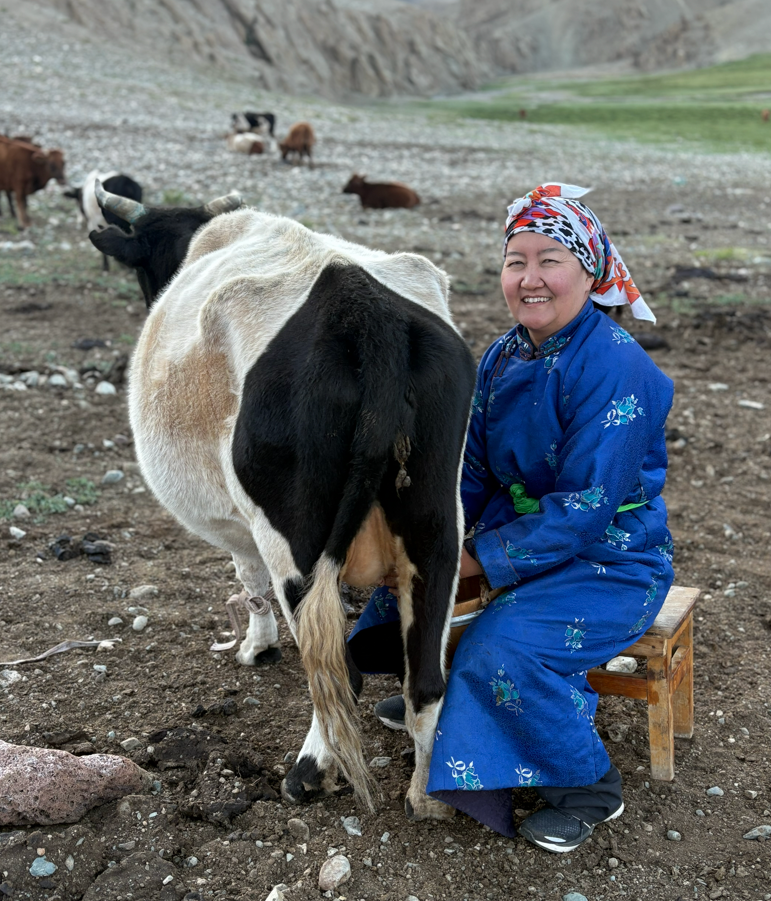
Milking the cow. Photo Credit: Supplied

Their mother was completely at home there. She had grown up in a herding family herself, and relatives continued to raise animals and move with the seasons. For her sons, these weren’t encounters with some distant version of Mongolian culture. The people in the gers were Grandma, aunties, uncles and cousins.

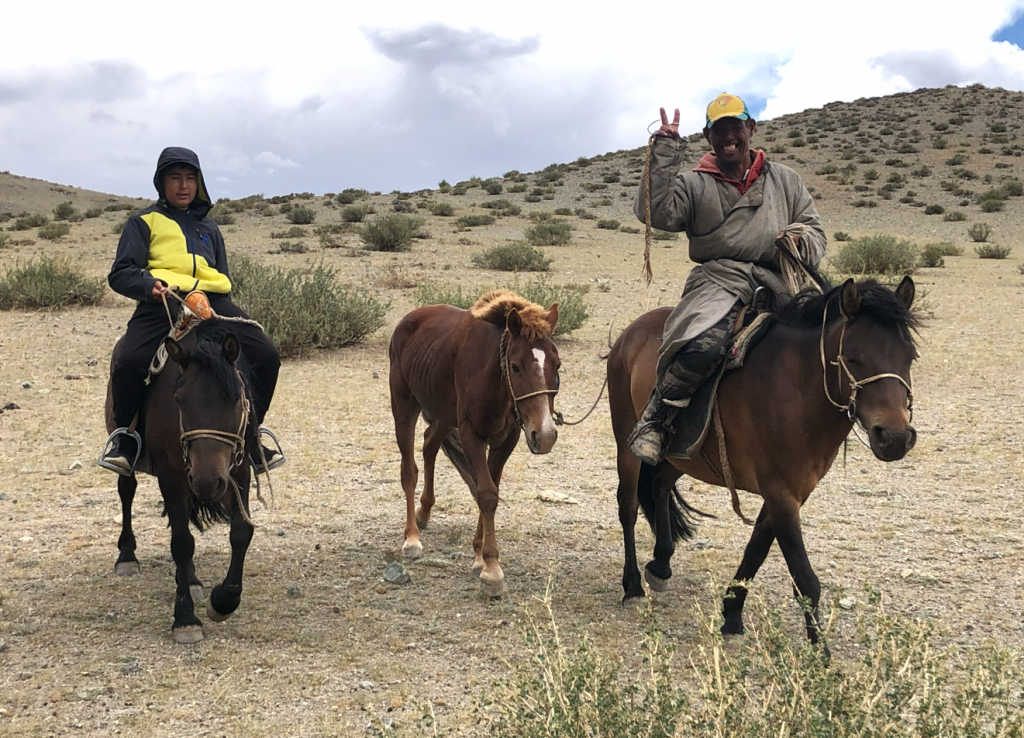
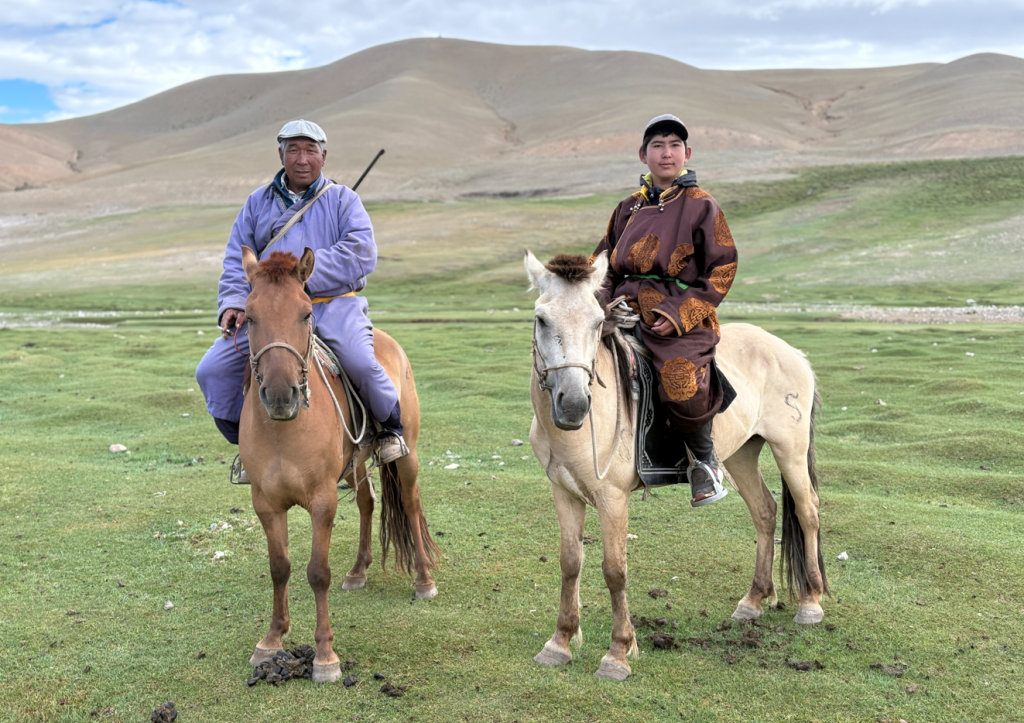
Jeff’s son with a herdsman. Photo Credit: Supplied

The boys could ride horses and motorbikes, herd animals, and help milk goats. They ate the dried dairy foods their father had once needed time to acquire a taste for.

English remained their first language, but their understanding of Mongolian became extensive. Jeff said his older son was the more confident speaker, although both could understand the language extremely well.

His wife brought something else to their children’s upbringing that Jeff could never have learnt from a book. She had been about nine when Mongolia’s communist era ended around 1990, and had grown up with the knowledge and routines of herding life before raising children in a very different Mongolia.

By the time her sons came along, smartphones, huge supermarkets and restaurants were part of everyday life in Ulaanbaatar. So were horses, hand-milking animals and visits to relatives who still moved their gers with the seasons.

The boys didn’t need anyone to reconcile those things for them.

They had grown up with both.


Coming back to Australia

Over the years, the family developed a loose rhythm: three or four years in Mongolia, then roughly a year in Australia.

COVID disrupted it. They found themselves staying in Tasmania for around two-and-a-half to three years before eventually returning to Mongolia, where their most recent stint lasted about four years.

They arrived back in Australia shortly before Christmas.

This time the boys are older, and that changes the equation. The Australian schooling they had carried with them through childhood has become increasingly important as they move into their teenage years.

What hasn’t changed is the family waiting in Mongolia, or the language and experiences they brought back with them.

For Jeff, Mongolia was somewhere he had to learn. He arrived as an Australian adult, picked up the language, adjusted to the food and gradually found his place in his wife’s family.

His sons started from somewhere very different.

The apartment and the ger, Brisbane and Ulaanbaatar, English and Mongolian, Australian schoolbooks and summers with their mother’s relatives were never competing versions of childhood. They were the same childhood.

Perhaps that is why the question of where they belong has no particularly tidy answer.

Australia is home. So is Mongolia.

Catch Jeff at the Brisbane Men’s Breakfast on October 17.

Free Community Event
Brisbane Men’s Breakfast
Jeff King — Saturday, 17 October

The free community breakfast brings men together at Dale Farm in Fitzgibbon every four to eight weeks, with a guest speaker chosen for the uniqueness of their story.

Where: Dale Farm, 42A Desert Willow Way, Fitzgibbon
Start: 6.30am–7am
Cost: Free
Who: Lads of all ages welcome
Also: Coffee van on site

Published 15-September-2026

Meet the “King” of the Mongols Living in Brisbane

Jeff King went to Mongolia for six weeks in 2003. He could hardly have known that the trip would lead to more than 20 years of his life there, a Mongolian wife and an extended family of nomadic herders — or that he would become comfortable with winters deep into the minus 40s, meals that begin with the offal, and journeys into country where the truck eventually stops and the camels take over.

He was 29 when he returned in 2005 to work as a Christian missionary, and Mongolia gradually became much more than the place he had gone to work. Jeff learnt the language, married into a herding family and spent years moving between life in Ulaanbaatar and visits to relatives in the countryside.

Those two worlds could hardly look more different. Ulaanbaatar has high-rises, supermarkets, restaurants, smartphones and traffic bad enough that Jeff often preferred to walk; outside the capital, members of his wife’s family continue to raise sheep, goats, cattle and horses, moving with the seasons and the available grazing.

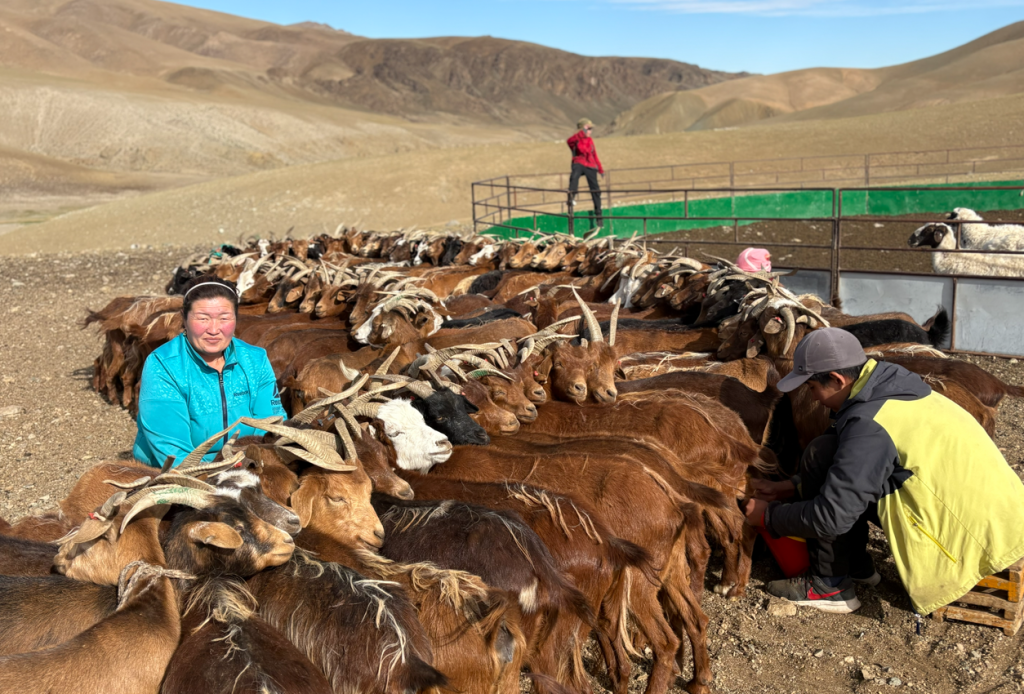
Milking the goats. Photo Credit: Supplied

For Jeff, that Mongolia isn’t something encountered on a tour. The people living it are his in-laws, and over the years he has had to learn everything from milking animals and living in a ger to navigating the considerable expectations of Mongolian hospitality.

Now back in Brisbane, he will tell some of those stories at the free Brisbane Men’s Breakfast at Dale Farm in Fitzgibbon on Saturday, 17 October.

Twenty-three years after that first six-week visit, the more interesting question is no longer why an Australian went to Mongolia.

It’s how Mongolia became home.

A Different Life

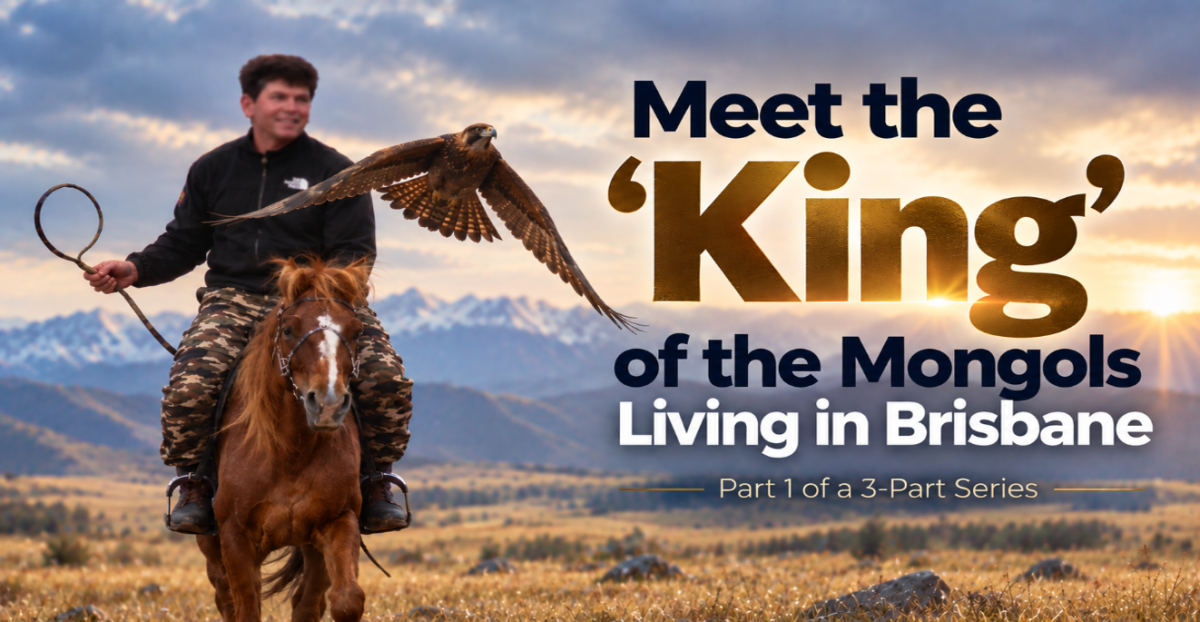
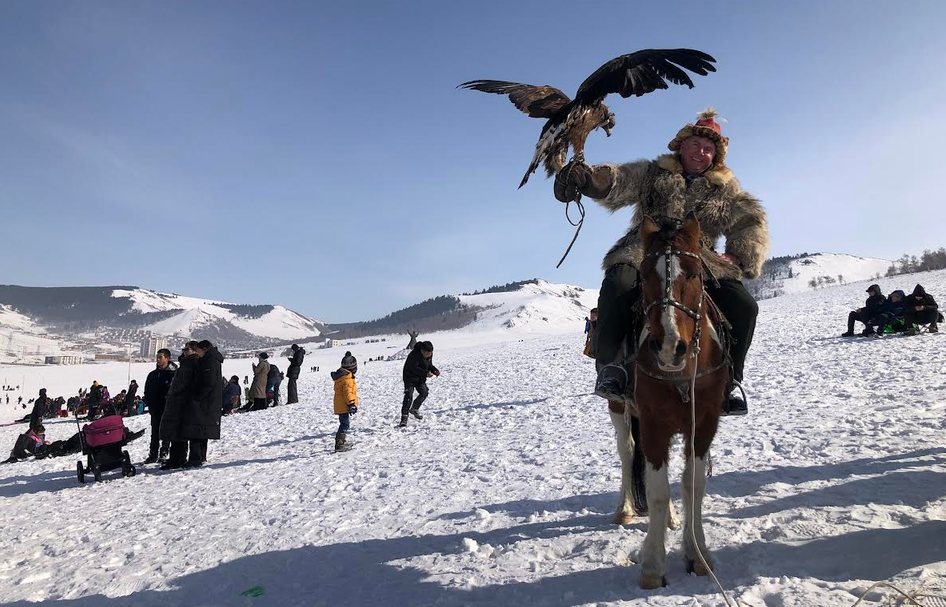
Jeff on horseback. Photo Credit: Supplied

A striking image shows the version of life that immediately catches the eye: Jeff riding through the snow with a large bird of prey, offering a glimpse of the equestrian traditions he encountered during his years in Mongolia.

But Mongolia gets more interesting once you move beyond the photograph.

Jeff can walk through Ulaanbaatar past high-rises, supermarkets and traffic jams, then head into countryside where there are hardly any fences. His relatives can move several times in a year, taking their ger and possessions with them as they follow grazing for their animals.

Trucks now do much of the carrying. Eventually, though, the terrain can become too difficult for them.

From there, the family loads what it needs onto camels and keeps moving.

Ger with animals. Photo Credit: Supplied

Jeff’s wife grew up in a traditional herding family, and relatives still live from their animals today. That meant his introduction to rural Mongolia was not a carefully packaged cultural experience. He was entering family life, with all the expectations that came with it.

Food was one of the quicker ways to discover them. When an animal is slaughtered, very little is wasted, and the first meal can involve parts that would rarely make it onto an Australian dinner table.

“The first meal is eating the guts,” Jeff said.

Heart and kidneys were fine by him. For everything else, experience eventually taught him to get in early, take something he liked and make his enthusiasm obvious.

“I don’t mind the heart and I don’t mind the kidneys. You grab the bit you know you don’t mind and say, ‘Oh, this is great.’ Then they’re not trying to feed you.”

Even the dairy could beat him. Aaruul, a traditional dried curd, can be extremely hard, and Jeff remembers keeping a piece in his mouth for about half an hour before discreetly burying it. These days he eats it; his boys love it.

Not every lesson was about food. He once watched his brother-in-law trade a sheep for a sack of potatoes and thought he was witnessing a terrible deal. What Jeff didn’t know was that the sheep had nearly died the previous year and was no good for breeding.

“They’re not dumb,” he said. “He gave his absolute worst sheep for their sack of potatoes.”

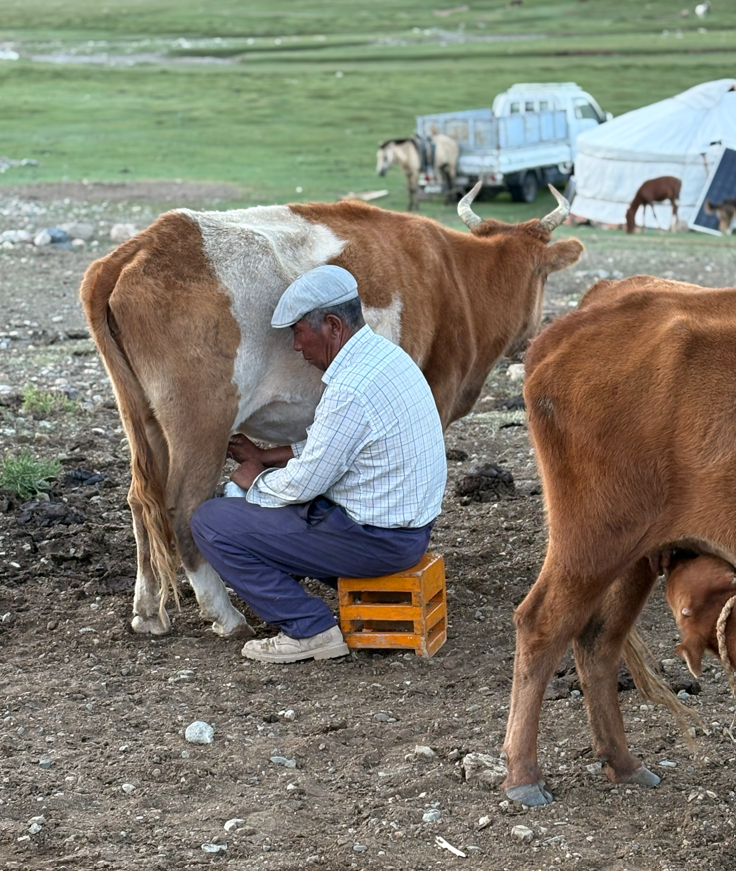
Mongolian herdsman milking a cow. Photo Credit: Supplied.

It was one small glimpse of how well herders know their animals. Herds can exceed 1,000 animals, yet Jeff has watched people recognise individual sheep and know which lamb belongs to which ewe.

Learning to live with the cold

Winter required a different education.

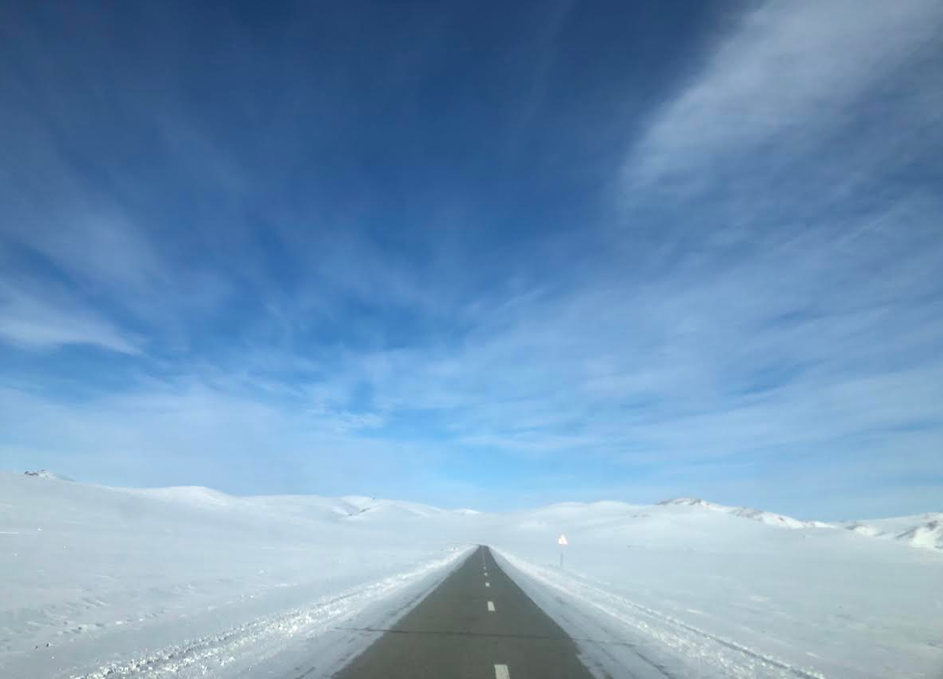
Jeff has seen temperatures fall well into the -40s and keeps a screenshot showing -49°C. On one journey his car thermometer could go no lower than -30°C, while another vehicle travelling with him eventually reached the bottom of its gauge at -40°C.

By then, the cold was affecting the vehicles themselves.

Icy Mongolian road. Photo Credit: Supplied

“The brake fluid starts to freeze. Your brakes don’t work really well. Even the steering fluid — the steering gets hard.”

“You never travel alone in winter,” Jeff said. “If you have a breakdown, it’s very dangerous.”

Summer made travelling through the countryside easier, and some of those journeys came through an unusual project Jeff helped operate: a mobile library.

Books were taken to nomadic families, left with them and exchanged when Jeff and his colleagues returned roughly a month later. The runaway favourite was Jules Verne’s Around the World in Eighty Days.

Jeff began taking photographs of families as well, having them printed and bringing them back on later visits. The books gave him a reason to return, and repeated visits meant people who had initially been strangers became familiar faces.

That overlapped naturally with the Christian missionary work that had brought him to Mongolia. Jeff travelled through cities and remote communities, sometimes arriving at a ger and asking simply: “Do you want to hear some good news?”

The answer varied. Some weren’t interested; others invited him inside for tea.

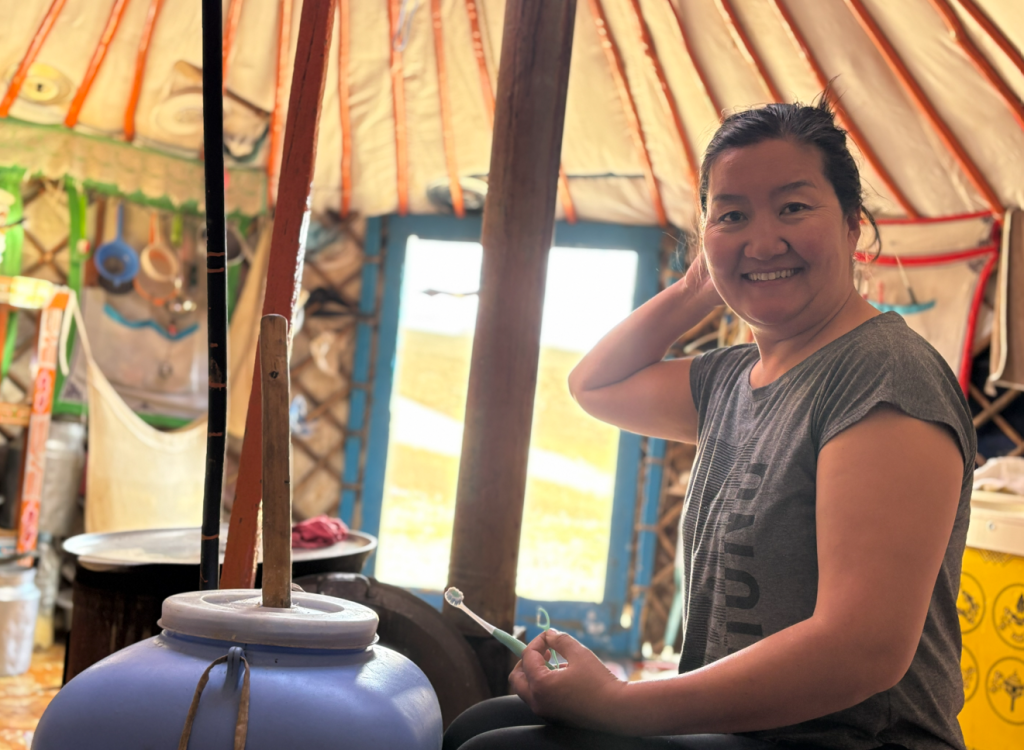
Jeff’s wife making milk products. Photo Credit: Supplied

By then, though, Jeff’s connection to Mongolia was becoming increasingly personal. He wasn’t simply working there and returning to Australia with stories about an unusual place.

Jeff’s son and a herdsman. Photo credit: Supplied

He had married into a Mongolian family, learnt their language and watched his children grow up with things he had needed years to learn. Mongolia had stopped being an overseas posting.

Bringing the story to Fitzgibbon

Jeff will be the featured speaker at the Brisbane Men’s Breakfast on Saturday, 17 October, at Dale Farm, 42A Desert Willow Way, Fitzgibbon.

The free community event starts between 6.30am and 7am, with a coffee van on site and lads of all ages welcome.

Free Community Event
Brisbane Men’s Breakfast
Jeff King — Saturday, 17 October

The free community breakfast brings men together at Dale Farm in Fitzgibbon every four to eight weeks, with a guest speaker chosen for the uniqueness of their story.

Where: Dale Farm, 42A Desert Willow Way, Fitzgibbon
Start: 6.30am–7am
Cost: Free
Who: Lads of all ages welcome
Also: Coffee van on site

NEXT: Two Mongolias — Jeff King takes us from the streets of Ulaanbaatar into the Mongolia most visitors never get close enough to know.

Published 15-September-2026