



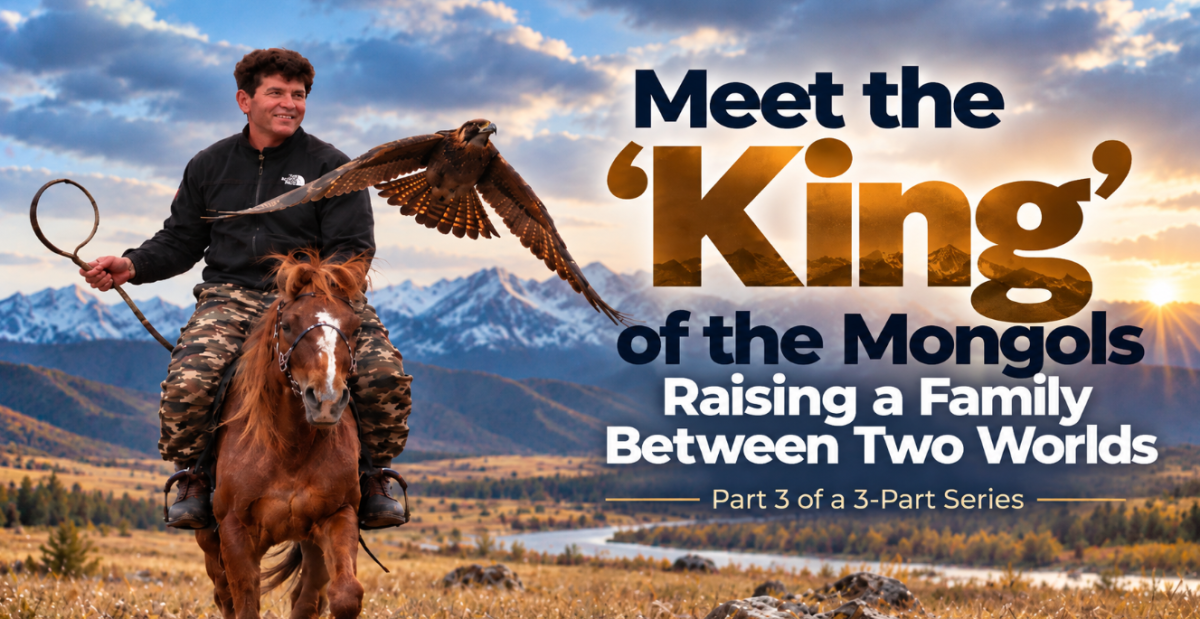
This is Part 3 of a 3-Part Series
Jeff King’s sons could spend one day doing Australian schoolwork in their Ulaanbaatar apartment and another riding horses and milking goats with their Mongolian relatives. To them, neither life was the unusual one.
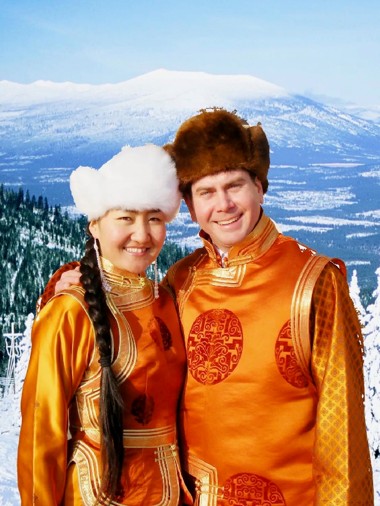
Their father is Australian; their mother grew up in a Mongolian herding family. The boys were raised between both worlds, speaking English and Mongolian and knowing Australia and Mongolia as home.

One part of their upbringing, though, remained deliberately Australian: their schooling.
Read: Meet the “King” of the Mongols Living in Brisbane — Part 1 of a 3-Part Series
An Australian classroom in Mongolia
Jeff and his wife chose an Australian homeschooling program rather than putting the boys into a Mongolian school. When they were preparing to return to Mongolia, they weren’t even certain where they would be living.

There was a possibility the family might stay in remote country with nomadic relatives, where they couldn’t count on having internet access. So instead of relying on online lessons, they went with paper.
Books and materials travelled with them. Tests and completed work went back to Australia, keeping the boys in the Australian education system even while they were living thousands of kilometres away.
“We were still in the Australian system,” Jeff said.


The family eventually settled in Ulaanbaatar rather than living remotely with the herders, but they kept the same arrangement. Jeff remembers it working “really, really well” academically.
The harder part wasn’t the schoolwork.
It was everything that normally happens around it.
After finishing lessons, the boys didn’t have classmates spilling out of school with them. That became particularly noticeable during the Mongolian winter, when temperatures around -30°C could keep them indoors for long stretches.
Jeff tried to break that up. Every couple of weeks, when they could, he would get the boys out horse riding or skiing.
Summer opened things up again. They travelled, spent time outside the city and visited their mother’s relatives, where the boys slipped into a very different rhythm.
Their mother was completely at home there. She had grown up in a herding family herself, and relatives continued to raise animals and move with the seasons. For her sons, these weren’t encounters with some distant version of Mongolian culture. The people in the gers were Grandma, aunties, uncles and cousins.
The boys could ride horses and help milk goats. They ate the dried dairy foods their father had once needed time to acquire a taste for.
English remained their first language, but their understanding of Mongolian became extensive. Jeff said his older son was the more confident speaker, although both could understand the language extremely well.
Their mother brought something else to their upbringing that Jeff could never have learnt from a book. She had been about eight when Mongolia’s communist era ended around 1990, and had grown up with the knowledge and routines of herding life before raising children in a very different Mongolia.
By the time her sons came along, smartphones, huge supermarkets and restaurants were part of everyday life in Ulaanbaatar. So were horses, hand-milking animals and visits to relatives who still moved their gers with the seasons.
The boys didn’t need anyone to reconcile those things for them.
They had grown up with both.
Read: Meet the “King” of the Mongols: Two Mongolias — Part 2
Coming back to Australia
Over the years, the family developed a loose rhythm: three or four years in Mongolia, then roughly a year in Australia.
COVID disrupted it. They found themselves staying in Tasmania for around two-and-a-half to three years before eventually returning to Mongolia, where their most recent stint lasted about four years.
They arrived back in Australia shortly before Christmas.
This time the boys are older, and that changes the equation. The Australian schooling they had carried with them through childhood has become increasingly important as they move into their teenage years.
What hasn’t changed is the family waiting in Mongolia, or the language and experiences they brought back with them.
For Jeff, Mongolia was somewhere he had to learn. He arrived as an Australian adult, picked up the language, adjusted to the food and gradually found his place in his wife’s family.
His sons started from somewhere very different.
The apartment and the ger, Brisbane and Ulaanbaatar, English and Mongolian, Australian schoolbooks and summers with their mother’s relatives were never competing versions of childhood. They were the same childhood.
Perhaps that is why the question of where they belong has no particularly tidy answer.
Australia is home. So is Mongolia.
The free community breakfast brings men together at Dale Farm in Fitzgibbon every four to eight weeks, with a guest speaker chosen for the uniqueness of their story.
Start: 6.30am–7am
Cost: Free
Who: Lads of all ages welcome
Also: Coffee van on site
Published 15-September-2026