



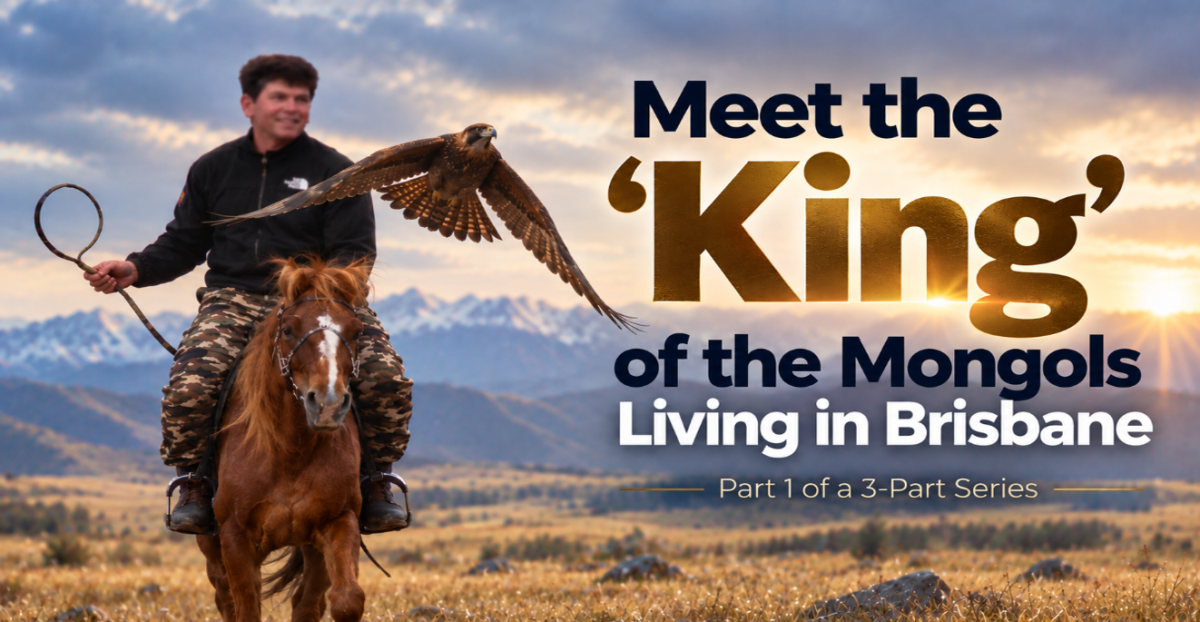
This is Part 1 of a 3-Part Series
Jeff King went to Mongolia for six weeks in 2003. He could hardly have known that the trip would lead to more than 20 years of his life there, a Mongolian wife and an extended family of nomadic herders — or that he would become comfortable with winters deep into the minus 40s, meals that begin with the offal, and journeys into country where the truck eventually stops and the camels take over.
He was 29 when he returned in 2005 to work as a Christian missionary, and Mongolia gradually became much more than the place he had gone to work. Jeff learnt the language, married into a herding family and spent years moving between life in Ulaanbaatar and visits to relatives in the countryside.

Those two worlds could hardly look more different. Ulaanbaatar has high-rises, supermarkets, restaurants, smartphones and traffic bad enough that Jeff often preferred to walk; outside the capital, members of his wife’s family continue to raise sheep, goats, cattle and horses, moving with the seasons and the available grazing.
For Jeff, that Mongolia isn’t something encountered on a tour. The people living it are his in-laws, and over the years he has had to learn everything from milking animals and living in a ger to navigating the considerable expectations of Mongolian hospitality.
Now back in Brisbane, he will tell some of those stories at the free Men’s Breakfast at Dale Farm in Fitzgibbon on Saturday, 17 October.

Twenty-three years after that first six-week visit, the more interesting question is no longer why an Australian went to Mongolia.
It’s how Mongolia became home.
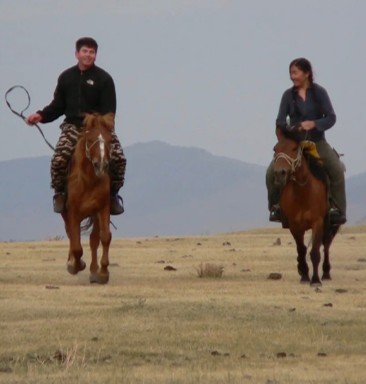
Jeff’s wife grew up in a traditional herding family, and relatives still live from their animals today. That meant his introduction to rural Mongolia was not a carefully packaged cultural experience. He was entering family life, with all the expectations that came with it.


Food was one of the quicker ways to discover them. When an animal is slaughtered, very little is wasted, and the first meal can involve parts that would rarely make it onto an Australian dinner table.
“The first meal is eating the guts,” Jeff said.
Heart and kidneys were fine by him. For everything else, experience eventually taught him to get in early, take something he liked and make his enthusiasm obvious.
“I don’t mind the heart and I don’t mind the kidneys. You grab the bit you know you don’t mind and say, ‘Oh, this is great.’ Then they’re not trying to feed you.”
Even the dairy could beat him. Aaruul, a traditional dried curd, can be extremely hard, and Jeff remembers keeping a piece in his mouth for about half an hour before discreetly burying it. These days he eats it; his boys love it.
Not every lesson was about food. He once watched his brother-in-law trade a sheep for a sack of potatoes and thought he was witnessing a terrible deal. What Jeff didn’t know was that the sheep had nearly died the previous year and was no good for breeding.
“They’re not dumb,” he said. “He gave his absolute worst sheep for their sack of potatoes.”
It was one small glimpse of how well herders know their animals. Herds can exceed 1,000 animals, yet Jeff has watched people recognise individual sheep and know which lamb belongs to which ewe.
Learning to live with the cold
Winter required a different education.
Jeff has seen temperatures fall well into the -40s and keeps a screenshot showing -49°C. On one journey his car thermometer could go no lower than -30°C, while another vehicle travelling with him eventually reached the bottom of its gauge at -40°C.
By then, the cold was affecting the vehicles themselves.
“The brake fluid starts to freeze. Your brakes don’t work real well. Even the steering fluid — the steering gets hard.”
“You never travel alone in winter,” Jeff said. “If you have a breakdown, it’s very dangerous.”
Summer made travelling through the countryside easier, and some of those journeys came through an unusual project Jeff helped operate: a mobile library.
Books were taken to nomadic families, left with them and exchanged when Jeff and his colleagues returned roughly a month later. The runaway favourite was Jules Verne’s Around the World in Eighty Days.
Jeff began taking photographs of families as well, having them printed and bringing them back on later visits. The books gave him a reason to return, and repeated visits meant people who had initially been strangers became familiar faces.
That overlapped naturally with the Christian missionary work that had brought him to Mongolia. Jeff travelled through cities and remote communities, sometimes arriving at a ger and asking simply: “Do you want to hear some good news?”
The answer varied. Some weren’t interested; others invited him inside for tea.
By then, though, Jeff’s connection to Mongolia was becoming increasingly personal. He wasn’t simply working there and returning to Australia with stories about an unusual place. He had married into a Mongolian family, learnt their language and watched his children grow up with things he had needed years to learn.
Mongolia had stopped being an overseas posting.
Bringing the story to Fitzgibbon
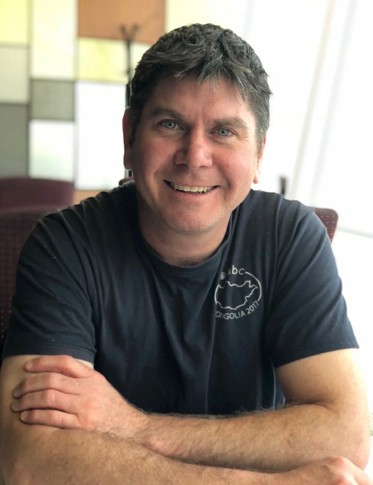
Jeff will be the featured speaker at the Men’s Breakfast on Saturday, 17 October, at Dale Farm, 42A Desert Willow Way, Fitzgibbon.
The free community event starts between 6.30am and 7am, with a coffee van on site and lads of all ages welcome.
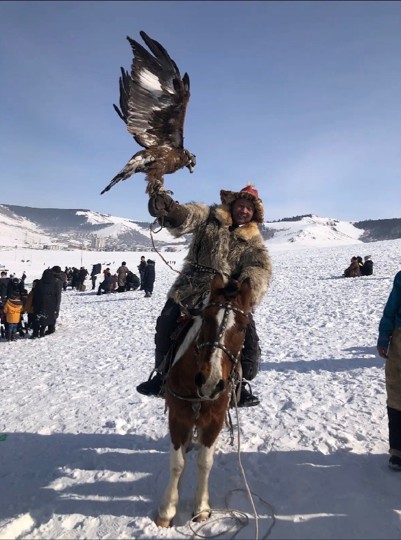
A striking image shows the version of Jeff’s life that immediately catches the eye: an Australian on horseback against a Mongolian landscape, with a large bird of prey beside him.
But Mongolia gets more interesting once you move beyond the photograph.
Jeff can walk through Ulaanbaatar past high-rises, supermarkets and traffic jams, then head into countryside where there may be no fences at all. His relatives can move several times in a year, taking their ger and possessions with them as they follow grazing for their animals.
Trucks now do much of the carrying. Eventually, though, the terrain can become too difficult for them.
From there, the family loads what it needs onto camels and keeps moving.
The free community breakfast brings men together at Dale Farm in Fitzgibbon every four to eight weeks, with a guest speaker chosen for the uniqueness of their story.
Start: 6.30am–7am
Cost: Free
Who: Lads of all ages welcome
Also: Coffee van on site
Published 15-September-2026